Biceps Curl Exercise Details: Get a Unicorn Arm!
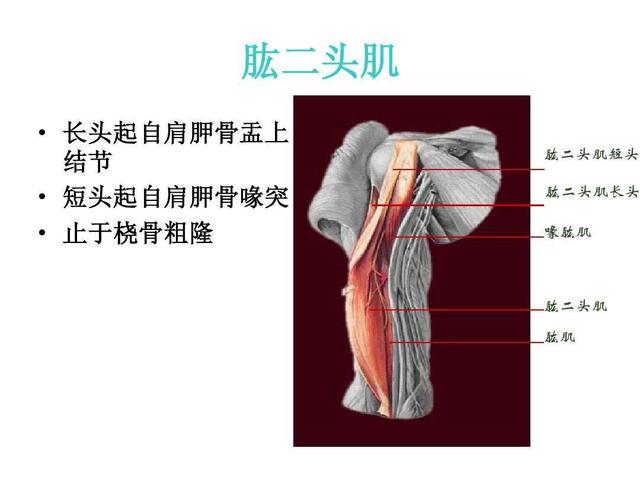
The biceps brachii is the muscle on the front of the upper arm, primarily responsible for elbow flexion (bending the arm), forearm pronation (rotating the forearm), and shoulder flexion (raising the arm). Elbow flexion is the most important action, i.e., the bending movement.
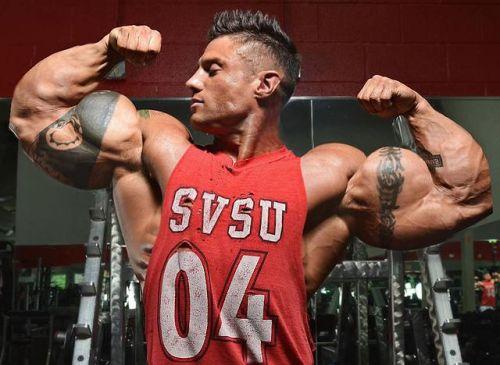
Exercises for the biceps are almost all bending-type movements, such as dumbbell curls and barbell curls. Other pulling exercises, including pull-ups and rows, also work the biceps, but are not as focused and effective as bending movements.
Today, we will mainly discuss the analysis of the dumbbell biceps curl exercise and how beginners should arrange their biceps training.
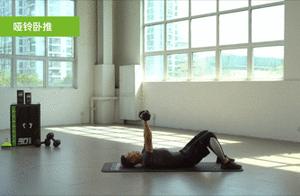
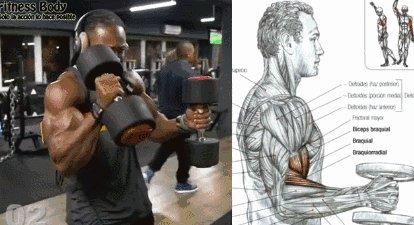
Dumbbell curls
With your hands placed on either side of your body, try to keep them close to your body, and don't move your elbows too much. Then, use your biceps to exert force, exhale as you lift the dumbbell to the highest point, and inhale to control the dumbbell back to its original position.
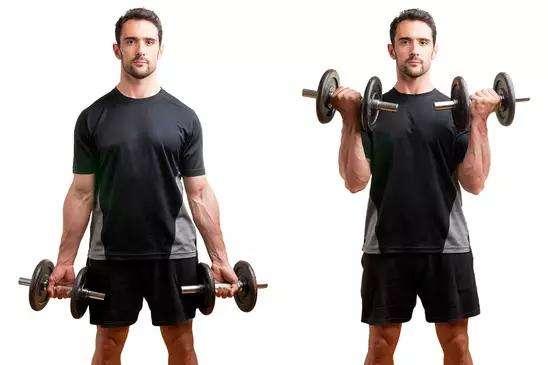
In the full range version, when returning to the lowest point, rotate the forearms (supination) to create space for the arms to fully extend. When going up, rotate the forearms (pronation) again (supination).
Both methods are suitable.
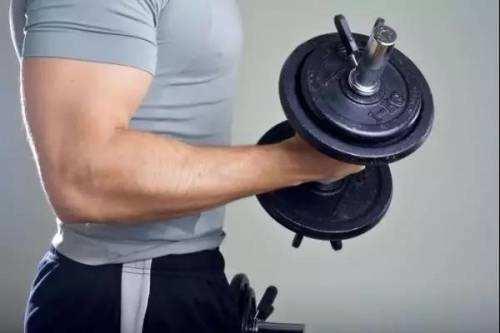
Common errors
Some common errors include:
Elbows are bent outwards, and the elbows are not close to the body
- Half-range, not going to the bottom
- Elbows are not fixed, and the elbows only allow for a slight movement
- If the range is too large, the front shoulders will participate too much
- No control of the speed (no eccentric contraction)
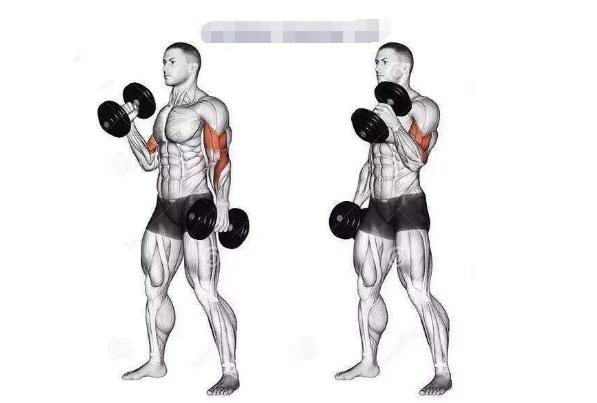
- Using body weight to shake up while lifting
- It’s okay to use a little leverage when very tired or with a heavy weight, but this is best avoided for beginners.
- The wrists should be kept straight.
- Biceps training methods
- For friends with limited training experience (possibly 1-2 years), a simple training principle is recommended: gradually increase the weight.
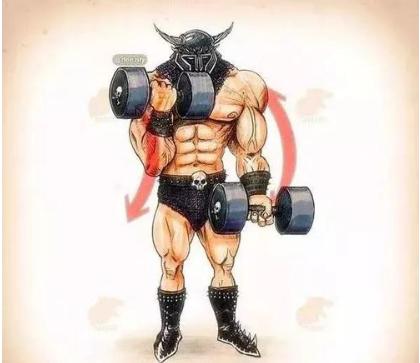
Choose 1-2 exercises, such as standing dumbbell curls and hammer curls, and perform them approximately 2 times per week. When training the biceps, only do these 1-2 exercises, 3-4 sets each, with 1-1.5 minutes of rest between sets.
When starting, choose a lighter weight, considering your strength and weight, such as 10-15 pound dumbbells. Each set should be able to be done 12 times or more. When you can easily do 12 reps per set, start to challenge yourself with a heavier weight.
Generally, for men to develop noticeable biceps, they should be able to curl at least 20 pounds or more. The first few months of training will see rapid progress, possibly from 10 pounds to 20 pounds. However, progress will be slower from 20 pounds to 30 pounds, and depends on your original strength and weight. When you reach a certain weight, you may not be able to increase the weight for several months, at this point, your basic strength and muscle should have formed.
For inexperienced beginners, exercises such as long head short head inclined decline bench curls and etc. are unnecessary, as they will only distract you and prevent you from focusing on the basic skills. Once the basic skills are solid, then consider adding these exercises, intensity techniques, and increasing the training volume.
2010202030