4 Leg Exercises to Build Stronger Thighs
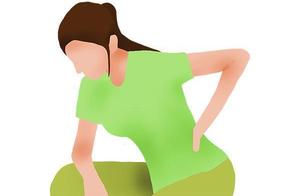
What muscle group do you most want to skip in your fitness class? Most people would choose leg muscle training, and many men only love to train the muscles they can see on their abs while ignoring the important muscles of the lower body. However, we should know that leg muscles are one of the three most important muscle groups in the body and also the largest muscle group!
It's beneficial to regularly train your leg muscles, such as strengthening your leg muscles, enhancing core strength, consuming more calories, promoting the concentration of growth hormone and testosterone, and improving metabolism. At the same time, the adductor muscles on the side of the thigh are always playing an important role in daily life, whether you want to strengthen your legs or improve the shape of your adductors, you need targeted training projects.
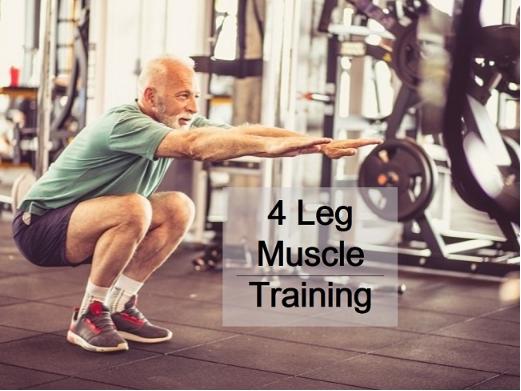
4 practical leg training exercises to quickly get rid of boyish legs!
In recent years, due to the prevalence of weight training and bodybuilding competitions, leg muscle training has begun to go popular, at that time when it was popular not to love straight and thin 'bird legs', leg muscle training has received the attention of various groups. Of course, the premise of training leg muscles is not just to increase leg muscle and strength, but also to make the legs more perfect curves and lines.
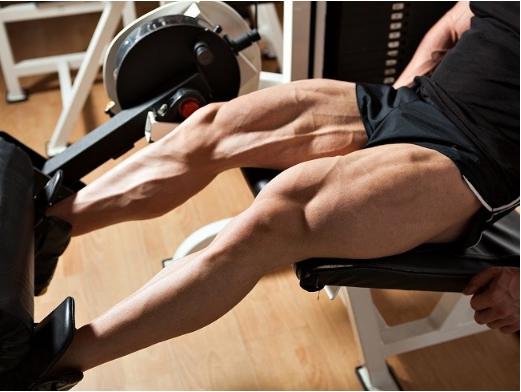
It's important to train your thigh muscles so that you can avoid injury in daily life or sports!
Thigh Muscle ()
The thigh muscles are mainly composed of the front 'quadriceps' and the back 'hamstrings'. The quadriceps include the rectus femoris, vastus lateralis, vastus medialis, and vastus intermedius. The hamstrings include the biceps femoris, semitendinosus, and semimembranosus. These two large muscles can help you walk, but also help the circulatory system, protect the knee, and slim.
When we start to train leg muscles, we can also have the function of slowing down or preventing knee injuries, because we are both two-legged creatures that stand and walk, so whether it's daily walking, running or hiking, we need a strong and powerful thigh muscle, especially the quadriceps in front of the thigh and the biceps femoris behind it, to avoid knee problems caused by instability.
Overcome muscle adaptation period
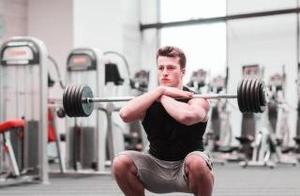
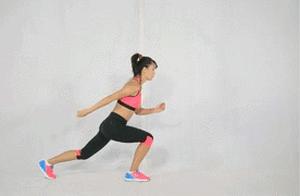
Generally, the common leg training exercises include squats, leg extensions, stretching, and curls. These exercises are not inappropriate; however, some exercises can more correctly help you change the training intensity and increase the size and clarity of the leg muscles. However, repeatedly doing the same training logic will make your muscles fall into a gentle adaptation period, which is also known as the 'wall effect'. Therefore, you must add new actions to your daily breaks to stimulate muscles and ensure muscle development. The next four training exercises may or may not have been added to your training menu. If not, we hope you can learn it and start using it in each leg day.
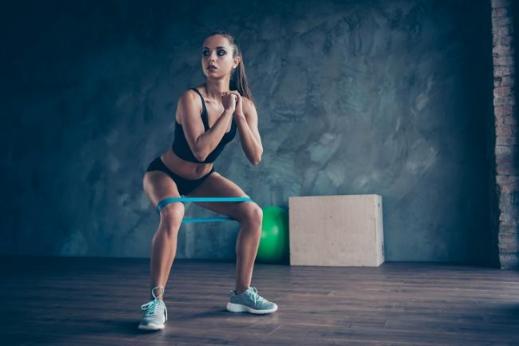
Common leg training exercises include squats, leg extensions, stretching, and curls.
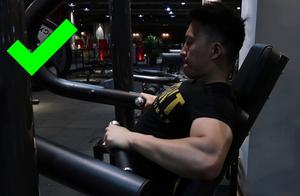
1. Hack Squats ()
Hack squats are also a type of squat, but different from the barbell squats we often practice. When doing barbell squats, it is necessary to maintain balance, so trainers usually adopt a wider stance. A wider stance can keep the body in a more stable center of gravity. Hack squats do not require you to spend too much energy to maintain balance, so you can use a narrower stance, which makes the force transmitted to the leg closer to vertical. Using a narrower stance, the leg muscle force direction is closer to vertical, so Hack squats are particularly effective in improving quadriceps strength.
Steps
1. First, spread your legs and keep them less than shoulder-width apart, and place the handles of the equipment on your feet, and loosen the safety bar.
2. Next, extend your legs and straighten them, remember not to lock your knees.
3. Then slowly lower your body, bending your knees until your thighs are less than 90 degrees with your shins.
4. Then use the force of your heels to push the ground, extend your legs back to the starting position.
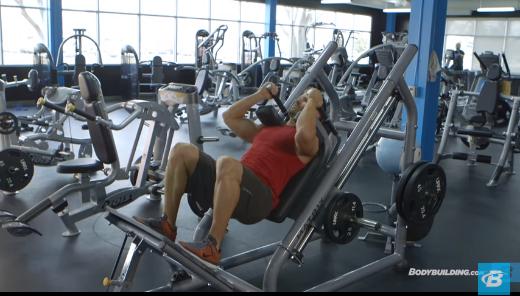
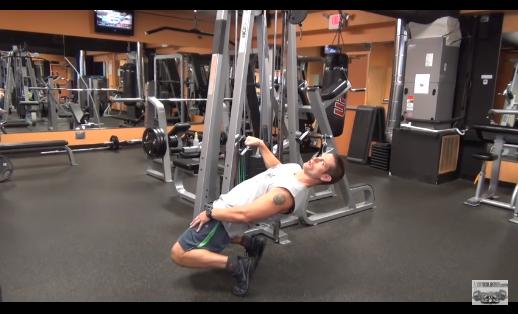
2. Hip Thrusts ()
Hip thrusts are a training action often seen in foreign videos, they belong to single-joint hamstring training, especially targeting the rectus femoris. Because hip thrusts and the squats we often practice are different, plus this action uses self-weight training mode, it's less likely to hurt our back and hips.
Steps
1. First, find a fixed object or equipment to hold, and keep the body balanced.
2. Next, spread your feet about the same width as your shoulders, and bend your knees to face forward.
3. When your body lowers, keep your hips tilting towards the ceiling.
4. Start with a small squat of about 10 cm, and return to the starting position.
5. When returning to the starting position, do not fully straighten your legs, slightly squat to keep the quadriceps muscles under tension.
3. Forward Fold ()
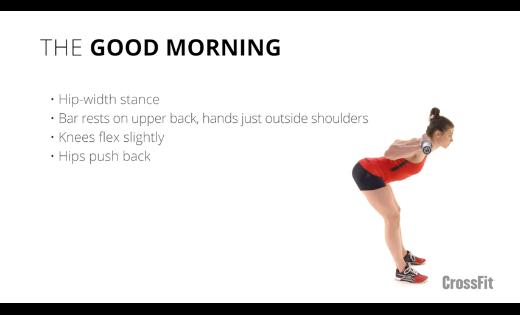
Forward fold is like saying 'good morning' to everyone. It mainly exercises the adductor muscles on the back of the thigh (biceps femoris), the back muscles (erector spinae), and the gluteus maximus.
Steps
1. The preparatory action is a standing posture, with your feet shoulder-width apart, place the barbell on your upper back, not your neck, and tighten your shoulder blades to keep your back straight.
2. Next, inhale, bend your body forward, keep your back straight, and tilt your hips back, moving forward like bowing.
3. When you feel a slight stretch in your lower back (erector spinae), you can slowly straighten up and push your hips forward to return to the starting position.
4. Four. Ladder Training ()
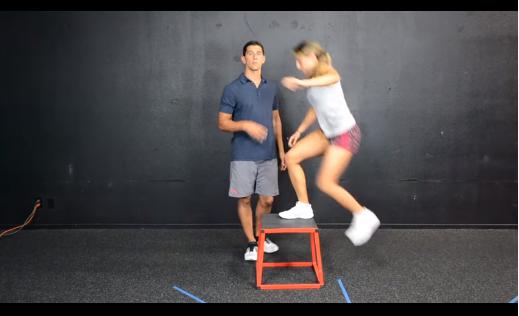
Ladder training is generally considered an aerobic exercise. It only needs a box or stairs. It can strengthen the heart and lungs, and can train the core balance ability by single-leg up-and-down movements. Of course, it can also stimulate the deep muscles such as the glutes and quadriceps through this training.
Steps
1. Stand upright with your head up and your chest out, place one hand on your hip, and place one foot on the box.
2. Use the force of your heel, raise your hips towards the direction of the ceiling. Place the other foot on the box to complete the action.