Methods for Longevity Sitting and Meditation
postures
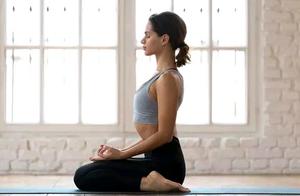
Cross-legged sitting: place your left little toe on the inside of your right thigh, and your right foot on the inside of your left thigh, with the soles of both feet facing upwards. The benefits of this posture are: the knees will always be in close contact with the cushion, will not be skewed forward, backward, left or right. However, this cross-legged posture is difficult to learn, and for people over 50, it is difficult to do.
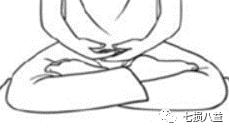
Straight-legged sitting: when doing business, place your left little toe on the inside of your right thigh, and your right foot under your left thigh. This is easier than cross-legged sitting, but the knee cannot be close to the seat, and it is easy to lean to the left after sitting for a long time. Correct it when you feel leaning. The left and right feet are exchanged.
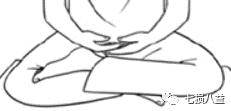
Down-legged sitting: if you can't do straight-legged sitting, try down-legged sitting. Place both feet down, but keep the heels of your feet on the back of your feet. This posture makes it easy for the knees to be empty. The posture is easy to skew, and you must correct it at any time.
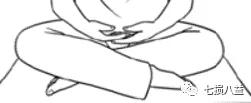
Flat sitting: let your feet hang down, but you must keep the heel of your left foot on the back of your right foot. This is called ‘four limbs unite’, or you can also let your feet lie flat on the ground, but keep your legs and feet at a 90-degree angle.
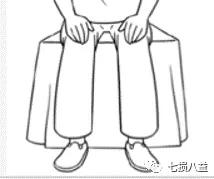
When you first start sitting for a long time, sitting for a slightly longer time will make you feel that your feet are numb. At this time, you can slowly open your legs, and when you are no longer numb, you can sit down again or stand up and sit again.
- Hand postures
When exercising, the neck, face, eyes, and mouth should all pay attention to the following: the neck and throat should be straight, the face should be facing forward, the eyes should be closed, and the mouth should not be opened. The tongue should touch the palate.
- Lying postures
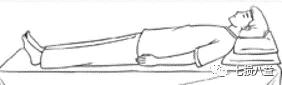
Lying postures such as lying on your back and side are both available. When lying on your back, the head and shoulders should be slightly raised to find the most comfortable position. The face should be facing forward, the eyes closed, and the mouth should not be opened. The tongue should touch the palate.
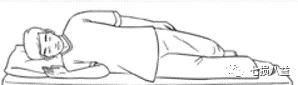
- Side lying: either left or right side is fine, it is better to choose the right side, because lying on the left side will press on the heart, so it is not recommended to choose the left side. The eyes are closed, and the mouth is closed. The tongue touches the palate.
The second section, mental concentration
When sitting in meditation, you should focus your mind on the lower part of your abdomen (about 1-3 points below the navel), it is difficult for beginners to succeed, people have many distractions, and it is difficult to control. The final meditation should be able to subdue these distracting thoughts. How to practice? Method one: pay attention to not thinking randomly during the day, and put all things away when sitting. Practice repeatedly, and it will gradually reduce distractions and achieve a state of no thought. You can close your eyes and look at the tip of your nose. Relax and naturally breathe through your nose, and your mouth should also be closed. When there is saliva, you can slowly swallow it in small mouthfuls. Most importantly, hold your intention at the navel.
Method two: close your eyes and use counting method. ‘One’ is an inhalation, and ‘one’ is an exhalation. Count from one to ten as one round. Continuously and naturally, so that the mind naturally concentrates. This is called ‘heart breath interdependent’. The most important thing is to hold your intention at the navel. This method can also greatly help. Choose a method that suits you.
The most common phenomenon is that people’s breathing is short and shallow, and it cannot effectively utilize the expansion force of the lungs. Therefore, it is impossible to inhale enough oxygen and exhale enough carbon dioxide, leading to blood impurity and increased susceptibility to disease. The method is as follows:
1 The breath should be light and fine, even the ears cannot hear the sound.
2 The breath should be gradually lengthened, so that it reaches the abdomen; it should be natural and without force. Be patient and persistent, and you will eventually achieve it.
3 The chest cavity, below the lungs, above the stomach, is connected by the diaphragm. When you first start breathing, you often feel stuffy in your chest, because there is no movement of the diaphragm. The method of movement is to inhale short breaths, and gradually lengthen them.
4 The intestinal tract in the abdomen is the most soft, and blood tends to stagnate here. Breathing deepens and lengthens, which will make the blood circulate throughout the body.
5 The breath should be inhaled through the nose, not the mouth. Because the nostrils have nasal hair that can filter dust and microorganisms from the air.
Third section, time of sitting
1 Sitting should be done every day, preferably when you wake up and before you go to sleep. If you cannot do it twice a day, but at least once a day.
2 The time of each sitting should be as long as possible; do not deliberately seek a long time, just naturally, if you can sit for 30 minutes, and you can do it every day, the effect will be better.
3 For people with a lot of things to do, each sitting should be 40 minutes; if you can extend it to an hour, that’s even better.
4 If you can only sit for one time a day, it is best to do it after breakfast.
5 It is recommended to sit for 15 to 20 minutes before going to bed.
6 When you wake up, first lightly touch your abdomen in bed to adjust your breathing, then relieve your bowels and wash your face, then sit.
Sitting is mainly in the morning after waking up, and supplemented by sitting before going to bed.
Rectal breathing
1 When sitting for a long time, you will find a vibration phenomenon at the navel, which is a proof that the abdomen is full of power.
2 Before the several days of sitting, you will first feel a hot energy coming and going under the navel.
3 The longer the hot energy comes and goes, it will cause a vibration, which can make the whole body vibrate, you don’t need to be too scared, just let it happen naturally.
4 The speed and duration of the vibration vary from person to person, and it is not necessary to force it.
5 Guide your intention to make this power, from the tailbone (the bottom end of the sacrum is the tailbone) upwards, reach the top of your head, and then slowly descend from your face to your chest, and then to the navel. (Not an instantaneous process, varies from person to person, may take several months or several years). After repeated guidance, it can be up and down. You can also guide your intention to the whole body.
Text according to the author of ‘Sitting to Promote Health’ is transcribed.
3
4
5
6
1
2
3
4
5
6
7
8 5-10
1
2
3
4
5