7 Steps to Unlock Correct Grip – Beginner Fitness Guide
Here are several common grip methods used in fitness, and many people will immediately think of supinated grip, pronated grip, and mixed grip. Besides these three grips, there are actually quite a few other grips that are very good. It’s important to know that different grips directly affect the training effect. Let’s introduce 7 different commonly used fitness grips and the differences between these grips
Fitness, we all know that there are many ways to do different exercises, such as pull-ups, you can use supinated grip, pronated grip, overhand grip; deadlifts can be done with supinated grip, pronated grip, mixed grip...
Basically, the different methods mainly differ in grip and grip style. The grip itself may be more familiar to many people, because the conventional grips are 3 grips, supinated, pronated, and standard grip
But the grip has many types, and different actions have different grips. It’s important to know that the grip directly determines your grip strength and also affects the training effect.
Therefore, let’s introduce itThe main grips used in fitness are 7 and the differences between the grips
1. Supinated grip
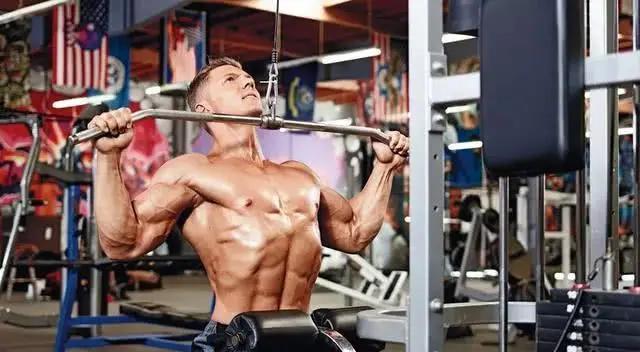
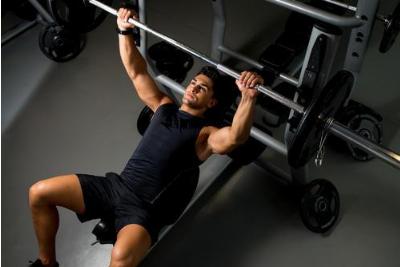
Supinated grip, also known as pronated grip, is when your palms face down with your hands rotated forward, and your thumbs wrap around the bar like a clenched fist. This is the most conventional grip and can be used to train almost all actions, such as bench press, pull-ups, seated row, overhead press, barbell curl, and deadlift...
The advantage of supinated grip is safety, so most beginners will use this grip for training.
However, it also has obvious problems, namely, supinated grip with a barbell often slides, and supinated grip is easy to cause forearm fatigue
Therefore, it is not the strongest grip in terms of grip strength, and people who have done deadlifts know that mixed grip (the 3rd grip) can lift more weight than supinated grip
2. Pronated grip
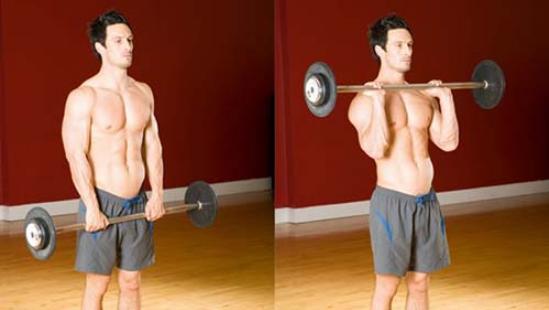
Pronated grip, also known as reverse grip, is when your palms face up with your hands rotated backward, which is the opposite of supinated grip. It’s also a conventional grip and is commonly used when doing barbell curls, rows, and pull-ups
Compared to supinated grip, when using pronated grip, your biceps brachii can better exert force; in addition, if you use pronated grip to do bench press, the shoulder pressure will be much smaller than with supinated grip, and the weight you can lift will be smaller.
3. Mixed grip
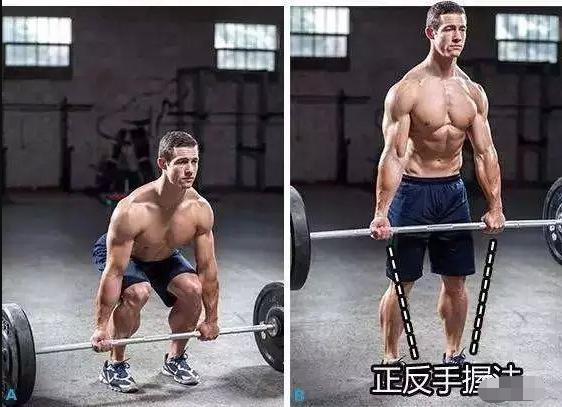
Mixed grip, or combined grip, combines supinated and pronated grips, with one hand supinated and the other pronated. This grip has the biggest advantage of preventing the bar from sliding.
Most people use mixed grip mainly when doing deadlifts, but in fact, it can also be used when doing hammer curls and pull-ups
Although mixed grip allows you to lift more weight, it also carries risks. For example, when doing deadlifts, the pronated side of your hand will be stretched. If the weight is too large, it may cause injury to the biceps brachii.
Moreover, because the postures on the left and right sides are different, in fact, during the action, your body is asymmetrical. Long-term training like this can cause muscle imbalance on both sides.
Therefore, it is not recommended to always use mixed grip for training, it is better to use supinated grip. If you want to lift heavier weight, you can use a weight belt to assist you.
4. Neutral grip
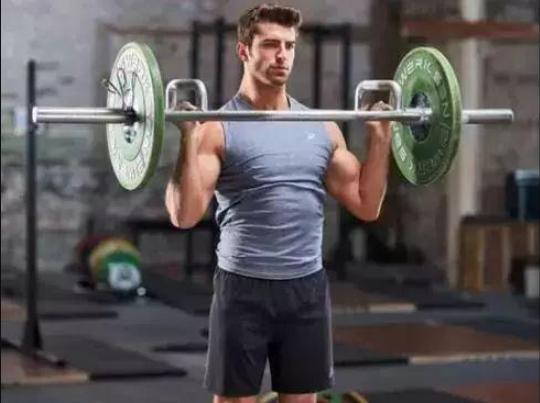
Neutral grip, also known as straight grip, is a grip where your palms face each other. You need to use a special handle when doing pull-ups or seated rows.
If you use neutral grip to do dumbbell curls, the action will stimulate the forearm more. This action is called hammer curls
Neutral grip is a grip that is ‘very friendly’ to the shoulders and wrists, and neutral grip can make your arms closer to your body, so that it can better stimulate the triceps brachii (so you will find that many actions that stimulate the triceps brachii use neutral grip)
5. Hook grip
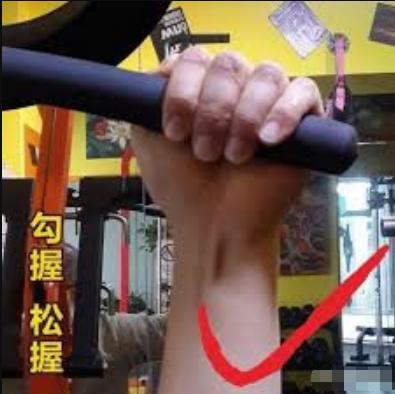
Hook grip is a grip commonly used by weightlifting athletes. This grip is very similar to supinated grip, but the difference is that your thumb does not press on the bar like other fingers, but instead presses the thumb into the space between your fingers
The biggest advantage of this grip is to increase friction, which prevents the bar from sliding.
Of course, the hook grip also has obvious disadvantages, namely ‘pain’! Because your thumb is pressed into the space below, it’s uncomfortable to hold the barbell, so it takes a lot of practice to get used to the hook grip.
P.S. For those who don't want to use mixed grip or weight belt to train deadlifts, they can try hook grip
6. Gun grip
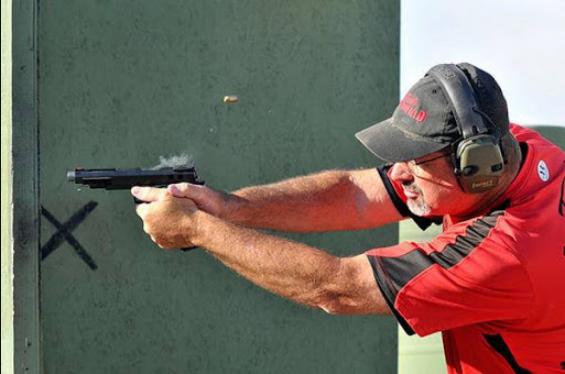
Have you ever heard of gun grip? This grip is almost rarely seen in gyms… The reason is simple, gun grip is different from other grips, it actually reduces the weight you can lift.
For most people, this grip doesn't have much use, but in fact, gun grip has its use.
Imagine when you do seated row or pull-ups, don’t you always feel that the back muscles aren't exerting force? This is because the weight you lift is too heavy, and the movement speed is too fast.
If you can still have this problem next time, you can try gun grip. You will find that whether it’s weight or speed, you can achieve better control (because as long as the weight is large or the speed is fast, it’s easy for your hand to slip out).
In addition, you can also use gun grip for warm-up. By controlling the speed and weight, you can help yourself to better achieve synchronized movement, so that you can better feel the force of the back muscles when you do regular training.
7.
…..emmmmm………..