Many Years of Practicing Taijiquan Still Didn't Make Progress? These 10 Techniques Might Help You
Taijiquan is a very good fitness exercise. Taijiquan's fist techniques have a long history and profound principles. When I first started learning Taijiquan, I was exploring the basic principles and had only a partial understanding. After practicing for a while, I gained a lot of physical sensations.
Taijiquan Technique One: Relaxation ( – Song).
Without relaxation, practice is useless. To relax the heart, relax the intention, relax the spirit, relax the body. Relax the five internal organs and six internal viscera, relax every joint and every channel, relax the whole body. One movement and one relaxation, one movement and one relaxation, relaxation without fatigue, balance between softness and strength, with intention without using force.
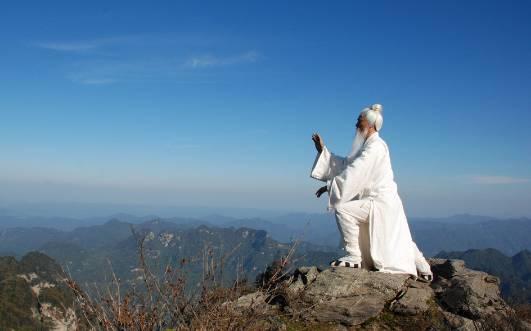
Taijiquan Technique Two: Quietness ( – Jing).
From the preparatory movements to the closing posture, one must maintain a quiet mind, a quiet intention, and a quiet spirit. External quietness, eliminate all distractions, indifferent to the affairs of the world, not hearing, not seeing, the spirit does not relax, intention focuses, intention guides, air follows movement. Internal quietness, inner energy defense, intention guides action, air follows, energy follows movement. Quietness without stillness.
Taijiquan Technique Three: Emptiness ( – Kong).
Empty the heart, empty the intention, empty the spirit, empty the body. The inner cavity is the way to enlightenment, the whole body is permeated with emptiness. Use the heart to walk with intention, use intention to guide air, use air to move the body. The whole body is filled with breath.
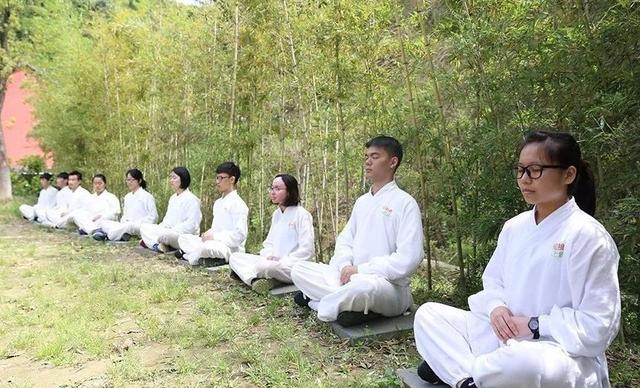
Taijiquan Technique Four: Thoroughness ( – Tong).
Empty the heart, empty the intention, empty the spirit, empty the body. All five internal organs and six internal viscera, all four limbs and all joints are completely connected. One movement without stillness, stillness breaks the root, the central channel is open, flowing smoothly, air flows smoothly, unobstructed.
Taijiquan Technique Five: Joy ( – Le).
This is a smile. A smile that comes from the heart, filled with joy, outwardly appears calm and relaxed. A smile causes the air to descend and the body to relax, the spirit is free.
Taijiquan Technique Six: Roundness ( – Yuan).
Taijiquan is round, Yin and Yang complement each other, mutually inclusive. One movement and one circle, one stillness and one circle. Whether it's pushing, pulling, squeezing, pressing, plucking, arranging, elbowing, leaning, or advancing, retreating, looking left and right, looking left and right, all use curved, circular movements.
Taijiquan Technique Seven: Softness ( – Rou).
Step like a cat walking, moving with force like pulling silk. Soft but not weak, hard but not stiff, pushing without blocking, loosening without dissipating. Movement like iron wrapped in cotton, bending and stretching is light, gentle, and relaxed, calm, comfortable, and harmonious.

Taijiquan Technique Eight: Continuity ( – Lian).
Taijiquan's set movements, from the initial stance to the closing posture, are all continuous and linked, standing upright, centered and relaxed, with the waist as the axis, movements are like clouds and flowing water, moving at a uniform speed and continuously.
Taijiquan Technique Nine: Slowness ( – Han).
Let the energy sink to the dantian (lower abdomen), combine stillness and movement, focus the mind, every move and every action are slow and steady, intention and energy are unified, slow and smooth, calm and flowing.
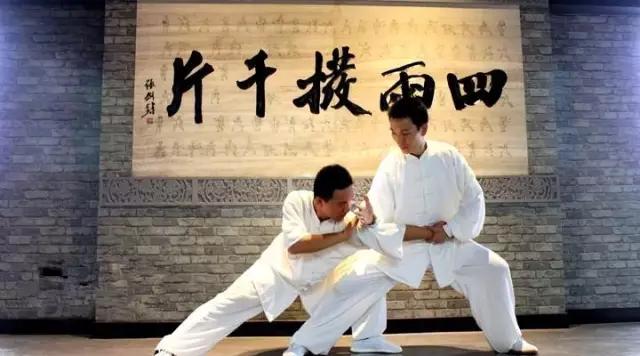
Taijiquan Technique Ten: Integration ( – He).
Up and down are integrated, left and right are coordinated, internal and external are in harmony. Externally: the shoulders and hips are connected, the elbows and knees are connected, the hands and feet are connected. Internally: the heart and intention are connected, intention and air are connected, air and force are connected. Hands, eyes, body, steps, and footwork must all be integrated. Open and closed must be smooth and fluid, the whole body must be coordinated and harmonious.
Actually, after saying so much about the benefits, it's better to experience it yourself. Relaxation, quietness, emptiness, thoroughness, joy, roundness, softness, continuity, slowness, and integration – all for a unified whole, merging stillness and movement, intention and action. A shallow understanding requires gradual cultivation. Once truly understood and practiced, the body and mind become healthy, the spirit is joyful in it, this is my true understanding of Taijiquan.