How to Eat When Losing Weight? How to Choose? Do These 3 Things, and You Can Easily Lose Weight
Talking about weight loss, all kinds of internet celebrity recipes flood out, everyone knows a key problem: to lose weight, you need to eat less. But there is also a segment of people who, despite eating very little, and all the materials they choose are natural and sugar-free. In short, how to be healthy, how to choose. But weight loss still doesn't take effect.
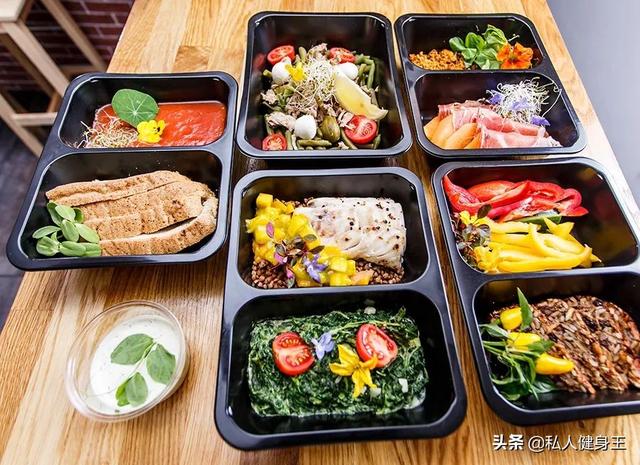
The reason for this phenomenon ispossibly because these three points have not been done well.
Part1
Food Portion
It is important to choose the right food, but how to choose the right amount is equally important. Many people who are losing weight are very frustrated. They eat very little, but they don't lose weight. But it is likely that it is just what you think is little, in fact, the amount is exceeded. Let's take a look at how to measure food portions.
Without measuring tools, it's too cumbersome to operate..., this will often hinder your weight loss journey.Actually, measuring food weight doesn't need to be so complicated, just use our hands, this measurement can determine:
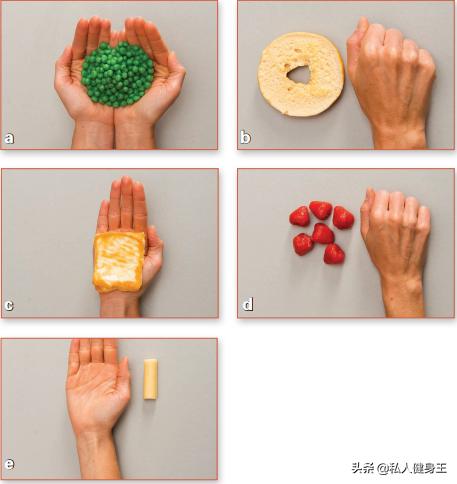
Vegetables are about two handspans (figure a); a serving of grains is about the size of a clenched fist (figure b); a serving of meat is about the size of one palm (figure c); a serving of fruit is about the size of a clenched fist (figure d); a serving of dairy products is about the length of your thumb (figure e)
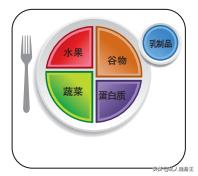
In addition to using palm as a benchmark,The Ministry of Agriculture has launched a system called 'My Meal Plate', which not only helps you understand the amount of food, but also helps you choose food and maintain a healthy body. This is a good food tracking system that can help you maintain a healthy diet.With our 'palm version' food portion reference, combined with 'My Meal Plate', we will be thinner and healthier on our weight loss journey.
Part2
Ingredient Label
Often, we buy sugar-free cookies or drinks, even if they taste bad, but we think that in order to lose weight, we can't eat indiscriminately, but over time, we eat a lot of sugar-free, low-fat food, but the weight doesn't decrease.
The reason may be that—
the positive information on the packaging is distorted, because they are not consistent with the nutrition label on the back of the packaging, which will mislead consumers.You will see labels with 'Low Fat', 'No Sugar Added', 'Natural', 'Low Salt', 'Enhance Immune System'
etc., which attract you to buy these foods, but the real meaning of these labels is vague.'Low Fat', 'No Sugar', 'Zero Calorie'These are likely to be misleading labels, because many people think that if a food does not contain fat and sugar, it is a healthy food.
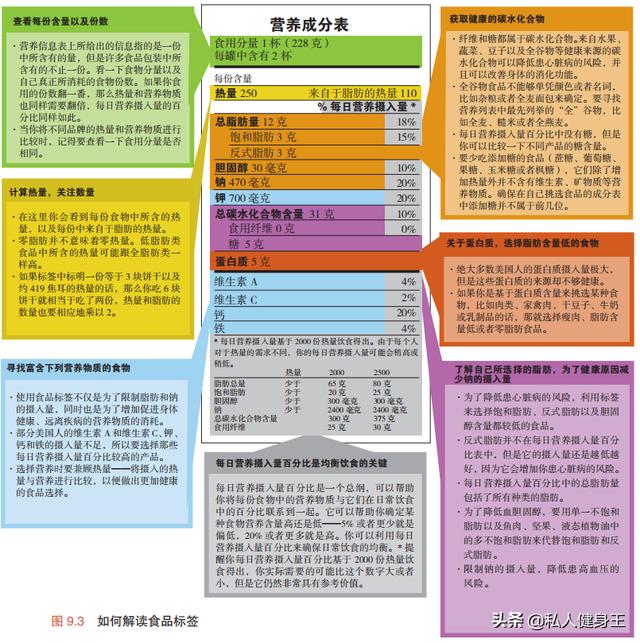
If a food has such a label, it means that the fat and sugar content in each serving is lower than 0.5 grams, and 'Zero Calorie' means that the calorie content in each serving is less than 21 joules.
It's important to understand this, because if a food doesn't contain fat, then fat and calories may be very high.
If it claims 'No Sugar', then the fat and calories may be very significant. Look at the total calories in each serving before deciding if this food is beneficial to your diet.
Low Fat, Low Sugar, Low CalorieThis means that the fat content in each serving is no more than 3 grams, and saturated fat is no more than 1 gram. Since it is considered low calorie, the calorie content in each serving will not exceed 167 joules.
This is where the manufacturer's positive labeling is distorted, because the positive label may claim 'No Trans Fat'
but in fact, the content of saturated and unsaturated fat in the nutrition list may be very high, and according to the regulations, it may also contain no more than 0.5 grams of trans fat.
If you eat a lot of 'No Trans Fat' food, it may accumulate in your body.After seeing this ingredient list, you still think your product is really fat-free and sugar-free? Learning how to choose an ingredient list will make you pay less mental tax.
Part3
Metabolism
Many people mention weight loss and have a big misunderstanding, that is, to eat three meals and do one meal, or to eat very little,
Eating too little or extreme dieting can slow down your metabolism.
Slow metabolism makes it difficult to lose weight.In fact, 'eating' can also help you consume calories!Because the calorific effect of food can also speed up metabolism. The calorific effect of food is the energy required for digestion, absorption and transport of nutrients in food.
Every time you eat, your body will open a switch, and it will continue until you finish eating.If you choose small meals and eat 5-6 times a day (breakfast, snacks, lunch, snacks, dinner), compared to not eating breakfast and eating 2-3 times a day, the calorific effect of food will last longer.In addition, eating 5-6 times a day, that is, being awake, the calorific effect of food is for digestion, absorption and transport of nutrients in food.
This is the end of our analysis of the obstacles to weight loss. If you are losing weight, hope you can successfully avoid the pitfalls and add to your weight loss career.The above content comes from 'Fitness Training Basics (Full Color Illustrated Explanation Revised Edition)'
Authorized by People's Post and Telecommunication Press, please remember to keep the copyright information of the book: title, cover, publisher when translating