Discussion on the Practical Combat Footwork Fundamentals and Key Points of Taijiquan
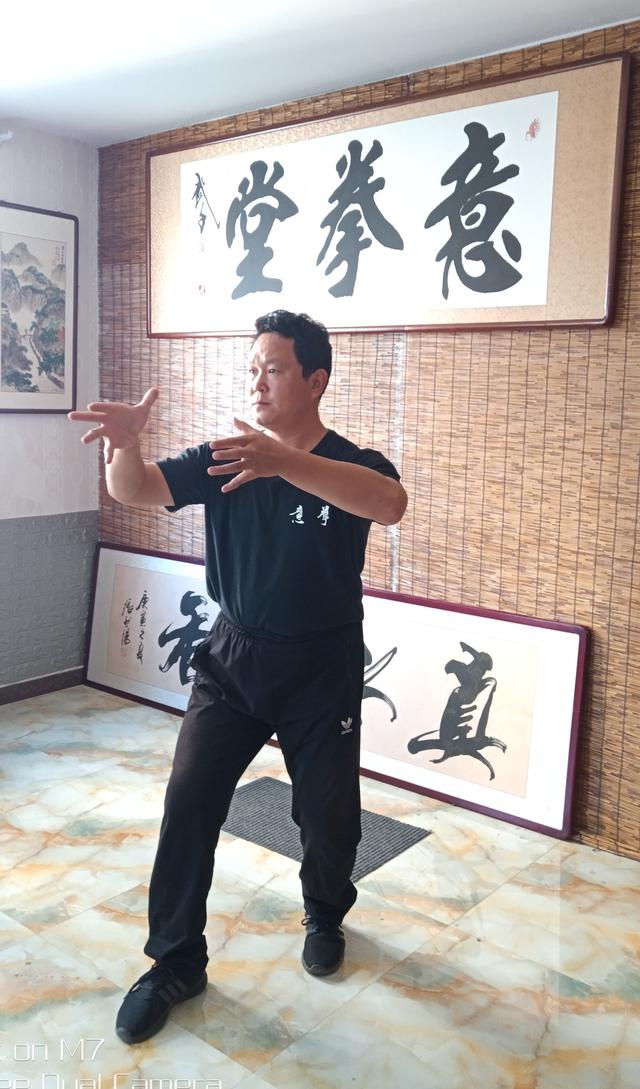
The author practices Taijiquan at the Taijiquan hall
An Introduction to Practical Taijiquan Footwork Fundamentals and Key Points
Xie Yongguang
I. Overview of Practical Taijiquan Footwork
Practical Taijiquan footwork is the soul of Taijiquan techniques. In principle, it emphasizes simplicity, practicality, flexibility, and stability. The training of practical Taijiquan footwork is different from the natural walking, running, darting, and jumping commonly seen in daily life. It is a highly technical type of footwork that maintains balance and allows for adjustments to the distance with the opponent at any time, enabling timely initiation of attacks and avoidance of opponent's attacks.
II. Characteristics of Practical Taijiquan Footwork
Practical Taijiquan footwork training is based on the foundation of 'hunyuan force'. Based on this 'hunyuan force', through friction step training, the sensitivity and coordination of the legs were enhanced, thus laying a solid foundation for the subsequent training of practical Taijiquan footwork. Taijiquan's practical footwork emphasizes simplicity, practicality, flexibility, and stability. Its most prominent characteristic is its focus on walking-style footwork, which is different from the jumping or running footwork seen in boxing and Sanda. Taijiquan's walking-style footwork is conducive to maintaining one's balance and conserving one's physical strength. At the same time, it is naturally flexible while retaining its power. Jumping footwork is flexible, but a forward jump can create opportunities for the opponent, and jumping footwork is less effective in conserving strength and maintaining a long-term tactical engagement with the opponent.
III. Detailed Analysis of Practical Taijiquan Footwork Methods
(1) Advance and Retreat Footwork
The footwork for standing, hand shape, and starting the walk are the same as the straight punch starting action. When advancing, the back foot steps forward, the front foot presses down, and the front foot slides approximately one foot in length. The back foot then follows immediately. (Figures 1-3)
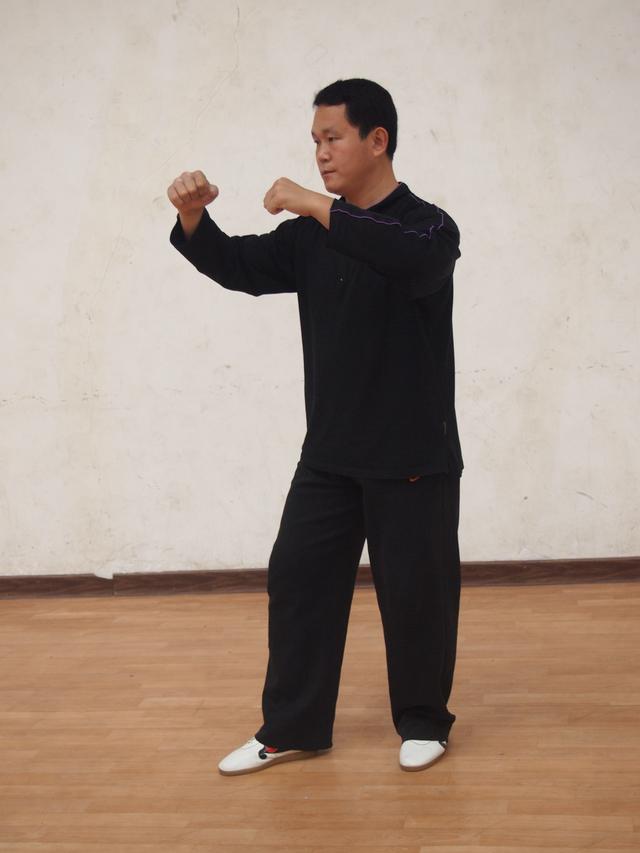
Figure 1
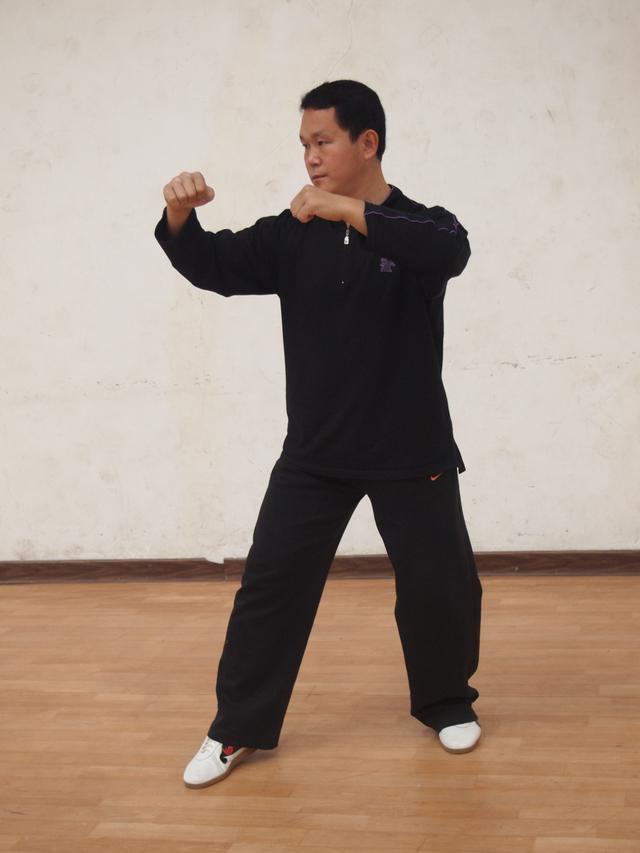
Figure 2
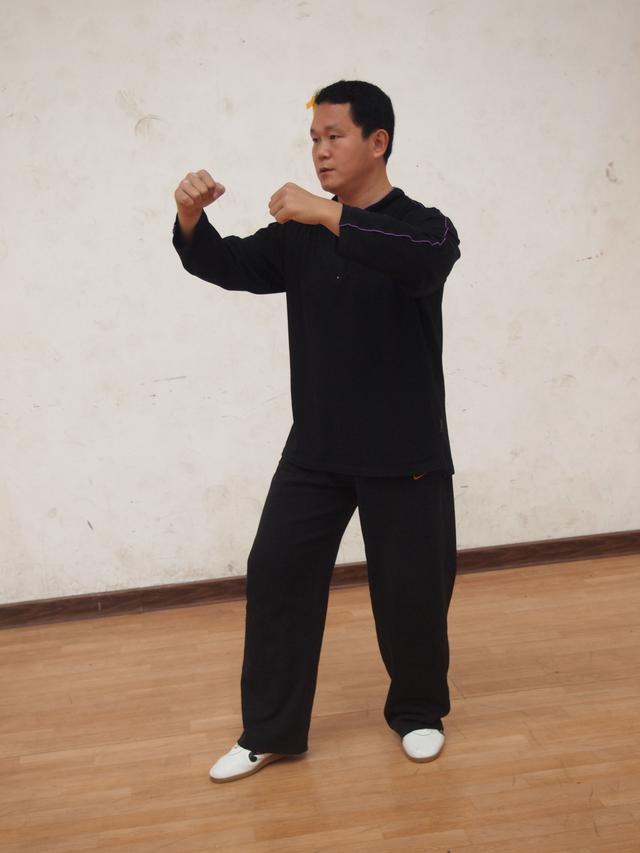
Figure 3
Subsequently, practice retreating footwork. The front foot presses down, pushing the ground backward to generate power, and the back foot follows the front foot, retreating approximately one foot in length. The front foot then follows the back foot, forming a preparatory stance. (Figures 4-6)
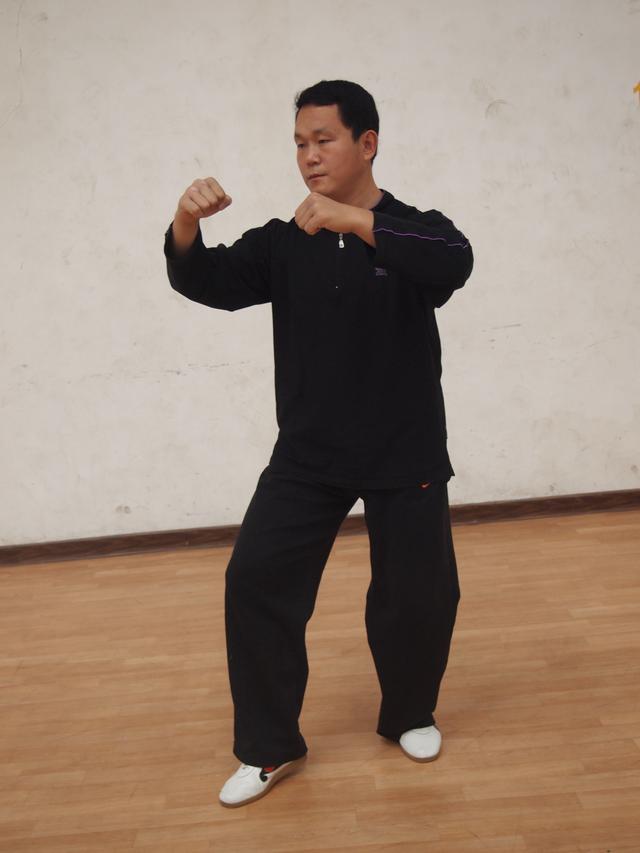
Figure 4
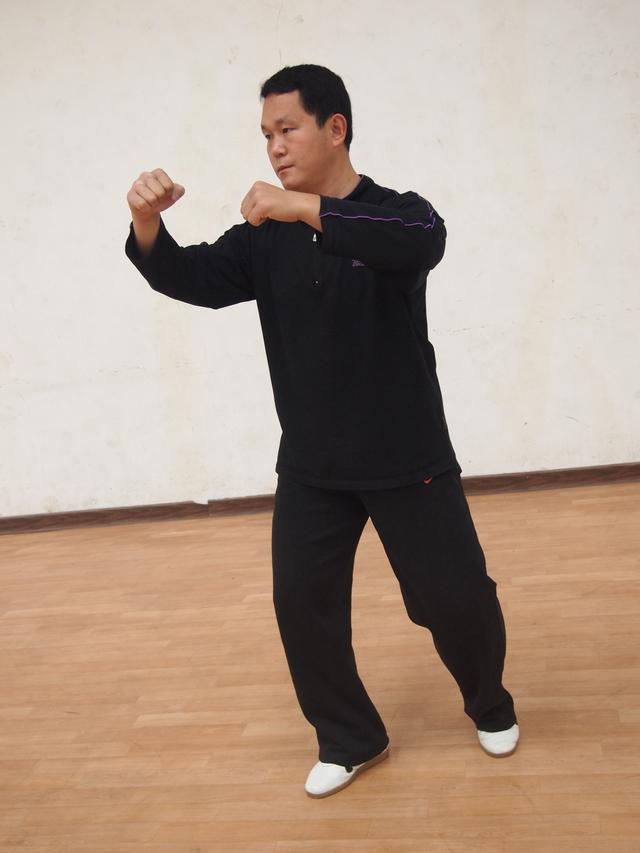
Figure 5
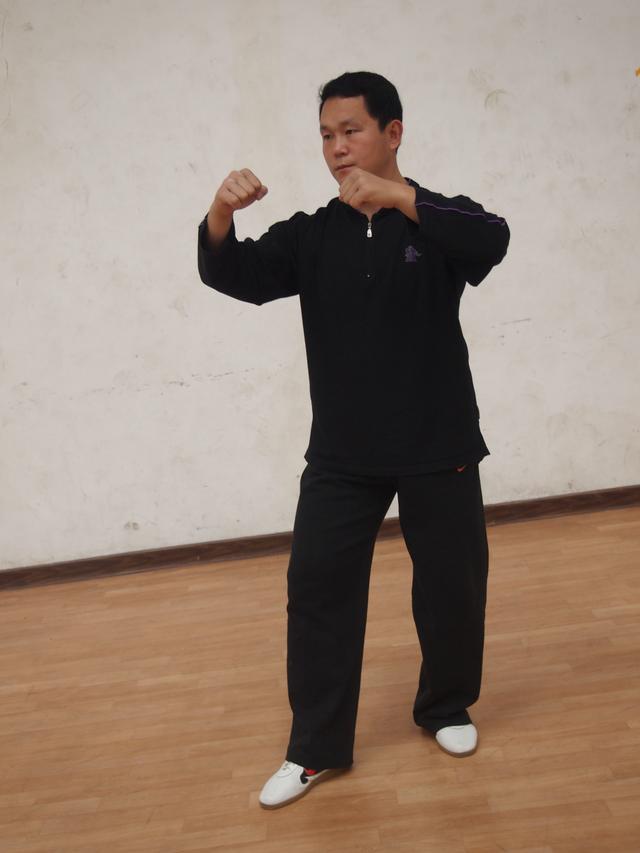
Figure 6
(2) Large Step Practice
The footwork for standing, hand shape, and starting the walk are the same as the friction step starting action. When advancing, the back foot suddenly steps down, the back knee bends, and the body and front foot strike forward, at this time the left foot is raised from the ground one or two inches, under the drive of the back leg, it slides forward approximately eight parts of a foot. The front foot lands steadily, and the back foot follows immediately, forming an eight-part step. (Figures 7-10)
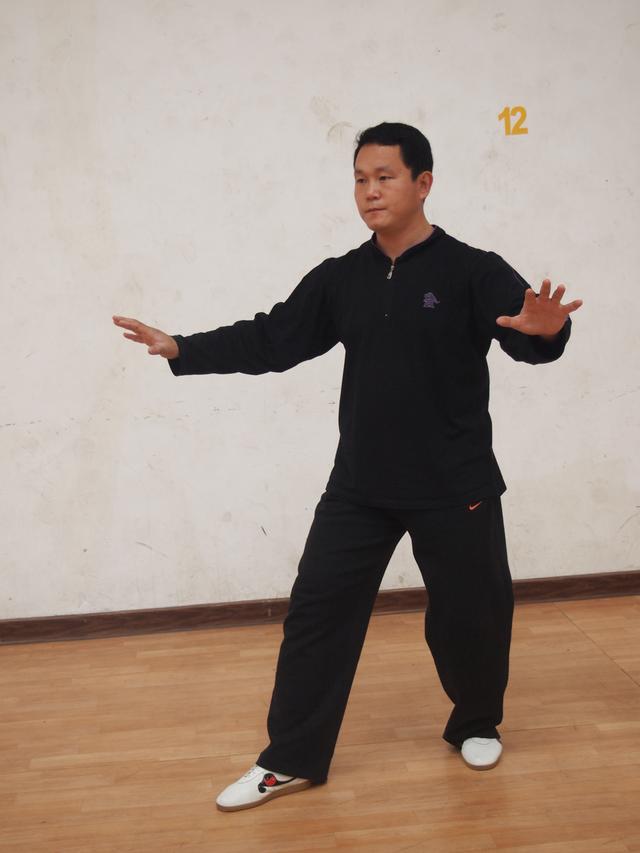
Figure 7
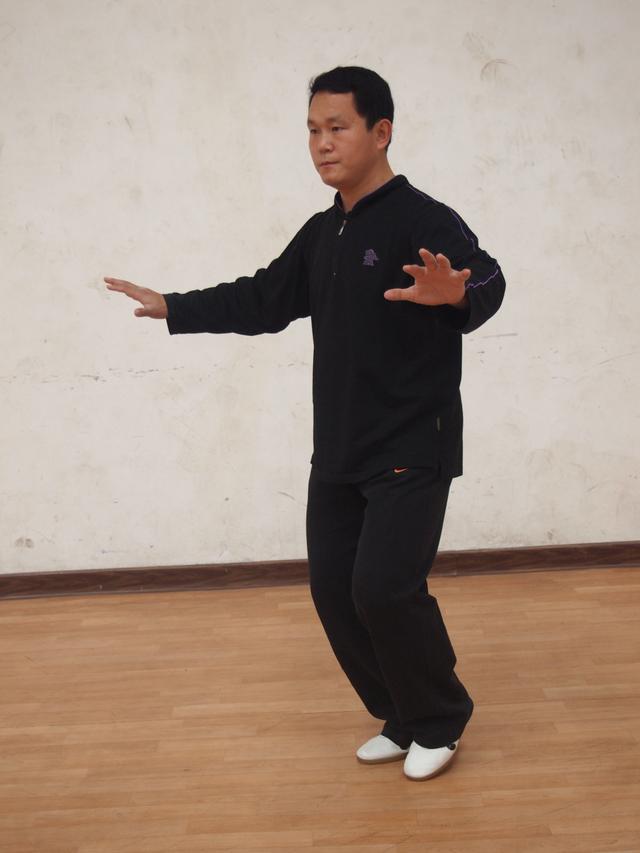
Figure 8
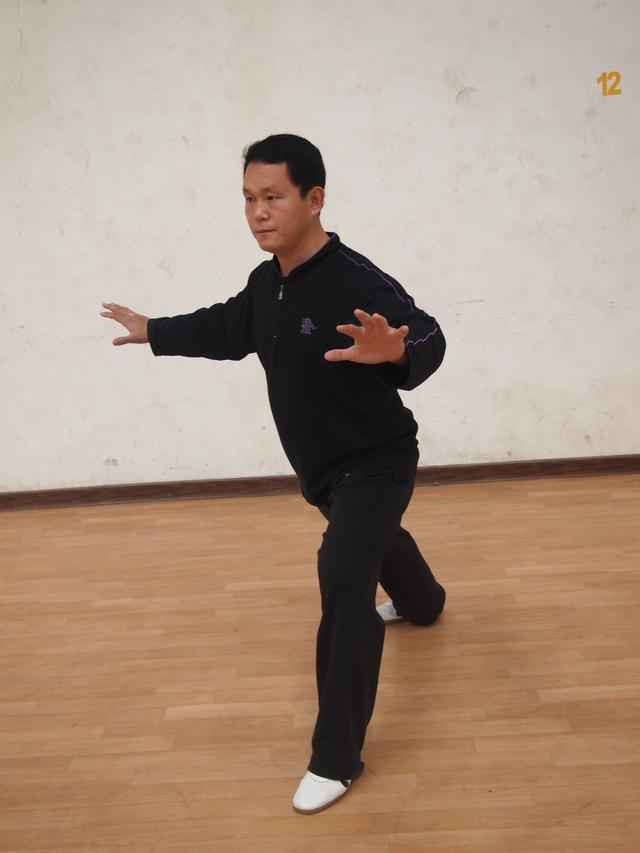
Figure 9
Figure 10
Next, practice advancing with a large step, and the route of the leg's travel and the mental activity are the same as the left-up step in the advance and retreat footwork. Its footstep distance on the foot landing is twice the distance of the right-up step in the advance and retreat footwork. (Figures 11-12)
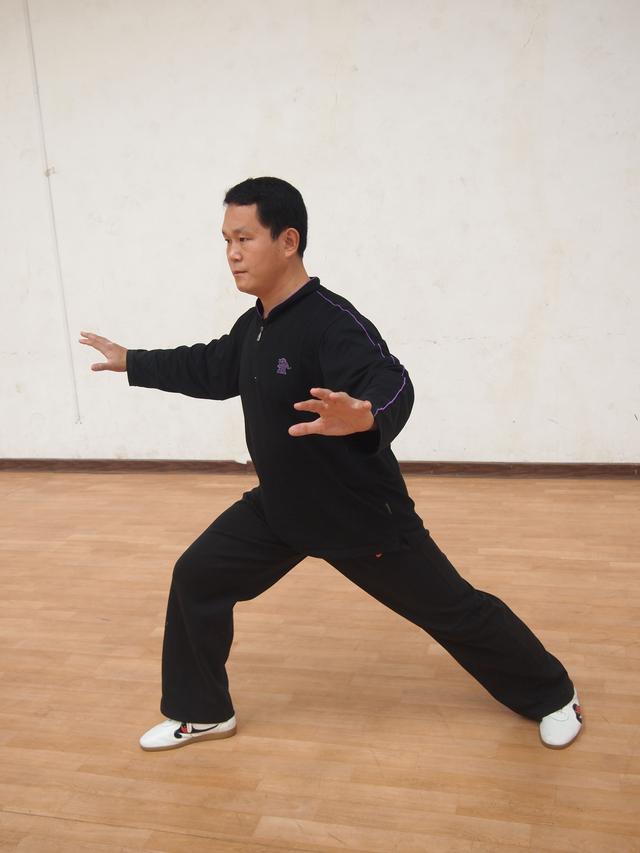
Figure 11
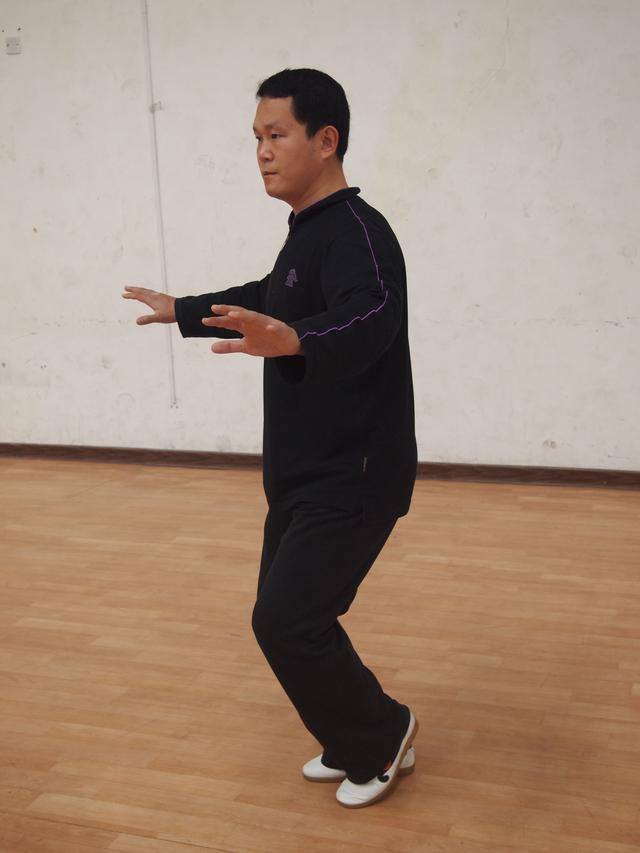
Figure 12
Practice retreating with a large step, and the action is the opposite of the advance step, and the requirements are the same.
(3) Circular Footwork
In a practical Taijiquan stance, the back foot suddenly steps down and presses forward, driving the body suddenly forward and outward, the front leg simultaneously rises and slightly separates from the ground, advancing forward and inward along the semi-step. When the front foot lands on the ground, it rotates clockwise. The back foot then follows, forming an eight-part step, thereby changing the initial face-to-face confrontation to 'attack with a diagonal punch'. In the front foot landing, the step and the punch are aimed at the opponent's face. (Figures 13-15)
Figure 13
Figure 14
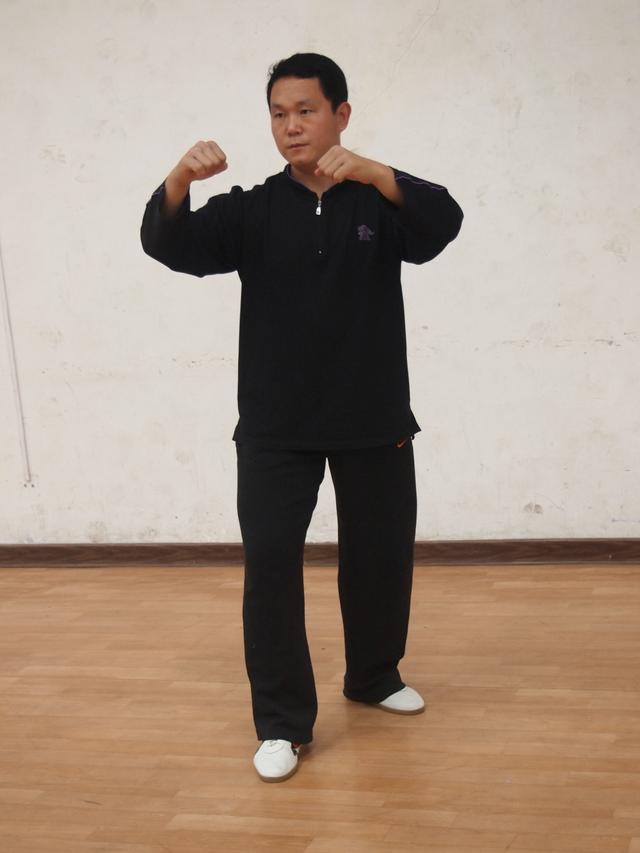
Figure 15
In practical combat, left-style and right-style circular footwork should be flexibly used, with the principle of encircling and striking with both hands, or can be used when the opponent initiates a step attack. I then use circular footwork to evade the direct attack and strike the opponent's face diagonally. If the opponent adjusts its footwork and increases the distance, I continue to hold my stance and perform circular footwork to strike the opponent. If the opponent changes the position of its footwork and creates a distance, I maintain my shoulder stance and perform circular footwork to strike the opponent.
(4) Horizontal Walk Vertical Strike
Both parties stand with an eight-part step footwork, with straight punch stance facing each other. The distance between the two sides is about 50 centimeters. First, the first party shifts its center of gravity to the right foot, then raises the left foot, performing a horizontal slide of about four or five sections, and the footstep distance is approximately twice the distance of the right-up step in the advance and retreat footwork. (Figures 16-17)
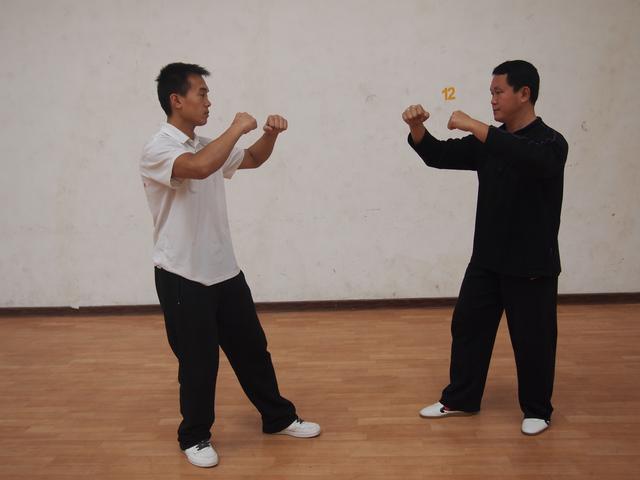
Figure 16
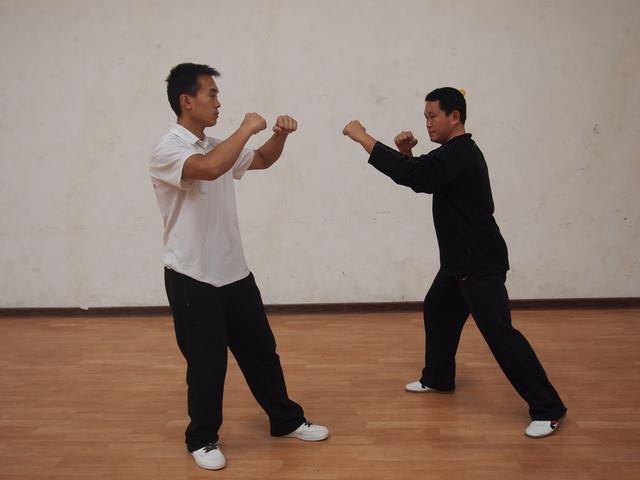
Figure 17
Subsequently, the first party performs a horizontal sliding step, and the footstep distance is the same as the advance and retreat footwork's left-up step. Its footstep distance on the foot landing is approximately twice the distance of the right-up step in the advance and retreat footwork. (Figures 18-19)
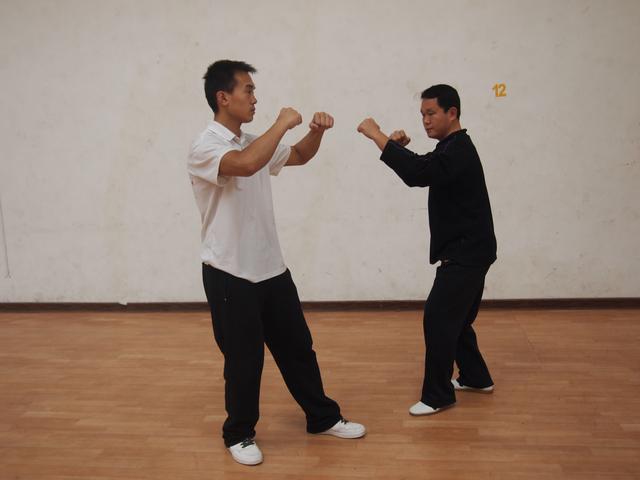
Figure 18
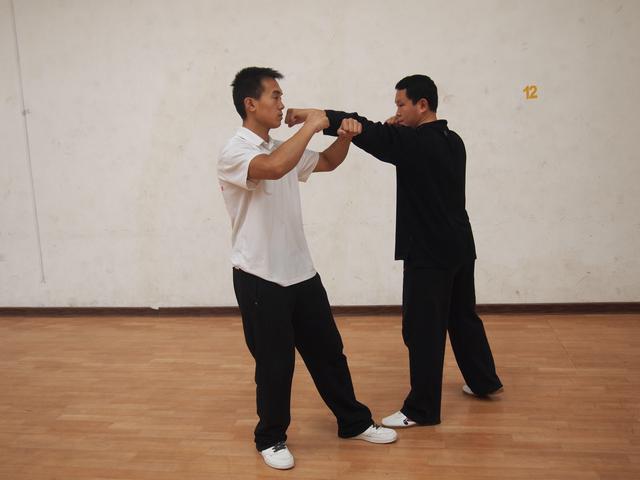
Figure 19
The role of Practical Taijiquan footwork in practical combat
1. It can effectively control the distance between itself and the opponent.
In combat, the distance between them is constantly changing, so to carry out effective attack and defense, it is necessary to rely on footwork to adjust the distance between oneself and the opponent at any time. Mastering the appropriate distance is crucial.
2. It can effectively maintain one's balance.
When moving, the target is more difficult to hit than a stationary target. At the same time, movement often leads to instability. Flexible footwork can be used for any kind of attack, and can also help maintain balance and conserve physical strength.
3. It can ensure the rapid launching of techniques.
The implementation of attack and defense techniques begins with footwork. If the footwork is slow, the hand techniques will also be slow. Therefore, fast and flexible footwork is essential for rapid punches and kicks.
4. It can effectively maintain one's physical strength.
In combat, flexible footwork is accurate and elastic. It can effectively control the initiative of combat, shorten the time spent circling with the opponent, and effectively maintain physical strength.
5. It can ensure the free conversion of footwork and effectively implement the tactical of multi-faceted attack.
Taijiquan's most significant difference from boxing and Sanda is that the footwork in the initial stance always revolves around the principles of attacking with both left and right hands, rarely appearing in two-sided attack tactics. This tactic's smooth implementation relies entirely on flexible footwork.
In summary, a skilled martial artist can use footwork to penetrate effective attack ranges and launch attacks, and then return to the original position, and can continuously use various footwork to prevent the opponent from having a fixed target, always grasp the initiative of combat.
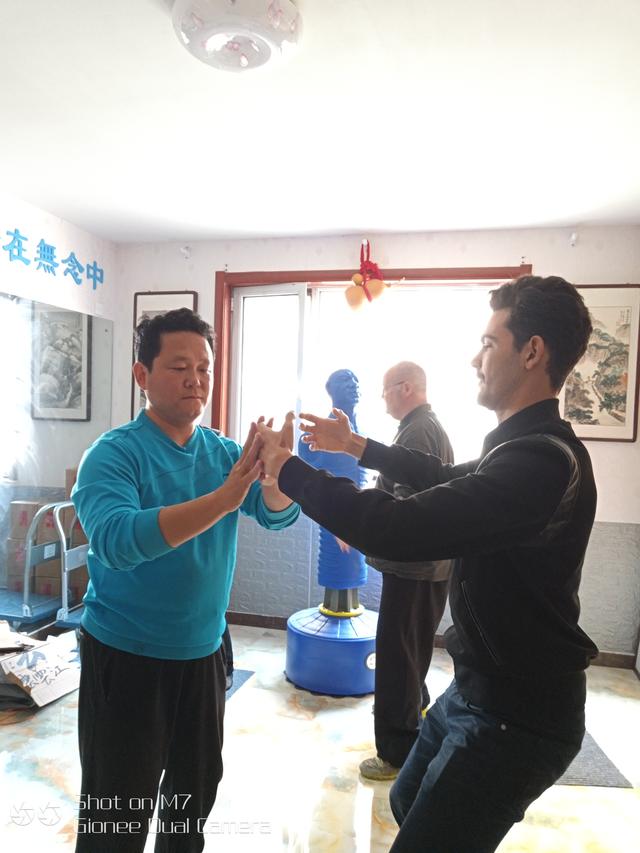
The author teaches foreign students at the Taijiquan hall
Practical Taijiquan Footwork Fundamentals and Key Points
Xie Yongguang
2
3
1
2
3
4
5
6