Professional players' backhand movements cannot be imitated casually, unless you have mastered this point.
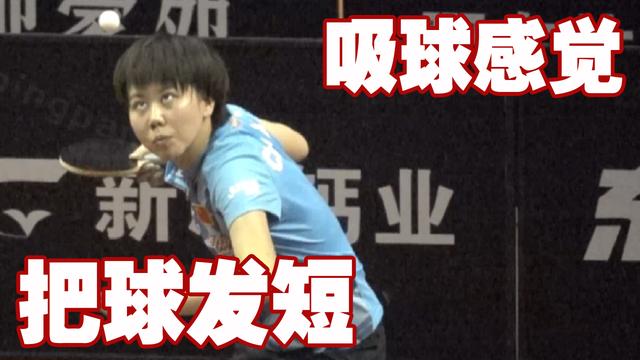
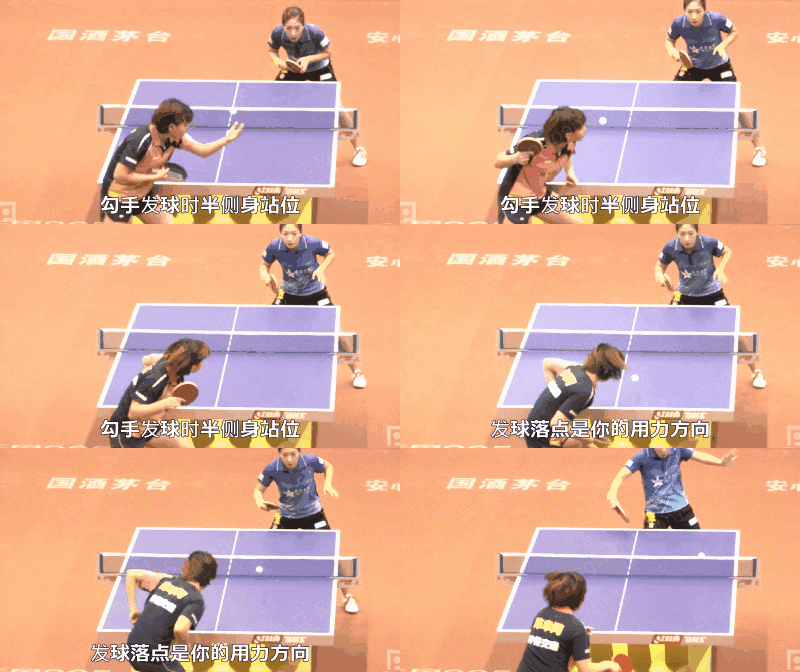
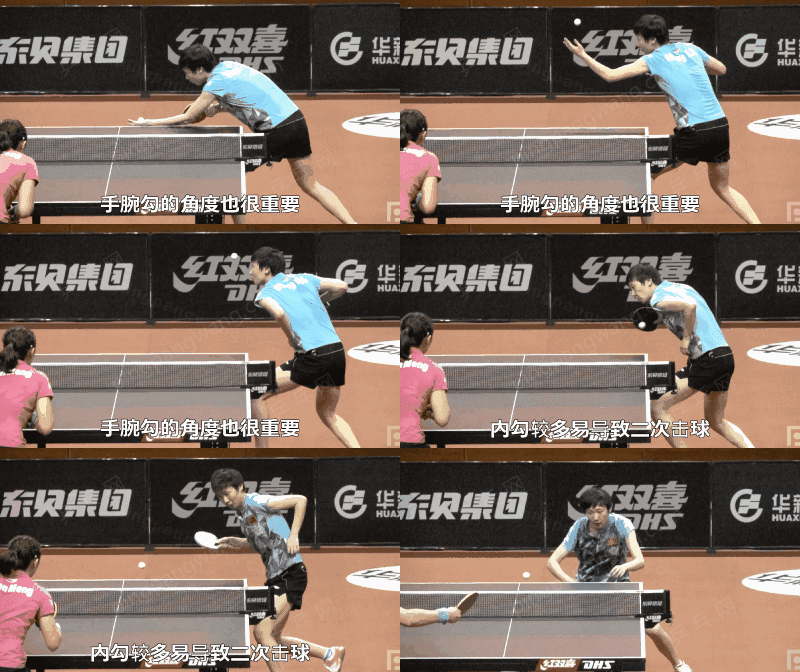
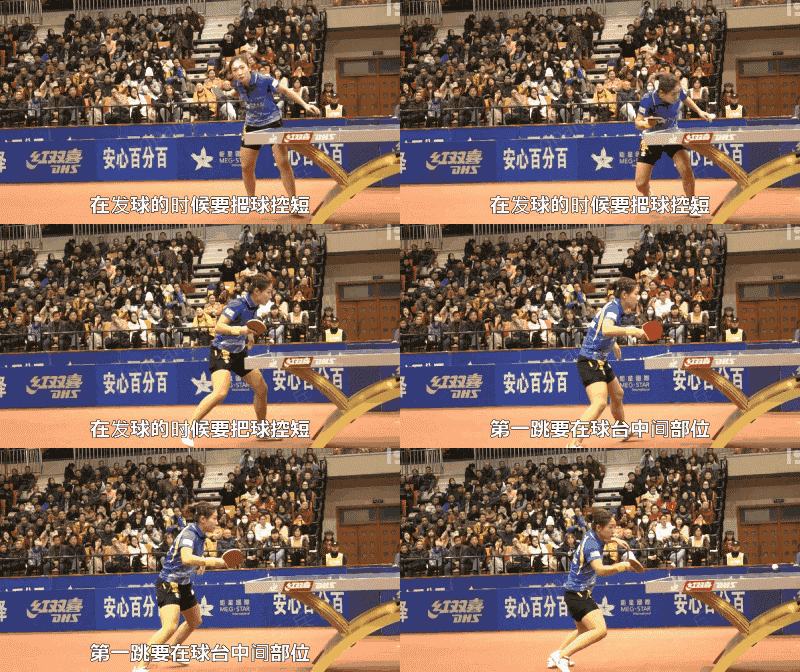
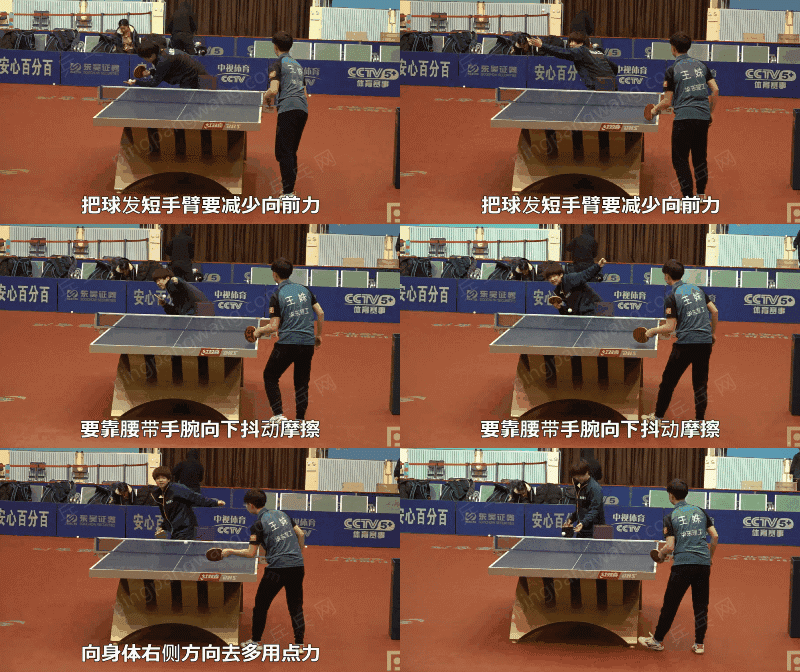
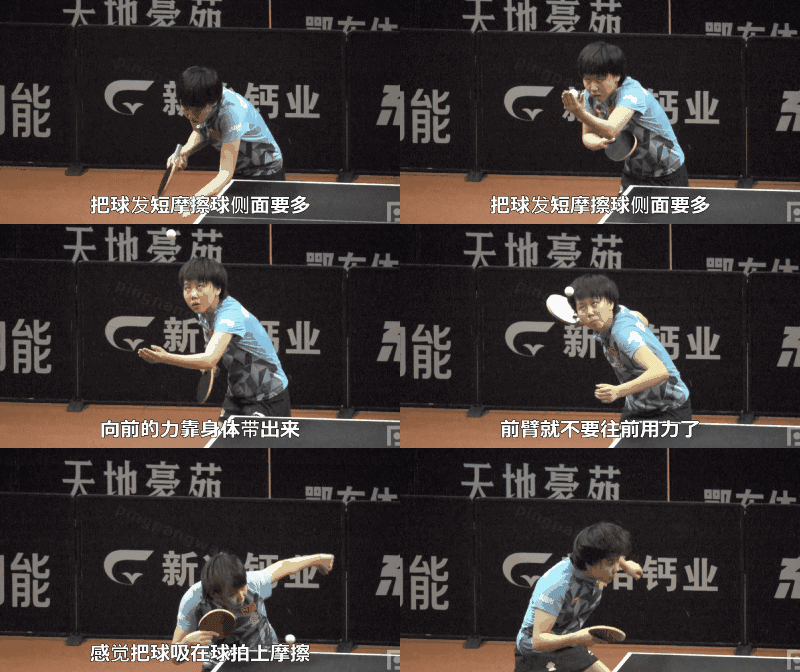
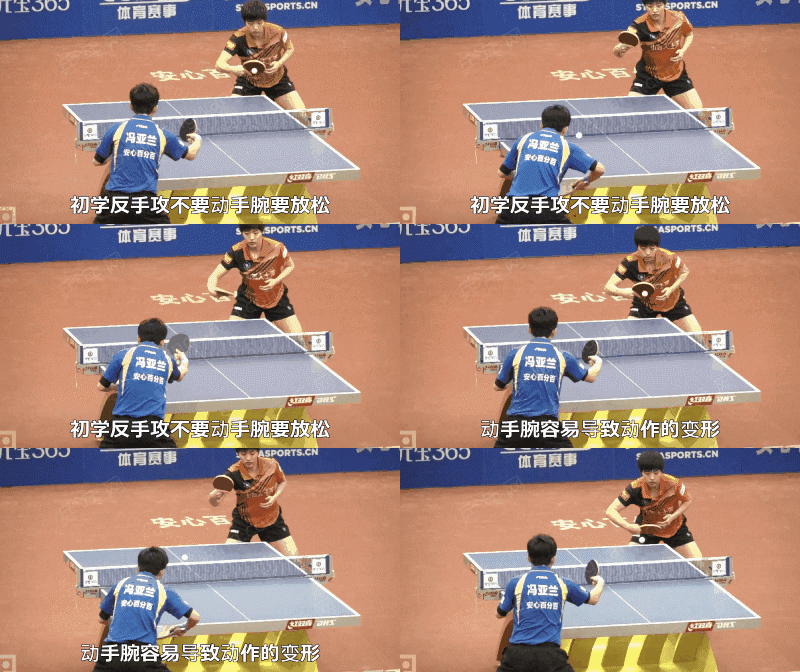
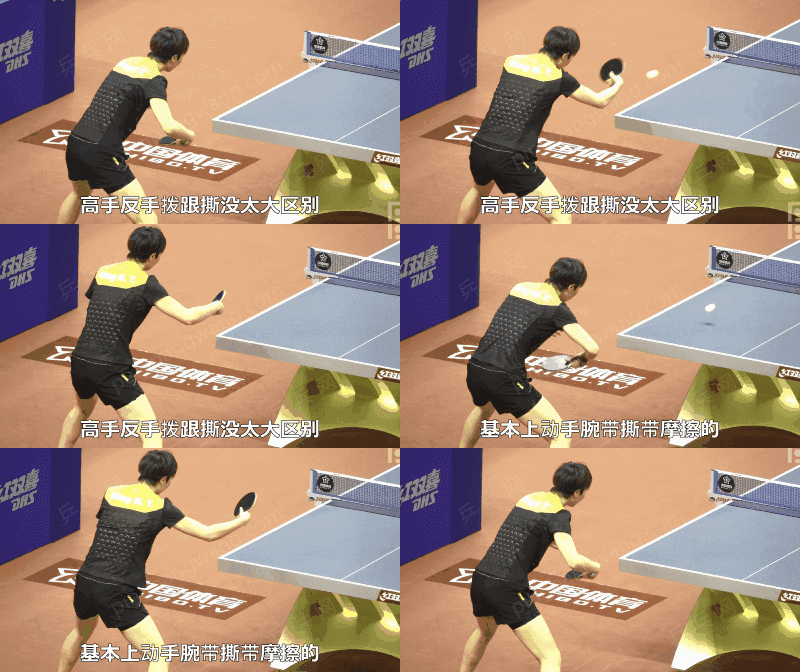
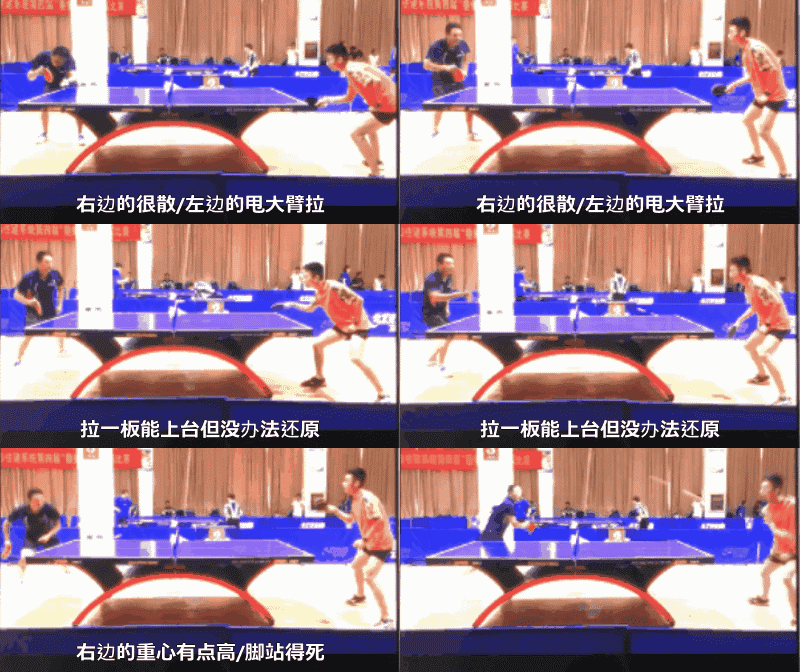
The player asked: How to control the length, spin (topspin and no spin), and placement with a hook-shot serve?Let's first talk about controlling the length. With a hook-shot serve, you stand with a semi-sideways position, and during the serve, you need to control the landing point. The most important thing is the direction of force – your body needs to rotate.For example, when standing on the side of your backhand, you should aim to serve to the diagonal line, that is, to the opponent's backhand side. When rotating, your arm should exert force towards that backhand side.Additionally, the angle of your wrist is also important. If your wrist is angled inwards, it's difficult to serve to the opponent's backhand. It will cause a sideways deflection. A large hook-shot also easily leads to a double hit, hitting the ball twice on the racket and causing a foul.How to control the length? When serving, try to keep the ball short – everyone should know that the first landing point should be as close to the center of the table as possible.When you want to send the ball short, you should minimize the force moving forward with your arm, mainly relying on your waist to shake the wrist and rub the ball, rubbing the ball thinner, you can use more force to the right side of your body, not forward, which will cause forward collisions, and the curve of the ball will be longer.If you rub the ball on the side, reduce the forward force, and let the forward force come from your body, when rotating, the forearm doesn't need to exert forward force. At this time, you can bring the ball to rub against the racket, so that you can reduce the forward collision and send the ball shorter.The player asked if you should use wrist force when serving to the backhand near the table?For backhand near the table attacks, wrist force is generally not necessary for beginners, just relax. Using wrist force can easily deform the movement, and can lead to wrist flapping.For high-level players, backhand (dā - a specific technique) is generally no different from (zhī - a tearing motion) – most semi-professional (professional) players don't use ; basically every board is a combination of tearing and rubbing, so his wrist will move more. The player should weigh his own level.Let's take a look at this player who says he wants to see his movements – it's a video of someone playing in a match.In this video, the two players' movements are scattered, belonging to amateur players. The whole movement is unstable, and the elbow and shoulder are exerting force. A single board hit can reach the table, but it cannot be reproduced later. The shift of the center of gravity is still done well, the feet are always moving, the orange-clothed player's center of gravity when receiving the serve is a little high, the feet are standing too stiffly, so when the ball comes, he doesn't react, and after it's pulled, he looks blank.Pingpongwang Liu Baosheng compiled