Split Squats: One of the Most Nutrient-Rich Exercises You Can Do
Most people do barbell squats after leg day, but there's another movement that's more nutrient-rich than fixed equipment—that movement is the split squat.
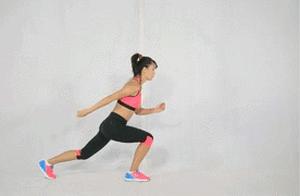
The split squat is a highly recommended movement because it's more functional and closer to the posture of walking or running. When performing a forward split squat, our lower body muscles will be more beneficial for walking and running, and when performing a backward split squat, our gluteus medius will be well stimulated. Most fitness exercises are completed within the sagittal plane, which limits the development of the gluteus medius. When performing a backward split squat, to maintain the balance of the body, the gluteus medius must always be in a state of contraction, so the split squat can not only train the leg muscles but also the gluteus medius, especially for people who have a sunken area between the gluteus maximus and gluteus medius, which makes the sunken area fuller, making the buttocks look better. All these benefits cannot be obtained by fixed equipment training.
Preparation before the action
Unlike the ordinary squat action, when performing the split squat, one leg is in a hip-hinging position, while the other leg is in a hip-extending position. Therefore, it is best to stretch the iliotibial band before performing this action to increase the hip-extending range. The iliotibial band is a combination of the iliacus and the quadratus lumborum. These two muscles help us complete the hip-hinging action. Because we are used to sitting in life and work, the iliotibial band is always in a shortened state. This state of shortened iliotibial band is too tense, which limits the extension range. Therefore, it is necessary to stretch the iliotibial band before performing the formal split squat to improve its activity. The stretching action is as follows.
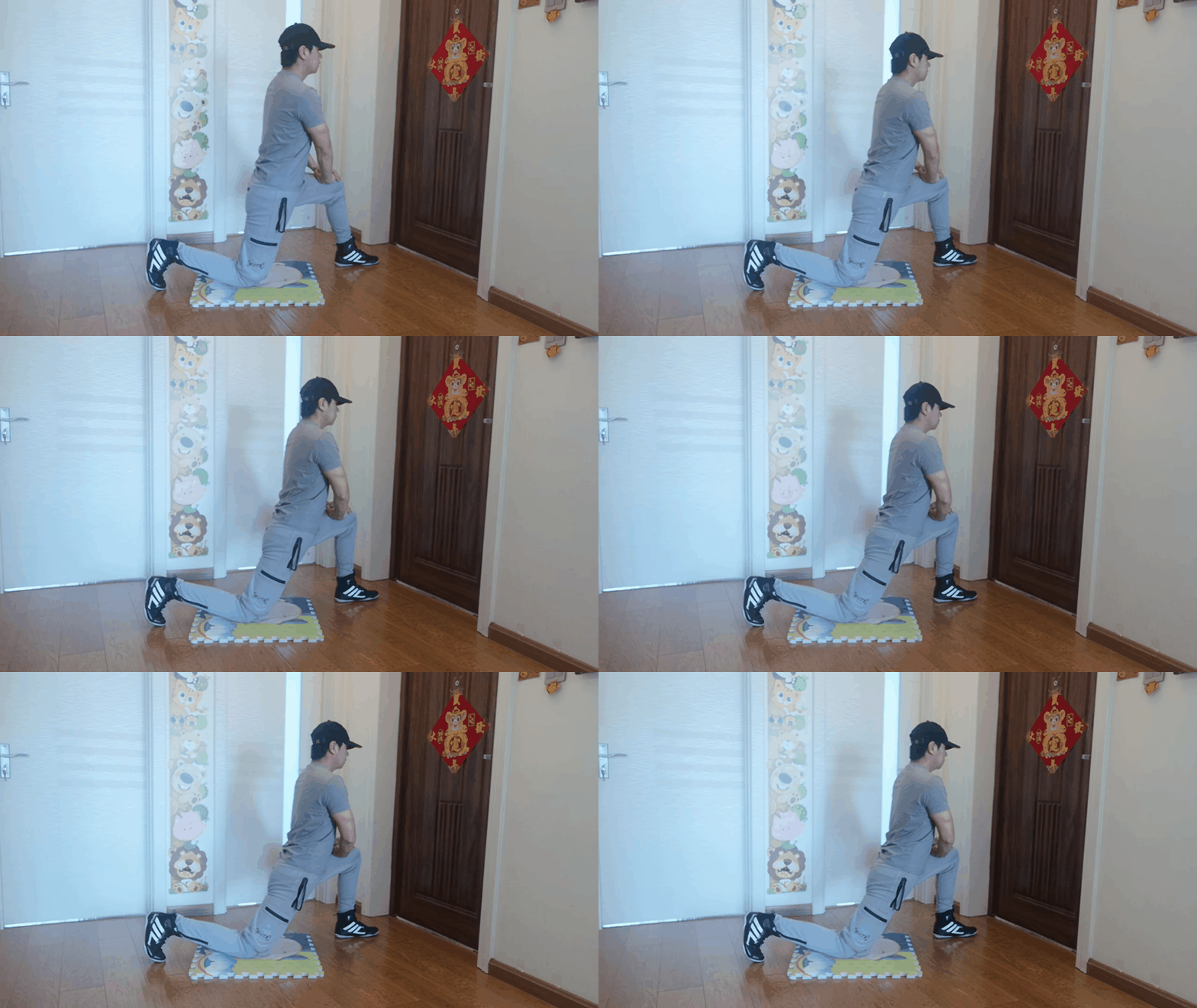
Action technique:Place your knee on the ground, and keep the distance between the heel of the front leg and the knee of the rear leg a little larger, then place your hands on the knee of the front leg to shift the center of gravity forward to stretch the iliotibial band of the rear leg. Each leg should be stretched for 2 sets and 15 seconds.
Action demonstration
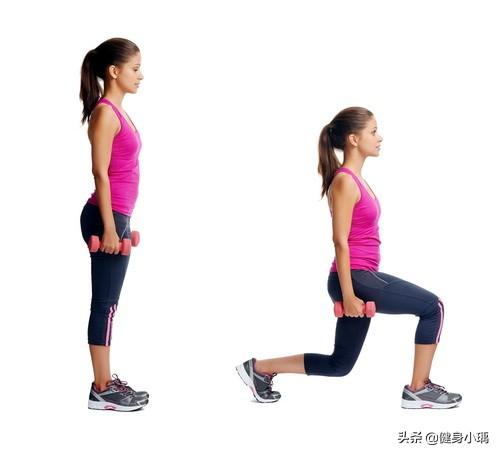
Action process:Hold dumbbells naturally, and step out with one leg forward, then squat down, ensuring that the little toe of the front leg is vertical to the ground, and the knee angle of the front leg is 90 degrees, and the knee angle of the rear leg is slightly greater than 90 degrees, keep the upper body upright, and concentrate the center of gravity between the two legs, after squatting down, focus on the front leg, regardless of the state of the rear leg, this is the first half of the action.
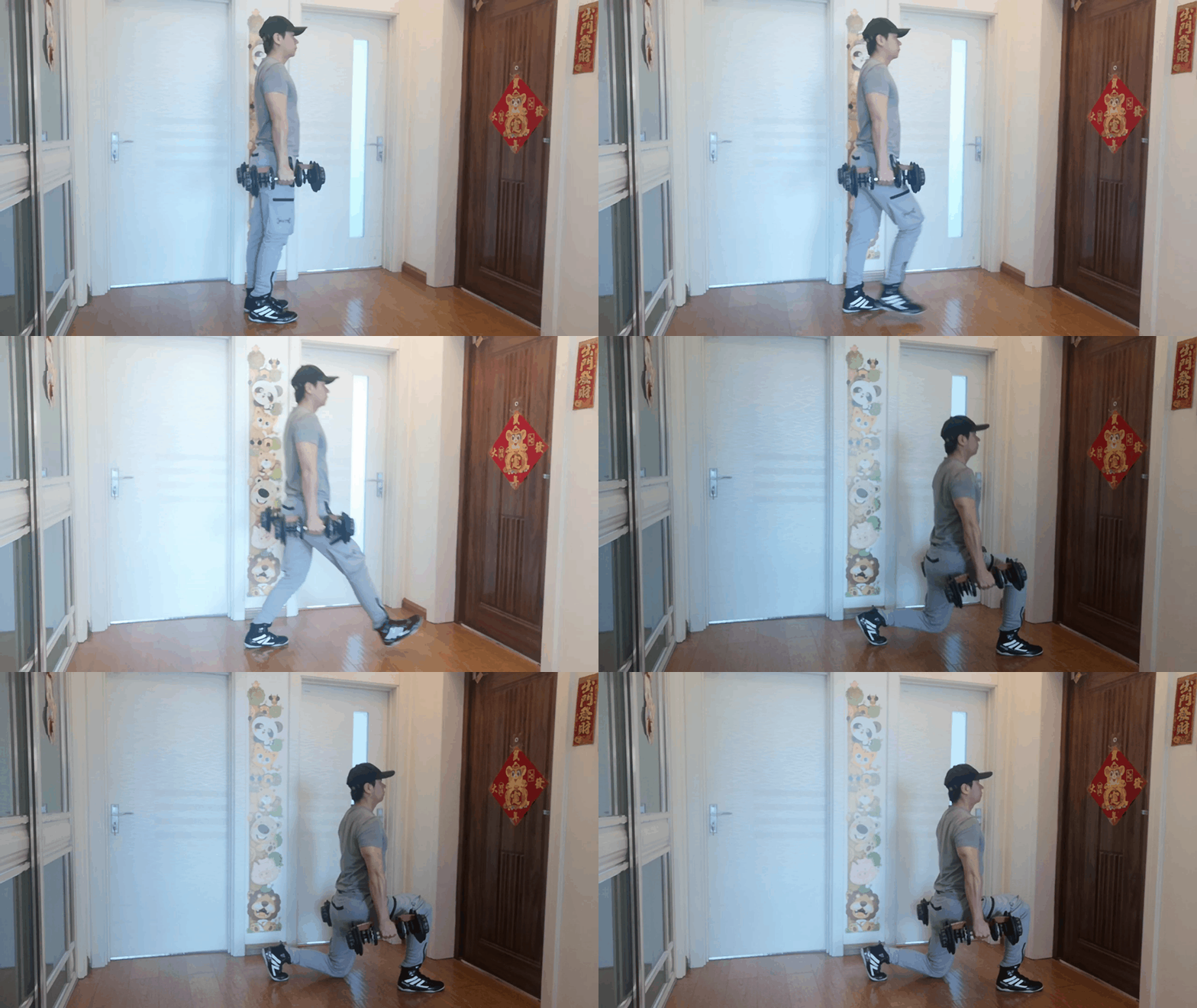
Starting action
When standing up, let the quadriceps of the front leg and the gluteus maximus work together to stand up the body. After standing up, don't rush to step forward with the rear leg, but first let the two legs stand stable, and then move the rear leg forward, this is the main process of the action.
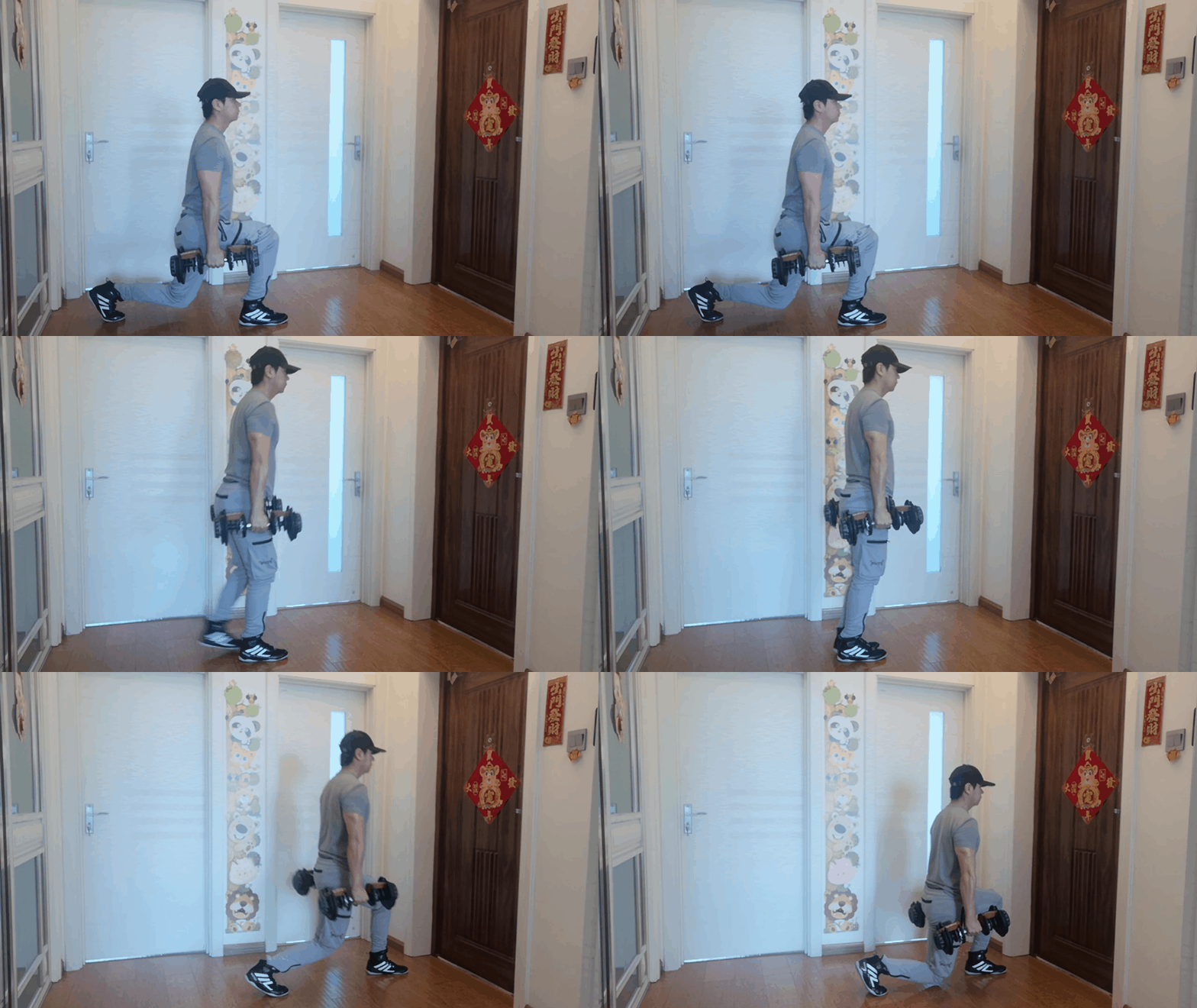
Action up
Common problems
Although this action looks very simple, it is still difficult to do. Here I will analyze these problems in detail.
Knee overextension
Knee overextension is a common mistake when performing a split squat. The main reason for this error is that the step is too small or too large. If the step is too small, when we naturally squat down, the knee will naturally overextend. If the step is too large, our upper body will lean forward due to inertia, which will give the knee a forward-extending force. Knee overextension will make the little toe and the ground not vertical, which will increase the pressure on the knee. Therefore, when performing a split squat, we should try to keep the distance between the stepped-out little toe and the ground vertical.
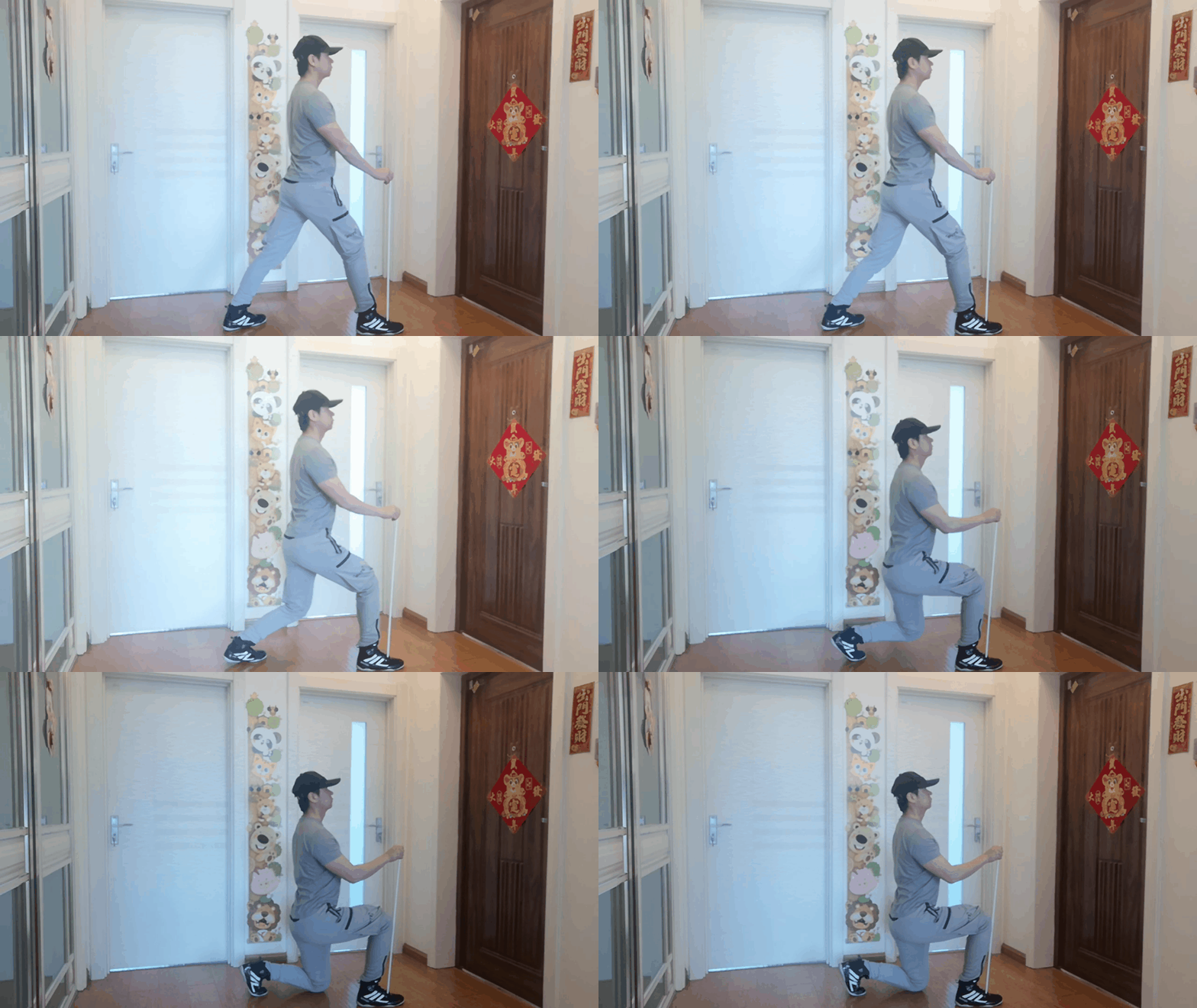
Correct the action
The way to correct this is to do several sets of original ground split squats before doing the formal set, and use a straight rod as a correction tool. The main way is to squat down, so that the knee of the front leg is exactly touching the rod, and the rod is still vertical when touching. Do several times before the formal group, which can help you find the feeling of knee only bending to 90 degrees. Doing a few sets of original ground split squats before the formal group can help you find the feeling of only bending the knee to 90 degrees.
Don't run straight
Another common problem in the split squat action is that the trainer doesn't move straight. The walking trajectory is not straight, but oblique. The reason for this error is that when we step out the leg, we will step it towards the oblique front, not straight ahead. The reason why we do this is that when we step the leg towards the oblique front, the area between the two legs formed will be larger, which is an instinctive action to make it easier to fall, but if we train in this way, it will deviate from the original intention of the split squat. The purpose of the split squat is not only to further stimulate the leg muscles, but also to create instability factors for walking action to strengthen the lower limb muscles, and to stimulate the gluteus medius.
If you are stepping out the leg in a split squat, it will not destroy the stability of the walking action, and lose the value of functional training of the lower limb muscles. Therefore, performing an oblique split squat will greatly reduce the overall nutritional value of the action.
Solve this problem is still to do a few sets of original ground split squats before formal training, and use a PVC rod to stand in the middle of the two legs as a reference, then perform the original ground split squat action with the rod as a reference. The direction of the stepped-out leg should be the same as the direction of the rod. In the beginning, you can use the downward looking method to correct the direction of the front leg stepping out. After establishing the sense, you can lift your head to do.
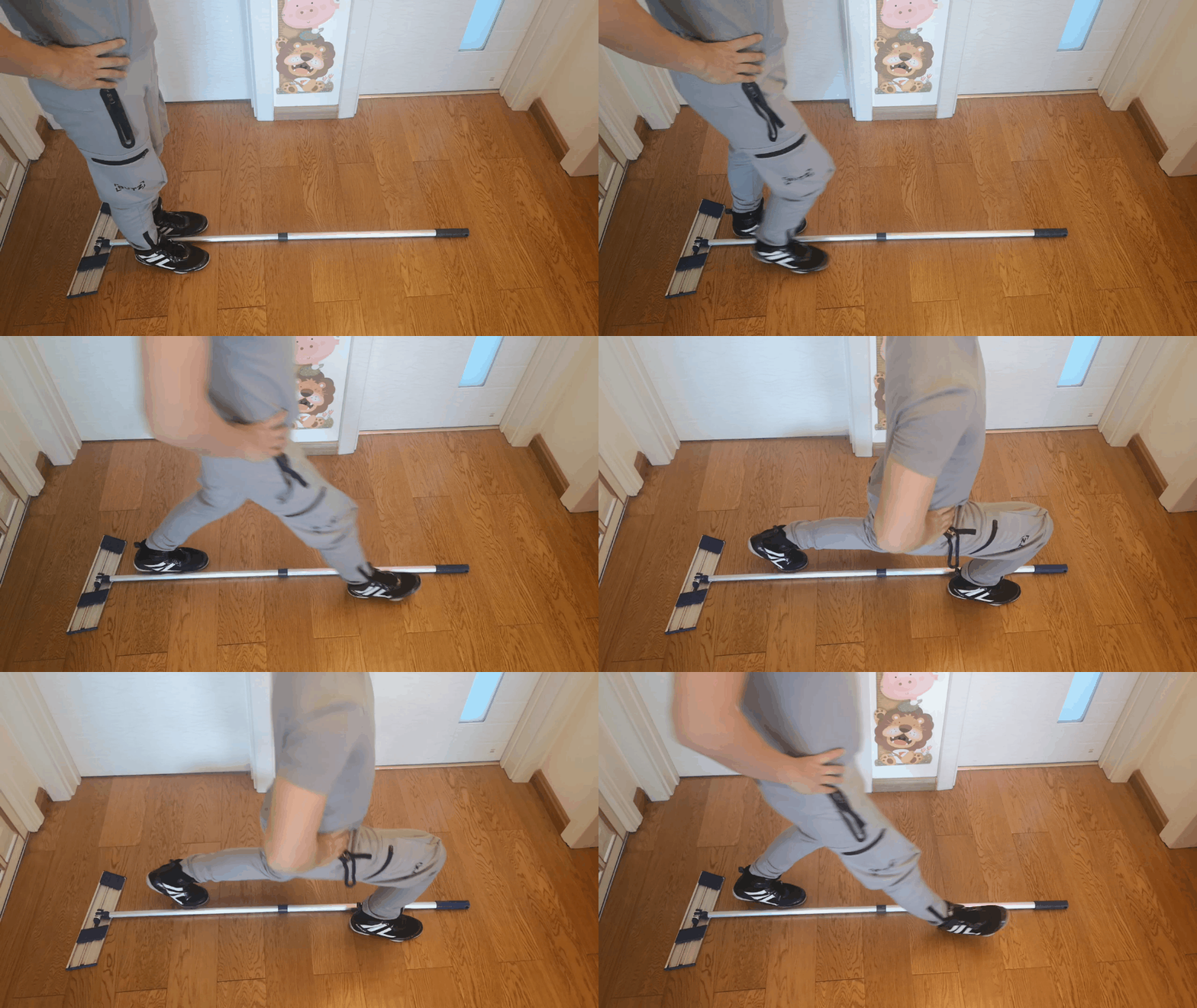
Inner knee angle
Another problem in the split squat action is that the pelvis of the trainer is not horizontal. The main reason for this error is that the quadriceps of the trainer are too fatigued, and they have no strength. So after stepping out the front leg, the front leg will involuntarily bow inward. This will make the pelvis tilt, which will reduce the weight carried by the quadriceps. After the back leg bows inward, our pelvis will become tilted. Although we use this state of training, we don't feel particularly uncomfortable. But the tilt of the pelvis will change the posture of the upper body. The pelvic end is connected to the spine, and the spine is supported by the entire shoulder. If your pelvis tilts, the spine will also bend. If the spine is bent, our shoulders will also tilt. This is a chain reaction that damages the posture.
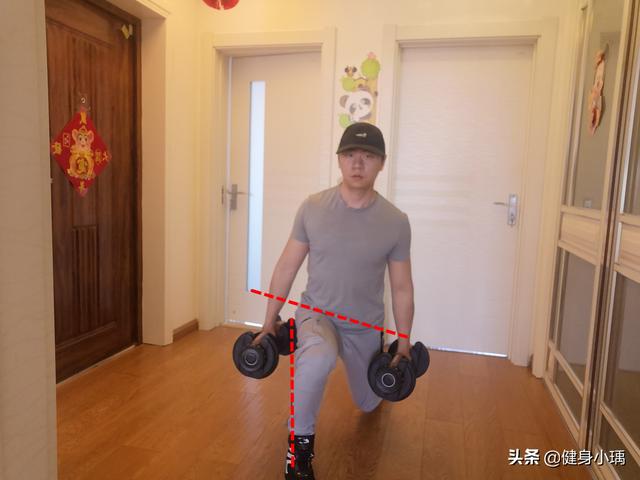
Therefore, when performing a split squat, if you have the phenomenon of the back leg bowing inward, I suggest reducing the weight or stopping for a short rest. If you like to bow the back leg in a good state, this means you have a knee-in problem. The way to solve this problem is to use a resistance band in the original ground split squat training to help you enhance the ability of the leg to extend outwards. The following action is as follows.
Action process:
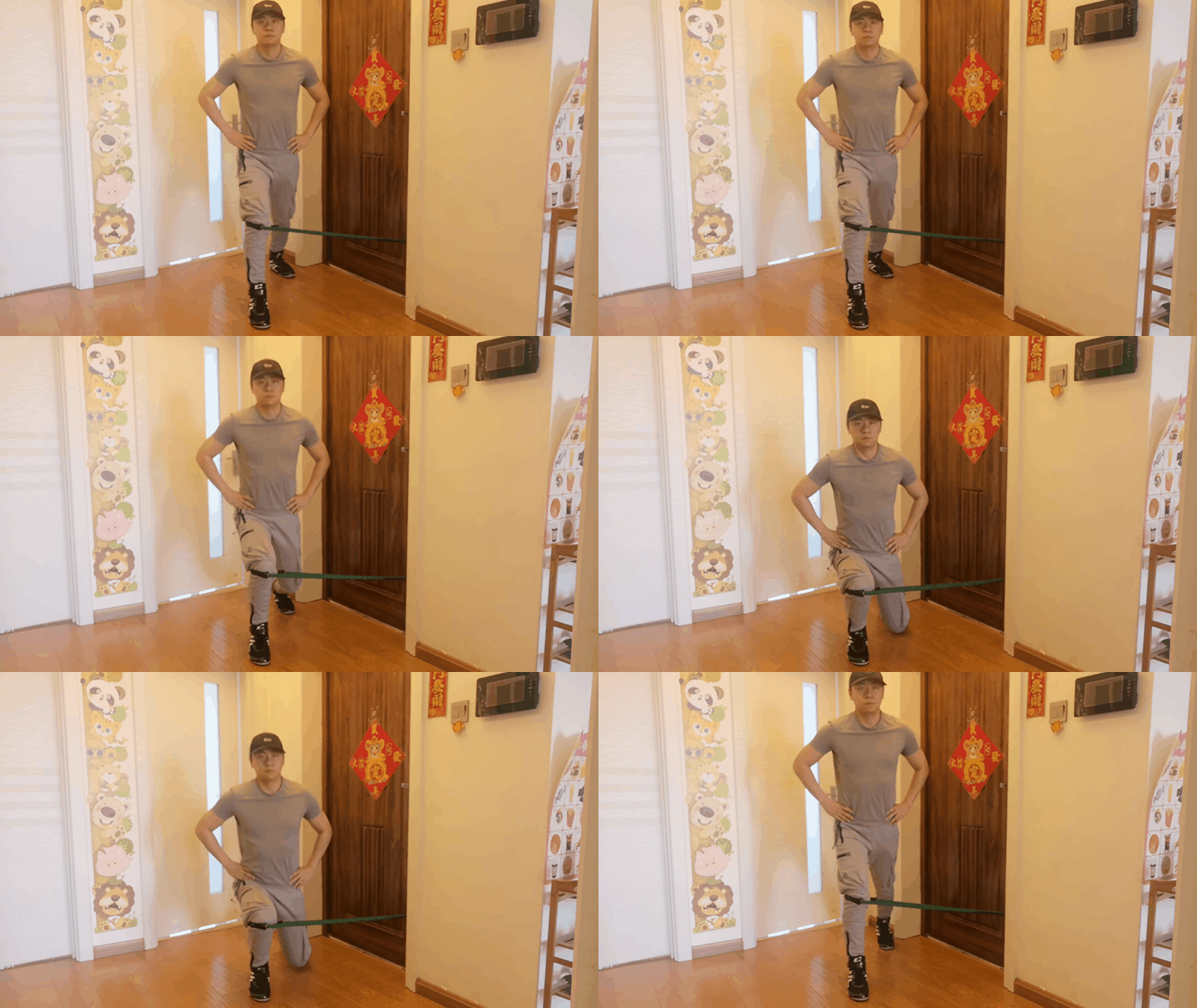
Only perform a single leg forward original ground squat action, and then attach a resistance band to the leg that is stepped forward, so that the elasticity of the band is in the same direction as the direction of the back leg bowing inward, so that when you squat, you can't help but extend the leg outwards. Through this training method, you can enhance the ability of the leg to extend outwards, thereby solving the problem of inner knee angle.Action variations
There are two variations of the split squat. The first is to lean forward while squatting, this is a training method that mainly focuses on the gluteus maximus. When performing a split squat, leaning forward focuses on extending the gluteus maximus. Pay attention to when doing this action, it is only to lean forward the upper body, try to keep the little toe vertical.
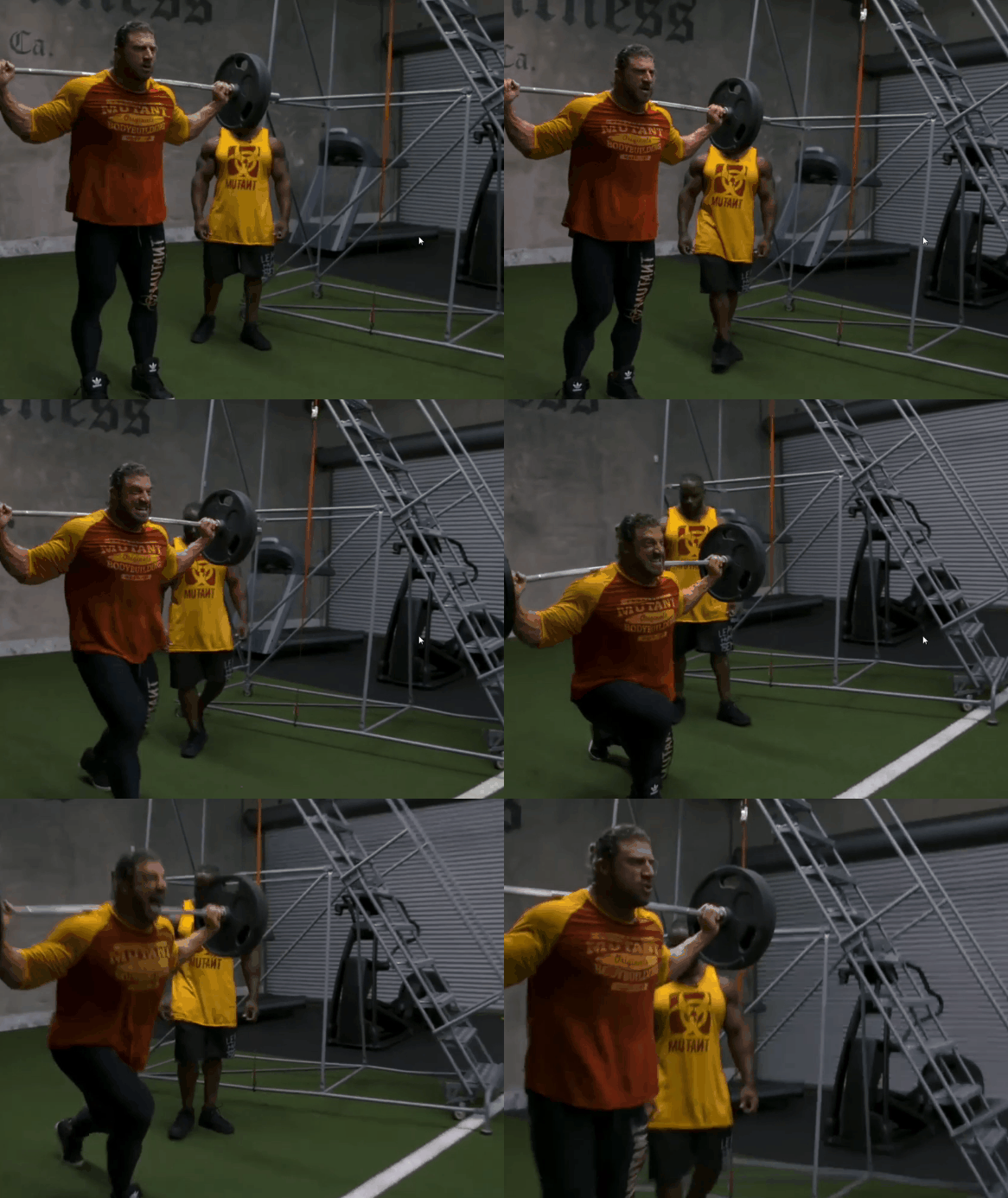
The other action is to lift the barbell and perform a split squat. When performing a split squat with dumbbells, our hands naturally hang down. Then when stepping forward, our hands will naturally shake, which can distort the action, and if the weight of the barbell is too large, the time for performing a split squat will be limited because we cannot hold the dumbbell.
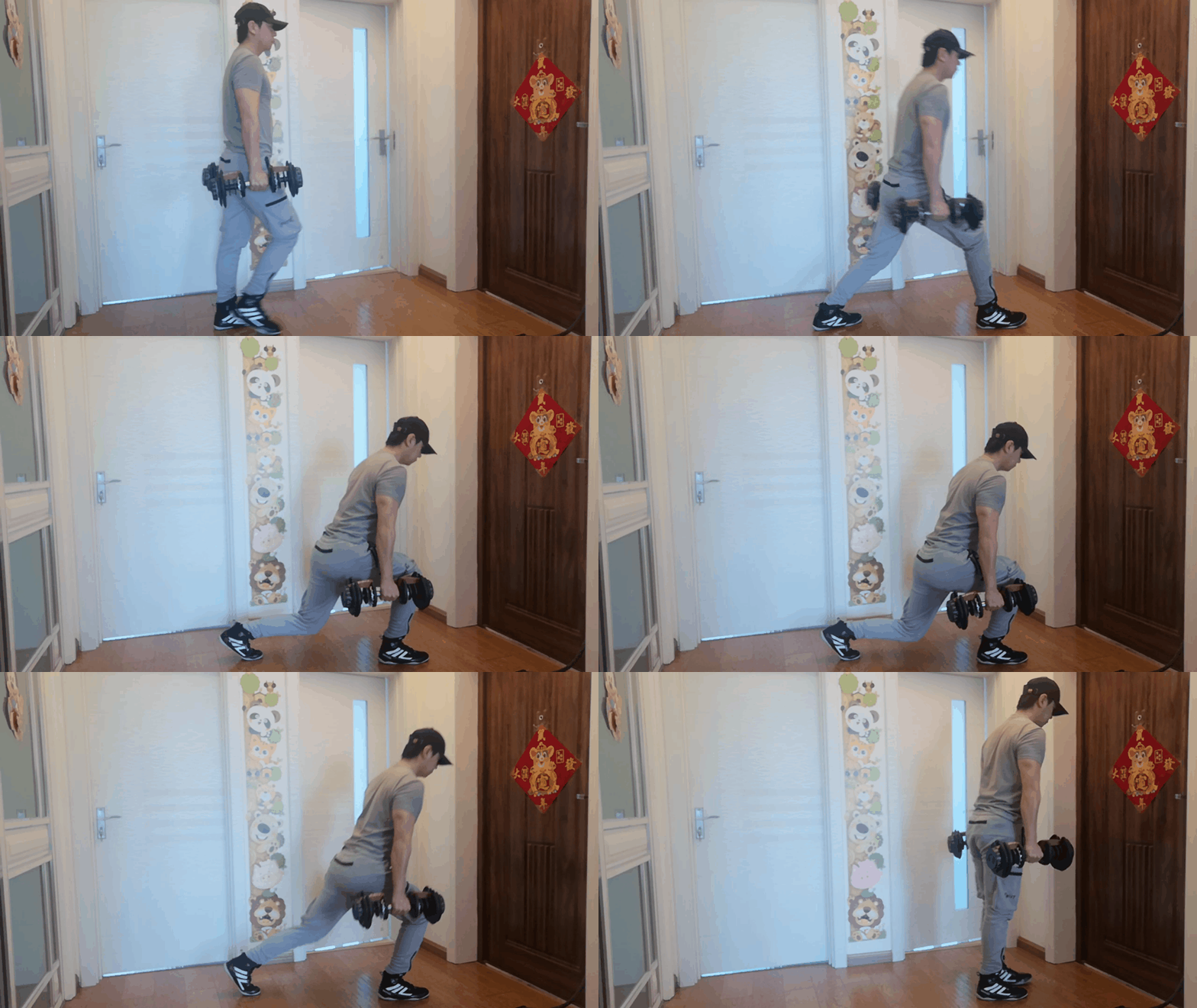
Action process:
Hold dumbbells naturally, and step out with one leg forward, then squat down, ensuring that the little toe of the front leg is vertical to the ground, and the knee angle of the front leg is 90 degrees, and the knee angle of the rear leg is slightly greater than 90 degrees, keep the upper body upright, and concentrate the center of gravity between the two legs, after squatting down, focus on the front leg, regardless of the state of the rear leg.
3PVC
PVC