Methods for Lumbar Disc Herniation with Specific Exercises and Precautions
Lumbar disc herniation traction therapy is a method that uses the relationship of mechanics to achieve the therapeutic purpose by applying special traction devices. It has the effects of relaxing the waist and back muscles, restoring the normal curve of the lumbar spine, etc.
Shift traction
Below, we will introduce several methods, you can choose to exercise according to your own situation, as long as you persevere for a long time, any method will be effective.
Method 1: Knee Hug Method
The patient takes a supine position, with both legs together and knees bent, while using both hands to hold both knees, and then try to bring both knees as close to the chest as possible. During this process, be careful not to raise the head and neck with the movement, otherwise it will not only reduce the intensity of abdominal muscle exercise, but also may injure the neck. Maintain this posture for 10-15 seconds and relax, repeat 10-12 times, 2-3 times a day.
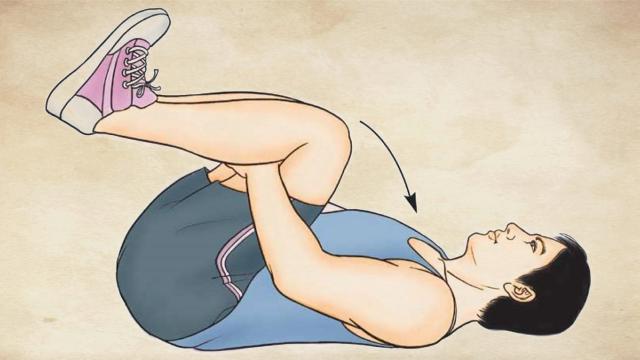
The patient lies supine, with legs together and knees bent, and holds both knees with both hands, trying to bring both knees as close to the chest as possible, maintaining the posture for 10-15 seconds and relaxing, repeating 10-12 times, 2-3 times a day.
Method 2: Arch Back Method
The patient is in a quadruped position, with both hips and knees bent at 90 degrees on the bed, using both hands to support the bed surface, then slowly lower the head while contracting the abdomen to make the back gradually rise up, maintain for 10-15 seconds and relax, then repeat the next round of action. Repeat 10-12 times, 1-2 times a day.
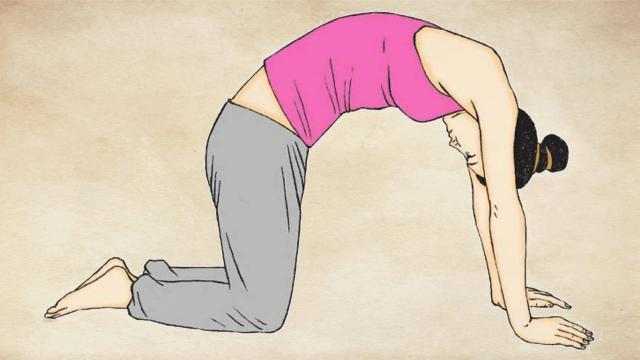
The patient is in a quadruped position, using both hands to support the bed surface, slowly lowers the head while contracting the abdomen to make the back gradually rise up, maintaining the posture for 10-15 seconds and relaxing, repeating 10-12 times, 1-2 times a day.
Method 3: Arm Closing Technique
The patient takes a supine position, with both arms raised on both sides of the body at the same height as the shoulders, with both legs straight and together, with both feet slightly outward. Then, move the head and upper body to the right side while using the left hand to forcefully slap the right hand, maintaining the state of combined hands for about 5 seconds, then restore the initial position, then move the head and upper body to the left side, using the right hand to slap the left hand. Do this alternately 10-15 times, 2-3 times a day.
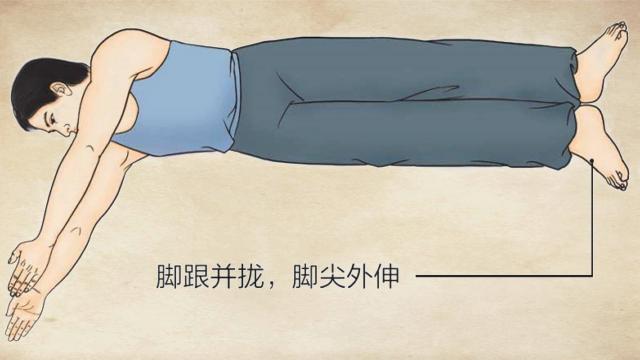
The patient lies supine, with arms raised at the same height as the shoulders, with legs straight and together. Moves the head and upper body to the right side while using the left hand to forcefully slap the right hand, alternately doing 10-15 times.
Method 4: Knee Bend Rotation Method
The patient takes a supine position, with both arms raised on both sides of the body at the same height as the shoulders, with both legs straight and together. The patient, with the assistance of family members or self-doing, performs the bending of both knees, while keeping both knees together and the soles of the feet straight, then slowly turns to the left side of the body to lay down on the bed, and the head also follows the turn to the left side, maintaining for 2-5 seconds, then in the bending state of both knees, turn to the right side of the bed surface, during which the hips should also rotate. Do this alternately 12-15 times, 2-3 times a day.
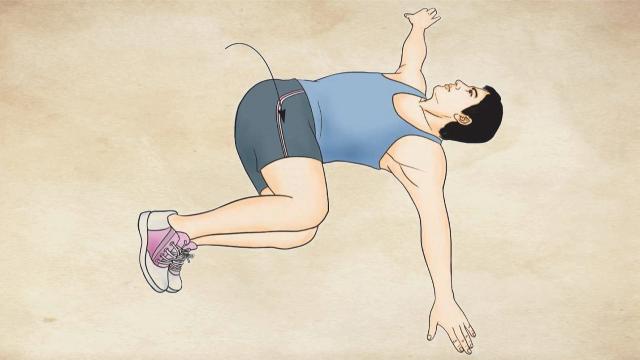
The patient lies supine, with arms raised at the same height as the shoulders, with legs straight and together, performs the bending of both knees, while keeping both knees together and the soles of the feet straight, then slowly turns to the left side of the body to lay down on the bed, and the head also follows the turn to the left side, maintaining for 2-5 seconds, then in the bending state of both knees, turns to the right side of the bed surface, during which the hips should also rotate. Do this alternately 12-15 times, 2-3 times a day.
This session's terminology
Shift traction
Shift traction refers to the use of the increase in the amplitude of body position movement to enhance the traction of the spine, at the same time, it can relax the waist and abdomen muscles and abdomen muscles, eliminate muscle spasm, relieve the pain and discomfort caused by lumbar disc herniation.