How to Swing Your Arms While Running to Avoid Arm Fatigue?
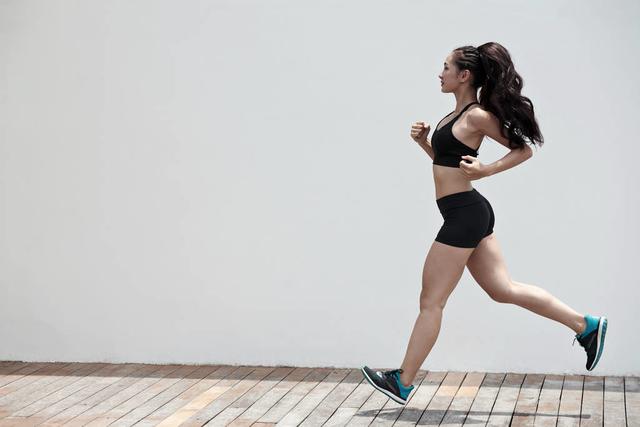
Among all running postures, the most easily forgotten is the detail of arm movement. We all know that running is an extension of walking. When walking, arms naturally hang down, relax and swing back and forth by inertia, and coordinate with the left and right movement of feet; when converted to running, the principle is the same, but the swing amplitude will vary slightly depending on each person's stride, frequency, speed and distance.
First: The function of arm movement in running exercise
1, to balance the body, to maintain a straight forward direction as much as possible;
2, to drive the legs by inertia, to use the core strength of the torso to pull the legs, making running faster and more energy-efficient.
Second: Seven techniques for long-distance running arm movement
1, arm swing opposite to the direction of the legs when running.
2, arm swing forward and backward in a straight line; and the elbow should face back, not outwards.
3, when swinging arms, use the shoulders as a pivot point, maintain the arm bent to push the elbow back.
4, the arm should be bent at an angle of about ninety degrees, allowing the elbow joint angle to be elastic between 70-120 degrees when running.
5, when swinging arms, the palm position should be around the hip height, avoiding too high (on the chest) or too low (lower than the hips).
6, when swinging arms, you must tighten your muscles, from the chest to the hip in an arc shape.
7, keep your shoulders and hands relaxed (empty fist), stable action but not tense, and don't shake left and right randomly.
Third: Arm movement techniques for sprints and marathon runners
1, sprints runner
relies on speed and burst, requires large strides, pushing and jumping force. Because the body leans forward at a large angle, the arm swing action needs to be larger and longer amplitude, the bending angle of the elbow when moving will be greater than 120 degrees. The palm position is from the chest near the chin, using the elbow back-pushing force to the hip rear, about the waist height (hip).
2, marathon runner
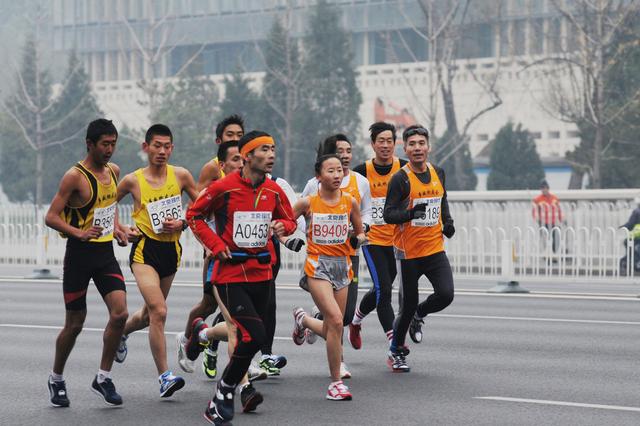
exactly the opposite of sprints. To maintain physical strength, reduce unnecessary kinetic energy loss, experienced ultra-marathon runners will choose not to take big steps, adopt a comfortable high frequency of movement, and also try to reduce the swing amplitude of the arms (some people even don't swing forward and backward, only slightly shake up and down), and keep the elbow angle below 90 degrees naturally on the sides of the chest, without extending to the hips. These adjustments in arm movement and running posture are all for protection, so that physical energy is evenly distributed, and persist until the end.
There is no best running posture, only the most suitable running posture. A swing style that allows you to run easily, save energy, have speed and not get injured is your exclusive swing style.