Latest Research Unveils the ‘Origins’ of the Red Panda”,
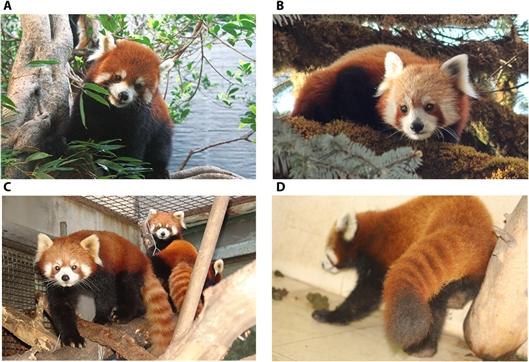
Ailurus fulgens, belonging to the order Carnivora and the suborder Caniformia, belongs to the family Ailuridae. However, for a long time, there has been controversy about the division of subspecies or species of the red panda. On the one hand, the traditional morphological division characteristics are not completely consistent with the geographical distribution, and on the other hand, there has been a lack of genetic evidence to support it. The evolutionary history of small pandas from ancient times is not yet clear.
Recently, the Second Qinghai-Tibet Plateau Comprehensive Scientific Investigation had an important discovery. This study comprehensively provided genetic evidence for the division of two species of small pandas, clarified the long-standing controversy about subspecies or species division, and deeply revealed the evolutionary history and extinction process of two species in the small panda genus at the genome level, providing a scientific basis for the formulation of reasonable protection strategies. The relevant research results were published online on February 27th in the journal ‘Science Advances’.
It is currently known that the small panda is currently distributed only in the Himalayas-Cross-Himalaya mountain region, including China, Myanmar, Bhutan, India and Nepal, belonging to the flagship species of the Qinghai-Tibet Plateau. Since 1902, the small panda has been divided into two subspecies: the Himalayan subspecies (A. f. fulgens) and the Chinese subspecies (A. f. styani), and the upper reaches of the Nujiang River was regarded as the geographical boundary for subspecies division; recently, some taxonomists have also classified these two subspecies as species, namely Himalayan red panda (A. fulgens) and Chinese red panda (A. styani) based on morphological differences and geographical distribution.
The Plateau Animal Diversity and Sustainable Utilization Research Team, using population genomics methods, carried out whole-genome re-sequencing analysis on 65 wild small pandas from seven geographical populations, assembled the genomes of 49 small pandas, and carried out Y chromosome SNP variation typing on 49 male small pandas.
The analysis of the three markers mentioned above all found that there was a significant genetic divergence between the two regions' small pandas, and the mitochondrial genome monophyletic group and Y chromosome SNP monophyletic group had no shared, these results strongly support the division of small pandas into two phylogenetic species, namely Himalayan red panda (A. fulgens) and Chinese red panda (A. styani). Further analysis found that the Yalu River Gorge was most likely the geographical boundary for the two species to diverge, instead of the traditional upper reaches of the Nujiang River, which also explained the phenomenon of ‘the inconsistent geographical distribution of the traditional morphological division characteristics’ previously found.
Based on the re-sequencing genomic data, the population dynamics and divergence history of the two small pandas were reconstructed, and it was found that they had significantly different evolutionary histories. The Chinese red panda experienced two population bottlenecks and one significant population expansion, while the Himalayan red panda experienced three population bottlenecks and a small population expansion. The two species began to differentiate after encountering severe population bottlenecks in the last glacial period of the Pleistocene, then the East Himalayan-Gaoligong genetic population emerged, and finally the Sichuan genetic population differentiated with the small-Shandong-shan genetic population.
Further analysis found that the Himalayan red panda has the lowest genetic diversity, the highest linkage disequilibrium and a high burden of harmful genetic variants, highlighting the urgent need to strengthen the protection of the Himalayan red panda. In addition, the research results provide scientific basis for scientifically protecting two wild small pandas, establishing an accurate pedigree of captive small pandas, and avoiding interspecies hybridization.
The Plateau Animal Diversity and Sustainable Utilization Research Officer Hu Yi Bo, Chinese Academy of Sciences Animal Institute Ph.D. student Arjun Thapa and Professor Wei Fuxuan are the first authors of the paper, and Professor Wei Fuxuan is the corresponding author of the paper. The research was funded by the Chinese Academy of Sciences, the National Natural Science Foundation of China, the Ministry of Ecology and Environment, and the Second Qinghai-Tibet Plateau Comprehensive Scientific Investigation Project. (Cui Xueqin)
Relevant paper information: https://advances.sciencemag.org/content/6/9/eaax5751.full