A Villager in Yunnan Finds Bird Eggs and They Hatch into a National Level Two Protected Animal, the White Stork
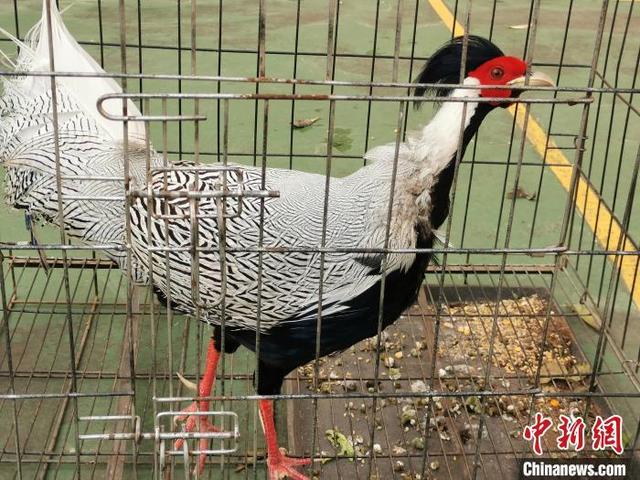
Here is the captured white stork. Photo taken by Guo Lijuan.
Chinanet, Puer, Yunnan Province, February 28th (He Yougang, Bi Xiaotong, Guo Lijuan) Recently, the forest public security bureau of Ning'er County, Yunnan Province, carried out a special action to crack down on illegal wildlife crimes during the epidemic prevention period, and seized four national level two protected animals, white storks, in a villager's home.
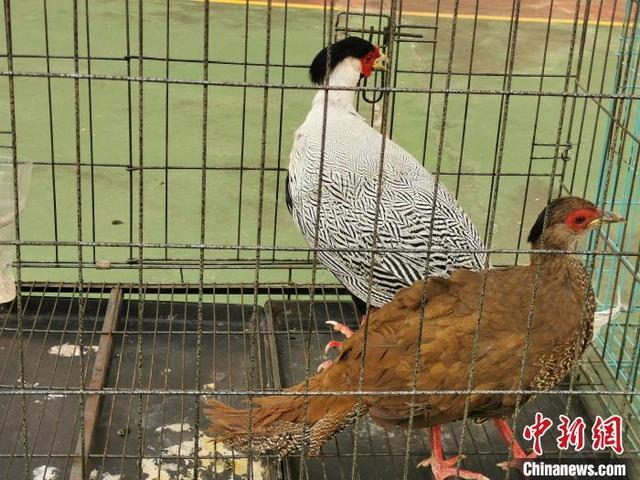
Here is the captured white stork. Photo taken by Guo Lijuan.
According to villager Li Mou, these white storks were hatched from eggs picked up from the tea fields. At that time, they thought it was a chicken's egg, so they took it back to incubate. When they just hatched, they looked similar to chickens.
As the 'chicks' grew up gradually, Li Mou's family realized that their appearance was increasingly different from chickens, and then confirmed that they were national level two protected animals, white storks. Because they liked them, the family did not hand over the white storks to the relevant departments, but raised them as pets until they were seized by the forest public security.
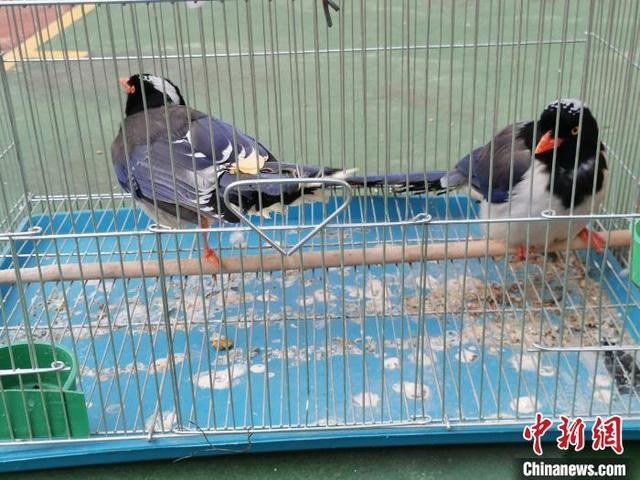
Also seized were 7 national 'three-important' protected animals, including peafowl, magpie, etc. Photo taken by Dao Zhinan.
According to relevant regulations, Ning'er County Forest Public Security made corresponding administrative penalties against Li Mou for illegally breeding and breeding precious endangered wild animals, and confiscated the wild animals raised.

Photo taken of the captured white stork. Guo Lijuan.
Forest Public Security also reminds: Wild animals live in complex environments and carry various viruses. According to the 'Criminal Law of the People's Republic of China' and the 'Wildlife Protection Law of the People's Republic of China' and other relevant laws, illegal hunting, killing, transportation, breeding, eating and trading behaviors not only constitute a crime but also damage wild animal resources, threaten the survival of wild populations, and may cause viral transmission. (Completed)
Editor: Qin Luming