A Quiet and Pleasant Ancient Stone Fortress – Yintang Village
Yintang Village, located in Luolong Town, Xingtai City, Hebei Province, is a quiet and pleasant ancient stone fortress with ancient charm. It is currently one of the best-preserved ancient stone fortresses in northern China.The village is enclosed by a red stone wall about 3 meters wide and 1000 meters long. Inside the village, a stone street and a mountain stream wind through, and all the streets are paved with stone, with staggered heights. There are numerous ancient stone courtyards, which are built on the slopes and reveal elegance and mystery in their simplicity, which is the foundation of Yintang Village’s ancient stone fortress.It is said that Yintang Village was originally a camp for Huang Chao’s rebel army during the Yellow Turban Rebellion, thus it has a certain military flavor.According to legend, during the late Tang Dynasty, Huang Chao’s rebel army once established a camp here and held a ‘Conference of Discussions’ (Yintang – ‘Discussion’ meeting), hence the name Yintang. In the second year of the Yongle reign of the Ming Dynasty, a family surnamed Lu migrated from the Big Tree of Huaxi in Shanxi to this place, opened up the frontier and cultivated land, and settled down with their children. The wise natives utilized the mountain terrain and worked hard to build this village of hundreds of people, with red stone houses.
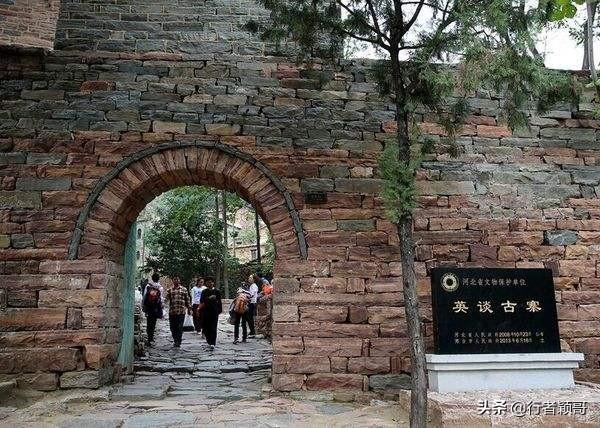
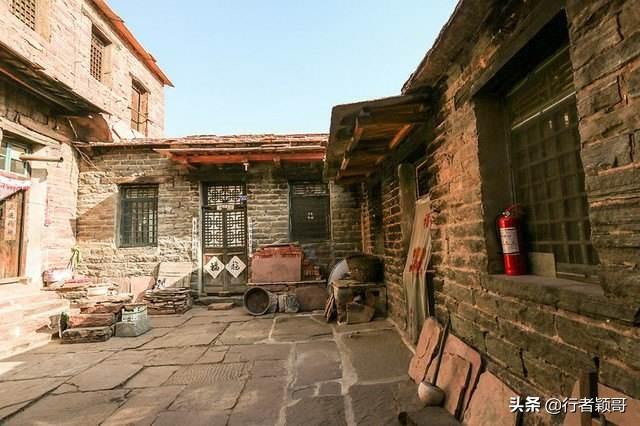
Although Yintang Village’s building materials mainly used pebbles, its ingenious and skillful construction is still evident. The stones fit together tightly, with straight and angular lines, which gives Yintang Village a more wealthy and energetic appearance compared to other villages in the Taihang Mountains. The four courtyards of the Lu family, named Dehe Hall, Ruhilin Hall, Guihe Hall, and Zhonghe Hall, showcase the beauty of Yintang’s architecture and tell the story of the village's past glory and prosperity.
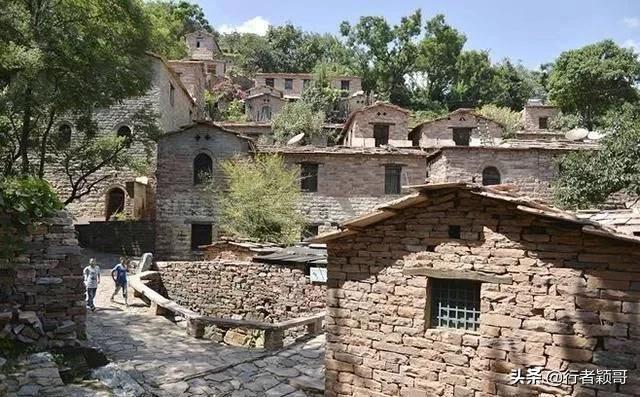
In 1937, when Japan invaded China, then Hebei Provincial Chairman Lu Zhonglin stayed in Ruhilin Hall in this village. At that time, the small courtyard became the provincial government office in Hebei Province.
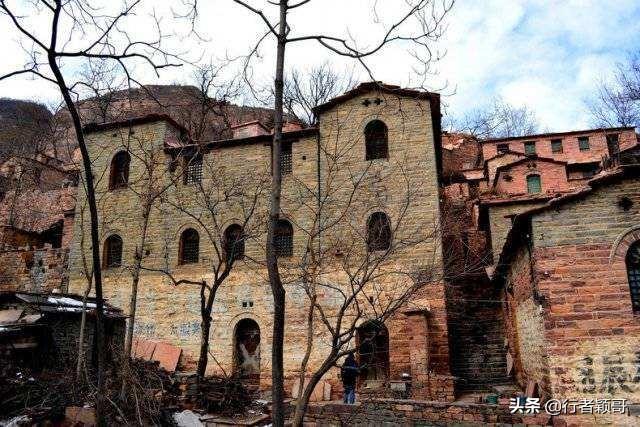
During the Liberation War, it was the location of the 8th Route Army 129th Division, a textile factory, a paper mill, and a printing plant. Marshal Liu Baocheng once lived in Ruhilin Hall in the village.
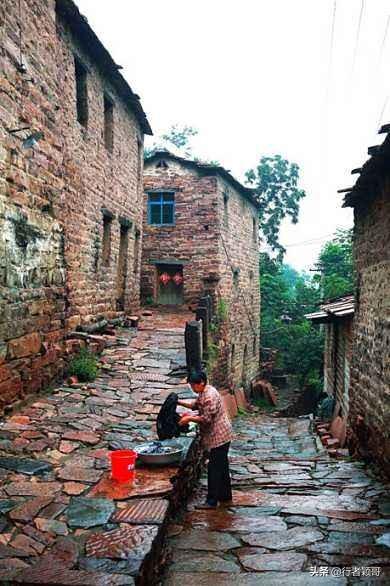
In recent years, as its popularity has gradually increased, the village has started to develop tourism, attracting many folk scholars, architectural experts, and tourists for visits and investigations. However, due to the lack of a unified planning and development concept, it has severely damaged the village’s historical and cultural atmosphere.
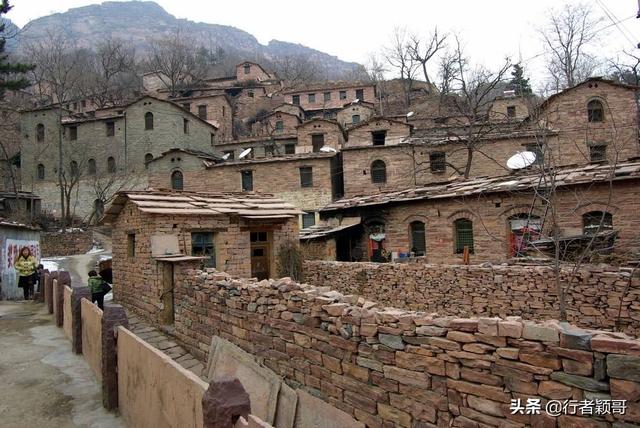
The village’s unique features of no buildings, no courtyards, vertical courtyards, locally sourced materials, red stone wall with mud slurry, and red stone slate roof are gradually disappearing.
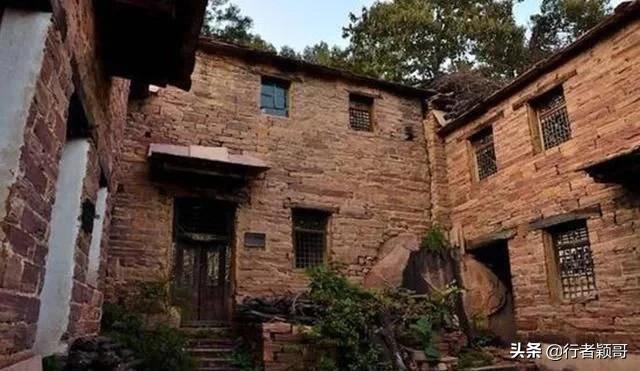
The oldest house in the village is over a thousand years old. In recent years, due to lack of residents, many old houses are rapidly deteriorating.
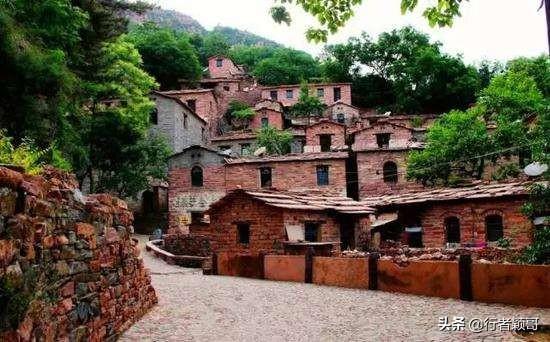
This exquisite and elegant ancient village is a ‘living fossil’ of a specific regional historical construction. It is a precious crystallization of human wisdom and a valuable, irreplaceable resource. It records the entire process of social, economic, and cultural development, and it is the collective memory of generations of people. If it is lost, it will never be regained.
“”