Sili Mountain on Dongping Lake, featuring China's largest and earliest 'Three Teachings Unification' Stone Carvings of Religious Figures
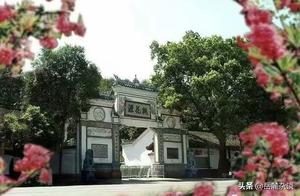
On the western bank of Dongping Lake, there is a small mountain named Sili Mountain. Although it is not large, it is the earliest 'Three Teachings Unification' religious mountain in northern China since the Northern and Southern Dynasties. It is dotted with stone carvings of Buddhas, scholars, and Taoist figures from all eras, which is extremely rare throughout the country. In terms of scale, it is the first in the country.
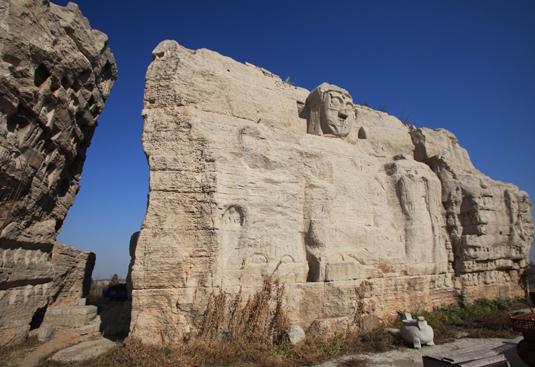
Sili Mountain's most famous feature is Qianfo Cave, formed by two giant boulders facing each other. The two cliffs are adorned with carvings of figures from the Northern and Ming Dynasties, totaling 788 statues, of which 480 remain today. The earliest carvings date back over 1500 years. The carving districts include those of the Northern Wei, Sui, Tang, Song, Yuan, and Ming Dynasties. ‘Three Teachings Unification’ carvings represent the earliest, most comprehensive, and largest carving group in China.
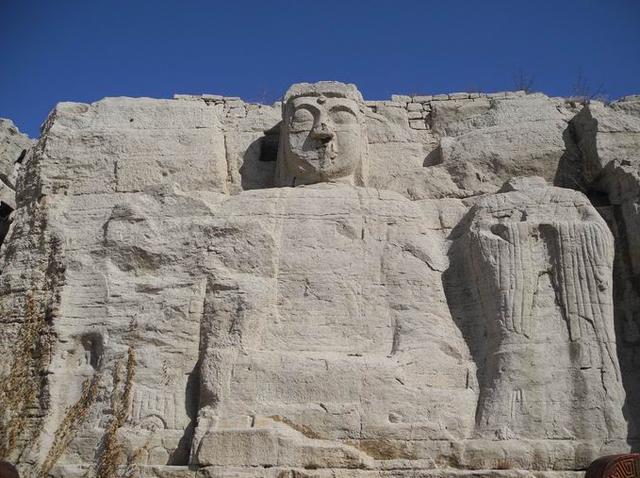
The largest carving in the ‘Three Teachings Unification’ group is that of Shakyamuni Buddha, standing 7.50 meters tall, with Laozi on one side and Confucius on the other, with monks and disciples standing beside each figure. Together, these three figures are among the largest statues in northern China. The carvings are inscribed with ‘Shakyamuni Buddha,’ ‘Laozi,’ and ‘Confucius,’ but all three statues have suffered varying degrees of damage, with Laozi's being the most severely damaged.
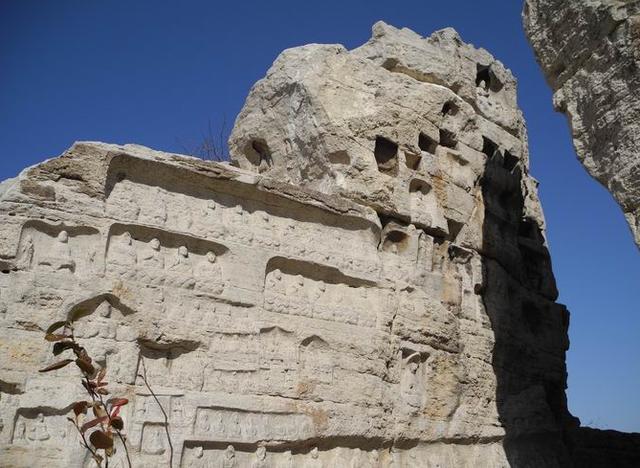
The eastern cliff also features numerous large-scale relief carvings, dated as Qi Huangwen's Second Year of the Great Qi Dynasty (561 AD). The carvings here reflect the style of the Northern Wei period, characterized by square faces, broad foreheads, full cheeks, raised eyebrows, straight noses, stout and plump bodies, broad shoulders, and loose robes. To the east of the cliff is a carving district from the Sui Dynasty, featuring twelve ‘Light Body’ Buddhas, some standing, some sitting, some in the ‘lotus position,’ and their style is similar to the Northern Wei, but their faces are more slender.
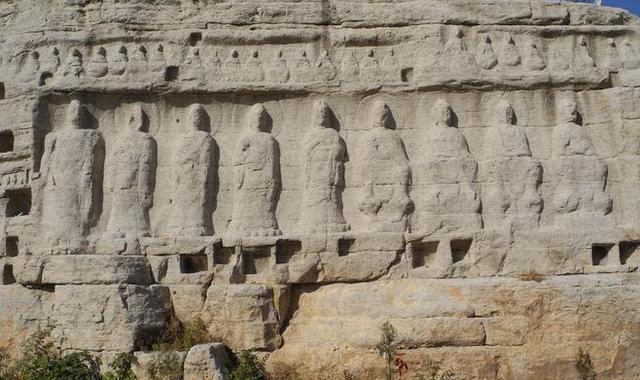
The cliff’s western side features carvings from the Tang Dynasty, influenced by the painting styles of the time. The Buddhas have full, gentle, and vibrant faces with high eyes and deep brows, curved eyes and lips, and balanced facial features. The Bodhisattvas are plump and graceful, with their ears hanging down. Their bodies are full and their lines are elegant. Their clothing is asymmetrical. The carvings often show the Buddhas with their right shoulders exposed.
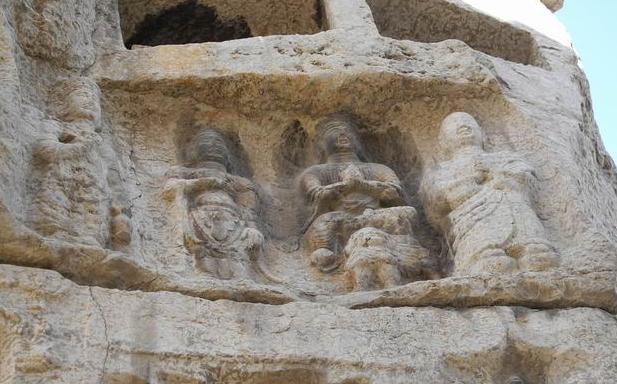
The lower part of the cliff's western side is adorned with carvings from the Song and Yuan Dynasties, mainly featuring Lohan statues, including thirty-six Lohans, the Tiger Lohan, the Flying Lohan, and others that are either good or bad, beautiful or ugly, angry or smiling. The ‘Eternal Life’ Buddha is the only golden statue on the mountain and is relatively precious.
On the southern side of the cliff's western slope are carvings from the Ming Dynasty, characterized by narrow waists, large breasts, large ears, high noses, elaborate clothing, delicate structures, and subtly expressive faces, presenting a distinct style and charm.
At the foot of Sili Mountain, there is a stone carving of the ‘Great Nirvana Sutra, Bridge Chen Ru Chapter,’ which dates back to the late Northern Wei period. Its calligraphy blends Northern Wei late-period script with a transitional style that incorporates both clerical script and early regular script, making it of considerable historical and artistic value.