Why Do Cats Choose to Give Up Their Wildness and Freedom? How Did They Learn to Coexist with Humans?
/toothpaste'5 minutes

Nowadays, cats have taken a place in human society, and they have finally caught up with dogs in terms of status. More and more people like cats.
So, I can't help but ask a question:How did cats learn to coexist with humans?
How did the wild cats in the wilderness, who had lived in the wild for thousands of years, give up their wildness and freedom and transition to coexisting with humans?
When did they become part of modern families?
What exactly happened? What changed?

If we want to find the answer to the question, we need to trace it back to the Egyptian granaries, which were places where various grains were stored.
The Egyptians experienced the pain of famine, so they chose to store food in silos to avoid famine. They needed to store enough food and prepare for the coming famine.
As time went on, the Egyptians stored a lot of food, which attracted rodents. The rodents, in turn, attracted wild cats. The rodents ate the food in the silos, and the wild cats preyed on the rodents.

At that time, the Egyptians highly valued cats, and they thanked cats for reducing the number of rodents. So they began to feed these wild cats to prevent the rodents from invading.
How long ago were cats domesticated?
As we said in the previous paragraph, people believe that cat domestication began about 4000 years ago. At this time, cats and their Egyptian partners lived together. And in Egyptian society at that time, cats were regarded as gods.
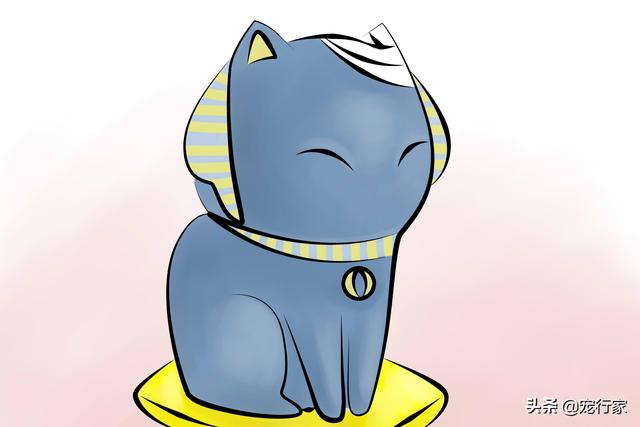
If a cat died, the Egyptians would first mummify it, and then bury it. In fact, the practice of mummifying cats was very popular in ancient Egypt. People would even deliberately mummify cats for sale and use by gods. These evidence all show that cats and ancient Egyptians had close interactions.In 2004, a discovery on the island of Cyprus found a cat skeleton that was only 8 months old. The researchers found not only his life's belongings in a person's tomb, but also a strange thing –
a cat skeleton
It is worth noting that the person and the cat skeleton were buried very close to each other, which highlighted the importance of the cat in his life. This cat was not a 'local cat' on the island of Cyprus, it was a wild cat originating from Europe, Asia or Africa, a member of the small cat family. Researchers believe that this cat may have been domesticated at that time.
In 2012, the cat genetics lab at the University of Missouri led by Professor Lesley conducted a study, which further confirmed this finding. In his report, he said that the mummified Egyptian cats' DNA matched that of cats found in the Middle East. This report further confirmed that the cats found on the island of Cyprus were compatible with the DNA of Egyptian cats.
We know that cats that were mummified in Egypt must have been domesticated. This study provides us with a very large possibility, that domestication may have occurred in ancient Egypt as early as 12000 years ago. Perhaps cats have been domesticated for 12000 years.
Are cats truly domesticated by humans, or do they domesticate themselves?
To answer this question, we first need to focus on the word 'domestication' itself.
When humans began to farm, they began to tame animals. Ideally, each domesticated animal has a specific use. For example, cows and goats were domesticated as sources of meat and milk, while horses and donkeys were used as transportation tools.

Sometimes humans go hunting, and dogs are often used as hunting companions to protect humans. Whatever their role, the existence of each animal has a certain meaning for humans. On the other hand, most domesticated animals are easily restrained, and people can manage these animals well.
These are common points in the human domestication of animals, but cats don't fit this pattern. This makes us start to think about another question: Why do humans domesticate cats?
In fact, cats may not have been completely domesticated by humans. Their behavioral changes were probably because cats domesticated themselves.

We can observe that even though we can provide cats with enough food, cats still continue to hunt and prey on rodents and other prey. Their hunting instinct has not changed.
As we said in the previous section, cats can help people solve the problem of rodents destroying grain, and humans will reward cats for this behavior. Cats come to humans on their own, and luckily humans are very satisfied with the cat's ability to control pests.
As time went on, people liked cats more and more because cats also had cute and docile aspects. Cats also got used to the new environment, they knew that as long as they were by people's side, food was readily available. Humans provide food to cats, and cats protect human grain, which is almost a mutual exchange.

Cats' bitter and sweet journey of domestication
Cats are independent animals, and they have mysterious natures. The journey of cat domestication is full of bitter and sweet. Ancient Egyptians and Romans placed cats in a god's position, but in the Middle Ages, cats were just the opposite.
After the Egyptian merchants brought cats to Europe for the first time, cats began their life in Europe. For a period of time, cats were beloved and a must-have for the wealthy. But this status did not last long.
As time went on, the number of cats increased, and they became less favored by people. Instead, ordinary poor people began to welcome cats into their homes because in the agricultural society, rats were a big problem. Cats played the role of guarding food, but this role did not last long.

Cats' hunting instinct became a major concern for some religions. Their nocturnal behavior and their tendency to snatch food were considered 'demons grabbing souls'. From then on, the fate of cats began to change, especially those with black fur.
In 1232, Pope Gregory IX announced that cats were evil animals. This announcement aroused public disgust towards cats. In 1484, Pope Innocent VIII announced that cats were the favorite animals of the devil. These events changed the fate of cats.
Soon, keeping cats became a reason to worship demons. These once beloved pets of people ushered in a dark period.

Cats began to be hunted collectively, and the cruelty of this hunt was unimaginable. From hanging to being burned alive. Even wild cats were not spared, they were hunted by people. These actions led to a sharp decline in the cat population, slowed the cat's domestication process, and reduced the number of cats in human society.
When the Black Death ravaged Europe in the 14th century, anti-cat sentiment was still high. Soon people mistakenly labeled cats as the cause of the plague. People believed that the plague was caused by cats. So many cats died in the anger of people.
Ships continued to transport grain from Asia to Europe, and with them came rats. Rats brought fleas and bacteria to most of the European continent, and eventually triggered another plague. At this time, most parts of Europe had almost no cats.
Despite the vast number of cats being slaughtered, there were still some cat lovers who saved the lives of cats. Despite facing accusations and death sentences, they still chose to rescue these cat species. With the arrival of the plague, people realized that it was not cats but rats that caused the plague, and they began to understand that cats could help eliminate the plague. At this time, every family wanted to have a cat.

Finally, the laws that demonized cats were abolished, and new laws were enacted.
From catching rats to companions of humans
By the 18th century, cats had begun to become popular again. With the development of commerce and shipping, cats were taken to all over the world. For a period of time, cats were beloved by the wealthy and were a must-have for the rich. But this status did not last long.
As global industrialization and the shift towards non-agricultural societies progressed, cats that were easier for people to accept and get along with, and docile cats began to appear gradually. Selective breeding began, and different breeds of cats gradually appeared.
Cats that appeared in the world through selective breeding were no longer as aggressive as wild cats. We can observe this in our daily lives, cats exhibit these behaviors.
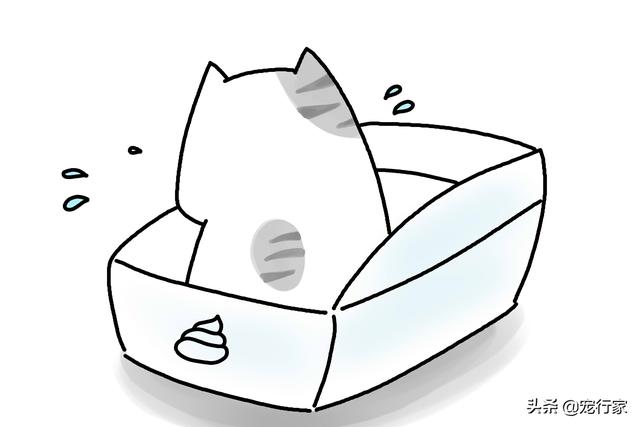
In the 1940s, cat litter was invented, which made it easier for people to keep cats as permanent family members.
Conclusion
Wild cats went through a long journey of domestication and finally became the cats we see today. There are both positive and negative aspects in this journey. When cats were regarded as gods, and when cats were in the Middle Ages, they were considered devils.
Cats have been domesticated for about 12000 years. Their self-domestication behavior makes us admire them more because cats choose to be with us out of their own free will.