Dunhuang Scenic Area ‘Opens Its Doors’ to Visitors with Free Access for Medical Workers and Police
Official AnnouncementThe official announcement from Dunhuang, Gansu, on the 17th stated that starting from the 17th, the city's Mesaquíshan and Crescent Spring, Yaidanshan Geological Park, Yumenguan Pass, Yangguan Pass, and Dunhuang Ancient City scenic areas have been reopened to the public. Simultaneously, local hotels, restaurants, and various catering businesses have also massively resumed operations.
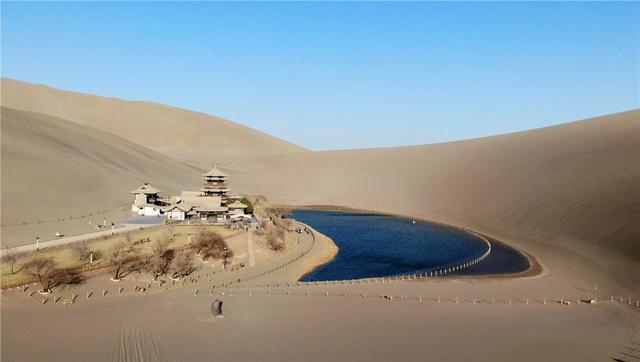
Photo taken on March 17th of Mesaquíshan Crescent Spring Scenic Area (drone photo). (Beijing Economic Daily)
According to Xinhua News Agency, Li Ying, director of the tourist service center of Mesaquíshan Crescent Spring Management Office, introduced on the 17th that the scenic area implemented temperature measurement and registration upon entry for tourists, with no cash transactions, and simultaneously increased sanitation disinfection work in the scenic area's public areas, and formulated emergency plans, through smart broadcasts urging tourists not to cluster together for chats or hikes, and to avoid cross-infection between tourists. She also stated that it is currently the time of blossoming flowers, and the scenic area has formulated some corresponding preferential policies, including free visits to the scenic area for all nationwide medical workers and police officers, and a half-price discount for all nationwide tourists before March 30th.
Not long ago, Mesaquíshan, another popular 'check-in spot' in Gansu, Yaidanshan Seven-Color Terraces Scenic Area, also 'opened its doors' and used daily booking limits of 3,000 people, 'contactless' service, etc. to 'welcome guests'.
According to the latest statistics from Gansu officials, there are now more than 100 scenic areas in Gansu Province gradually opening to the public. Gansu's catering service units also resumed dine-in services on the 17th.
In addition, major museums in Sichuan Province have also recently been opened. It is understood that flow control, information registration, temperature measurement, and phased visits have become the 'standard configuration' of many museums. Several museums' announcements show that visitors must present their ID card and personal health code before entering the museum, wear masks during the visit, avoid gatherings and crowds, and actively maintain a distance of more than 1.5 meters from others. (Completed)