Yoga Gate Post Pose (Warrior II Pose): Reducing Waistline Fat, But Knee Pain After Practice – What to Do?
Yoga Gate Post Pose can help us eliminate waistline fat, reduce waist flesh, and shape perfect body curves. From a health benefit perspective, this pose can also make the spinal nerves flexible, eliminate back stiffness, strengthen the knee joints, relieve rheumatic joint pain, and have a strengthening effect on the abdominal organs. During practice, please pay attention to focus your awareness on the extension of the waist, and maintain natural breathing.
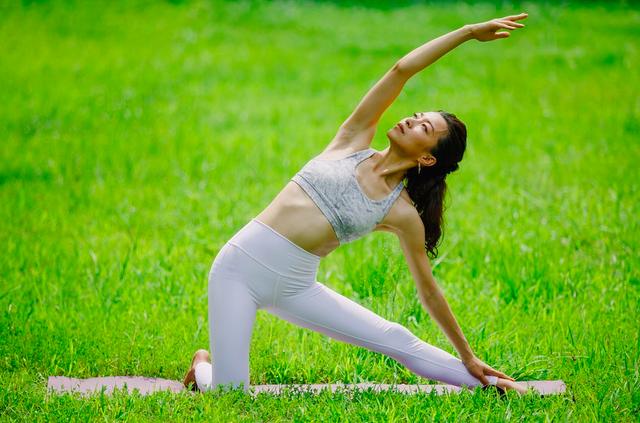
Let's take a look at its specific practice steps:
- Pad the mat with a mat, straighten the waist and back.
- Inhale to lengthen the spine, the chest expands upwards, and the shoulders relax.
- Extend the right leg to the right side, the right instep points to the right front. The left thigh is perpendicular to the ground. Place your hands on the sides of your body, with the pelvis facing forward.
- Extend your arms flat, palms down, the spine extends upwards. Tighten your abdomen, adjust your hips, and slightly tuck your tailbone.
- Exhale, shift your upper body to the right side as far as possible, then bend your body to the right side. Place your right hand lightly on your right leg, your left arm externally rotates towards the direction of the ear, and your eyes look up slightly. If you feel uncomfortable in your neck, you can straighten your head.
- Open your chest, stay for 5 natural and smooth breaths.
- With the next inhale, slowly return your upper body to its original position, and bring your right foot back to its original position.
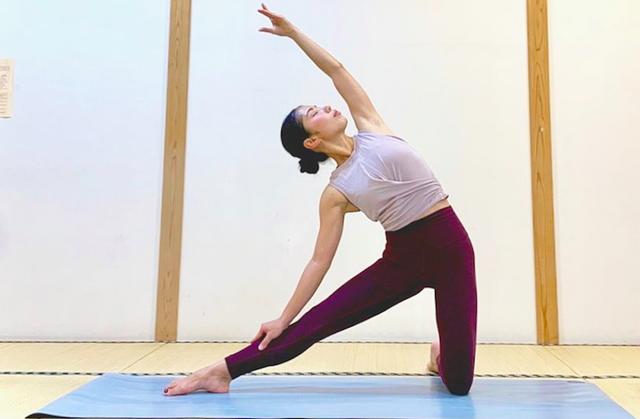
Adjust your breathing and then practice the opposite side.
Yoga Gate Post Pose doesn't seem like a difficult side bending pose, but if you really follow the steps of Yoga Gate Post Pose, you will find it difficult. The difficulty lies in two points, one is the kneeling position, the knee pressure is large, and the other is the inability to effectively let the toes bear the weight, or even there is a problem of leaning forward. It is recommended to pad the knee with a towel until you correctly master the posture, and then try to remove the towel.
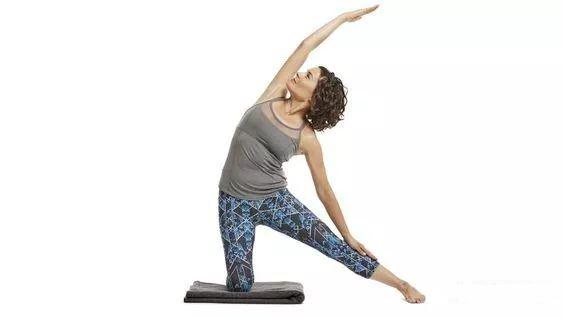
The standard Yoga Gate Post Pose requires the toes of the extended leg to point to the side, which is quite difficult. Most people can only achieve the feet on the ground. If you force your feet to press down, you may have calf cramps. It is recommended to press the extended foot against the wall or place a yoga brick underneath to practice.
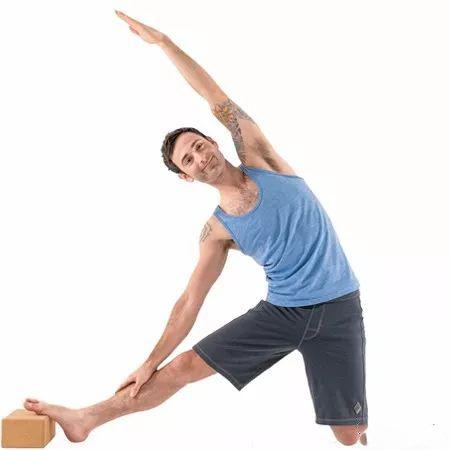
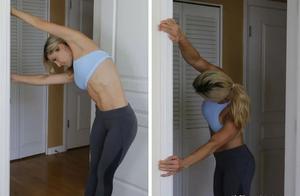
As a side bending pose, its main function is to stretch the muscle groups on the side of our body. From this perspective, Yoga Gate Post Pose can effectively stretch the waist oblique muscles and intercostal muscles, and can relieve some people's lower back pain and shallow breathing problems. Therefore, the problems of the knee and foot mentioned above, if you feel difficult, simplify it. Simplifying it will not affect the stretching of our muscle groups on the side of the body.
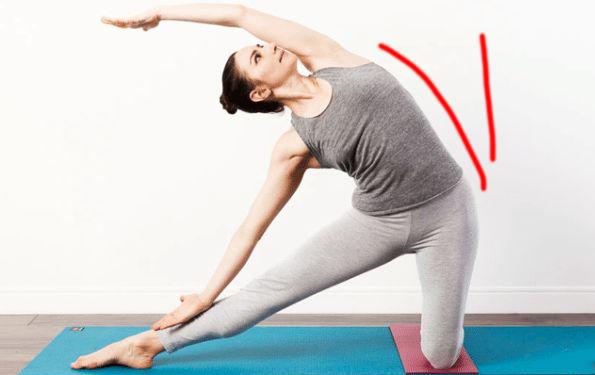
To stretch the muscle groups on the side of the body, you also need some techniques. Some people directly bend sideways, which is not a good way. It should be to first stretch the body and then bend sideways, which can effectively stimulate the muscle group on the side, and let them better extend and stretch. Intentionally feeling the waist oblique muscles and intercostal muscles can help you deepen the stretching.