Foot Exercises to Improve Running Ability
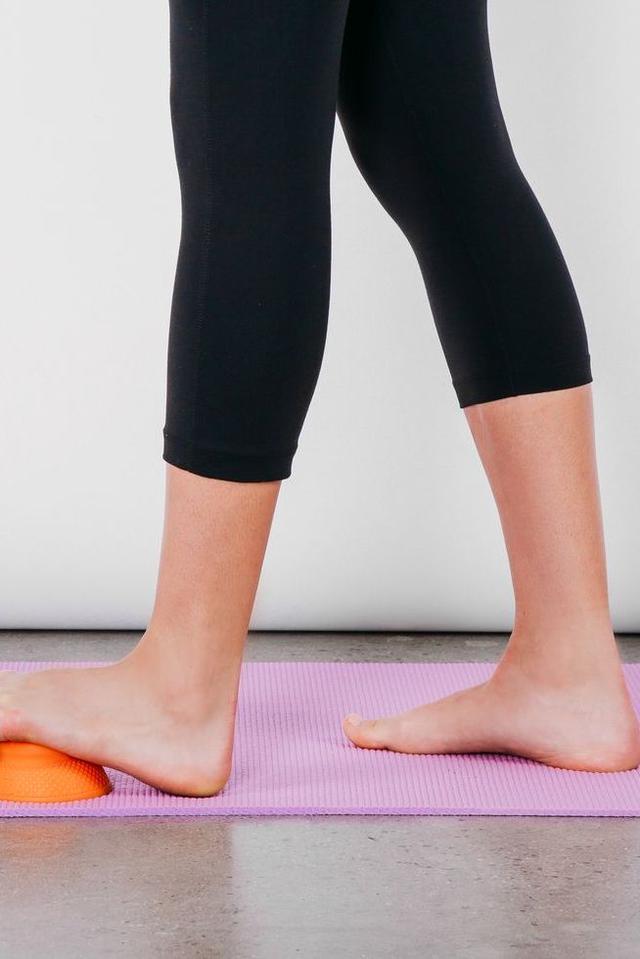
To run better, one of the most important factors is to have a healthy and strong pair of feet. If runners want to run faster, the muscles they need to strengthen are: calves, hamstrings, gluteus maximus, and quadriceps. However, they should not ignore the training of their feet.
Running is a high-intensity sport, and your feet are the first point of contact each time you land. To take care of our feet and the muscle groups we run with is just as important. When talking about strength training, feet are often overlooked. When we run, we land with one foot at a time, and the weight is two to three times the body weight of a long-distance runner. Strengthening the feet helps to improve natural elasticity and reaction time. Strengthening the muscles that stabilize the feet can also help us prevent arch collapse or preventing the ankles from rolling outward.
In other words, strong feet are stable feet. The more stable the feet, the better it can avoid abnormal inward or outward rotation. Foot stability and flexibility play an important role in optimizing running performance. Instability from the start of the feet can affect the legs. In extreme cases, ignoring the strength and flexibility of the feet can lead to more serious injuries. Foot weakness can often lead to inflammation, plantar fasciitis, bunions, nerve tumors, or stress fractures in the foot or tibia.
Therefore, we have summarized three key actions to specifically target the strength and flexibility of your feet, which is the foundation of your running. Do more, and your feet will become stronger! Each exercise is demonstrated by Corinne Fitzgerald.
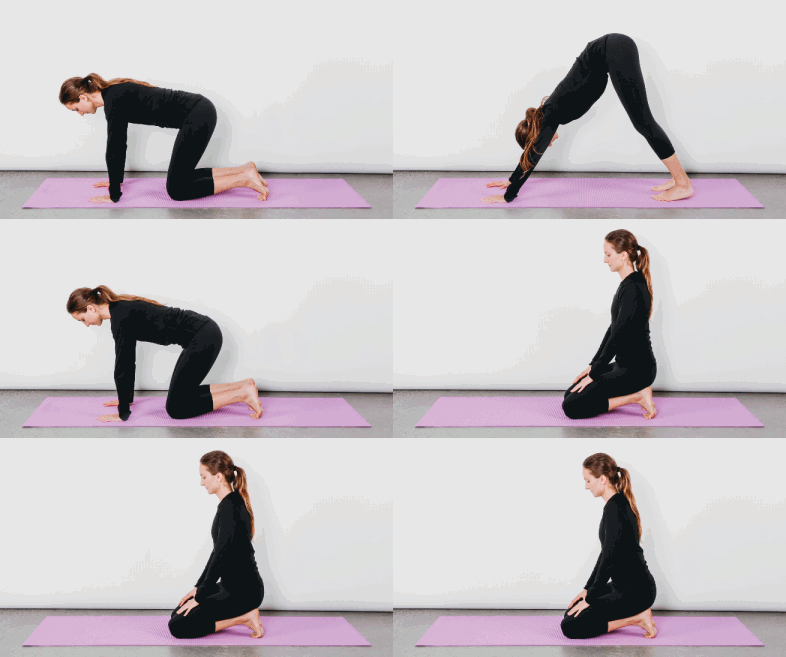
1. Dynamic Downward Dog Stretch
How to: Kneel on the floor, with your feet curved, and then return to your heels. Rock back and forth on the curved toes to stretch the feet, foot muscles and tendons. Then, form a table top pose with your limbs, while keeping your toes curved, your hips up and back into a downward dog, while keeping your heels on the ground. Hold for one to two seconds, then return to your hands and knees, and begin again. Repeat 5 times.
Function: This activity promotes ankle dorsiflexion and big toe extension, which is important for runners. Fitzgerald added that it’s beneficial not only to stretch the arches but also to stretch the muscles and tendons of the calves. “These muscles and tendons help move the feet and affect how the feet land.”
2. Arch Rolling Ball Exercise
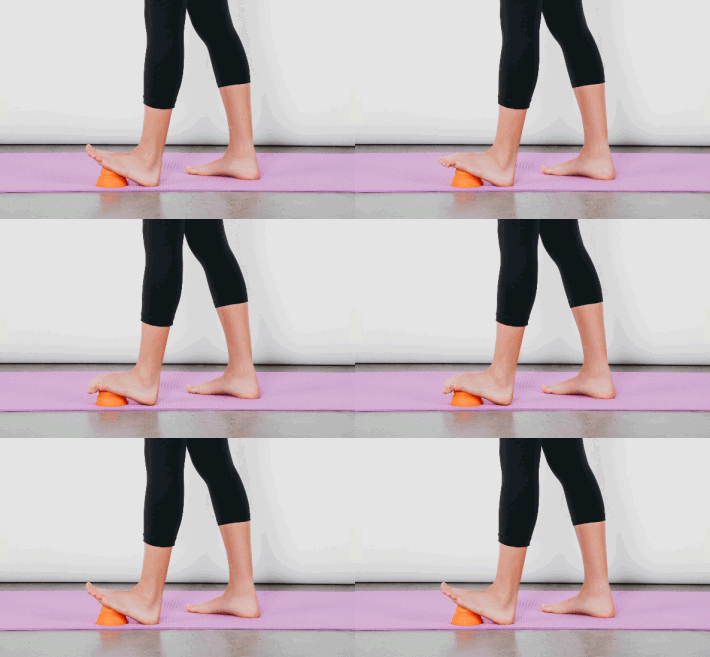
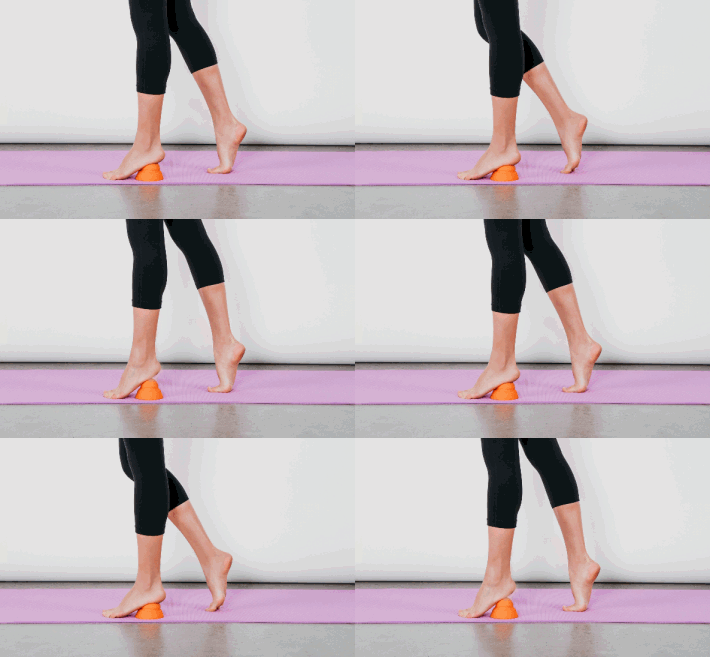
How to: Use a ball, place the ball directly below the base of your toes. Shift your weight to the ball. Bend your toes to grasp the ball, then extend your toes to complete the movement. Repeat 10 times.
Then, put the ball back under your foot. Shift your weight on the ball. Bend your feet around the ball through your toes and then straighten and extend your feet to complete all the movements. Repeat 10 times.
Finally, put the ball back at the arch of your foot. Shift your weight on the ball. Hold the ball in contact while bending your feet and lowering your heels, shifting your weight back into the ball. Repeat 10 times.
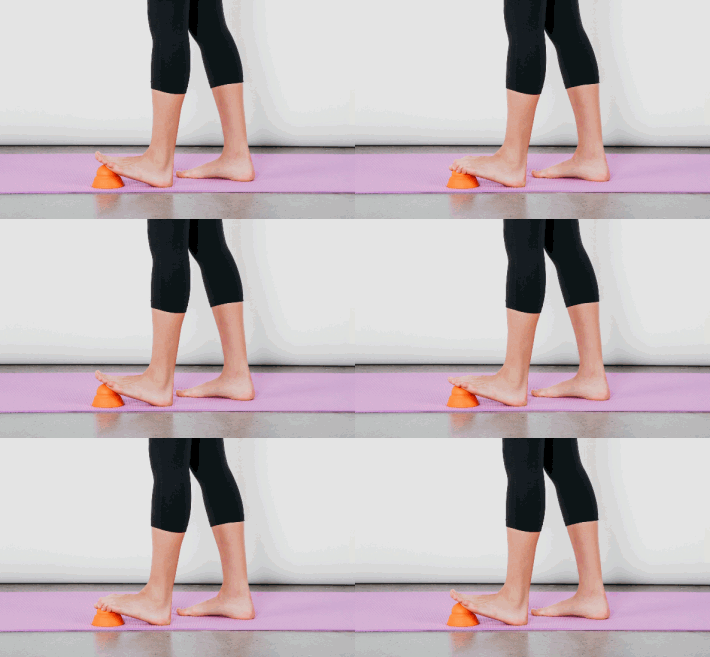
Function: ‘Trigger point therapy activates a lot of benefits for runners, especially on the feet. It can help promote blood flow, allowing the fascia around the muscles to align correctly. Your toes will have better movement, and your feet will be more stable.’ Fitzgerald explained.
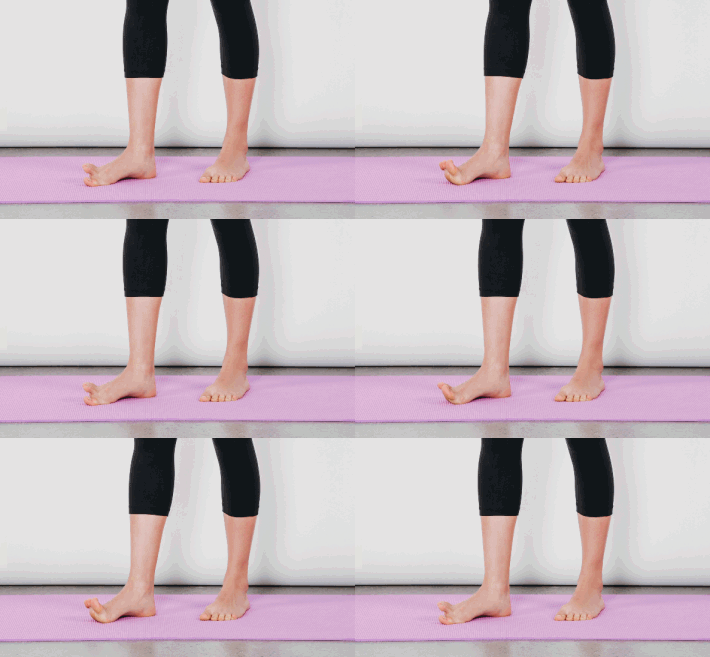
3. Toe Spreading Exercise
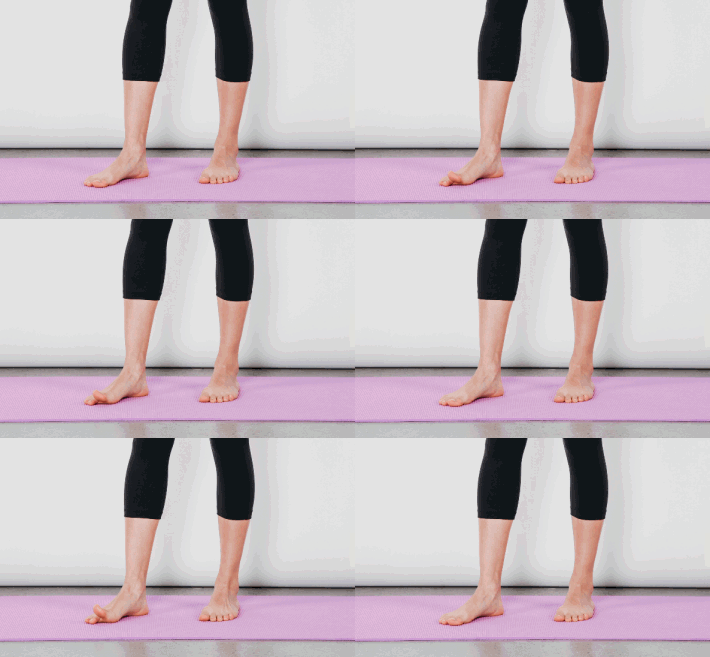
How to: Spread your feet and toes on the floor. Lift your big toes up and down 2-5 times. Hold for two seconds, while keeping the other toes relaxed. Repeat 20 times.
Then, shift your weight to your big toe, lifting 2-5 toes. When lifting the other toes, do not turn your feet. Hold for two seconds. Repeat 20 times.
Function: Think of these as the muscles in your feet—bending and extending the foot muscles. The goal of this toe-spreading exercise is to strengthen the stabilizing muscles of the feet—specifically the muscles that maintain and support the arches—by separating the big toes, it can independently move. Fitzgerald said, “You are working the foot flexor and extensor muscles, forcing them to work independently. These small muscles play an important role in balance and stability. Strengthening them can also help prevent injuries such as tibia stress fractures.” Although this exercise looks simple, it is not easy. She said, “It takes time to master and build strength, so be patient.”
:2 - 520
2520
:————
“”:“”