Girls, Look Here! Don't Miss These Fitness Tips to Maximize Your Results
It is rare to see women engaging in regular strength training, and when we talk about strength training, our first thought often goes to men. Even in scientific research, most participants are men.
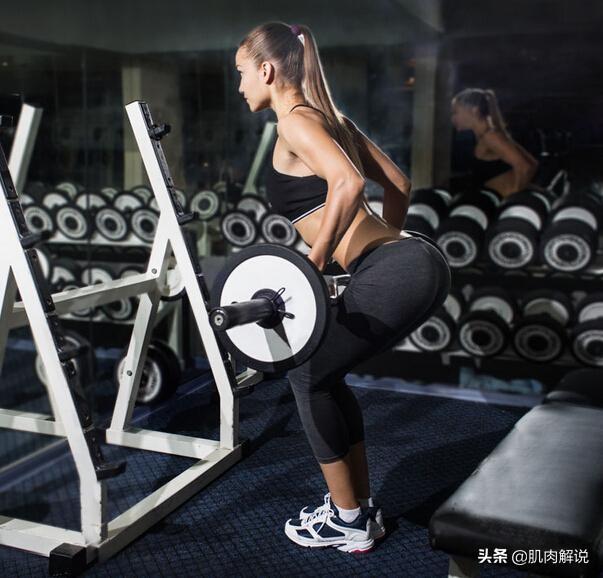
Fortunately, with the widespread dissemination of fitness knowledge over the years, more and more women have learned about the benefits of strength training.
Strength training doesn't make women bulky; it just makes your body look better and stronger. In addition to improving body shape, strength training can increase bone density in premenopausal women and improve quality of life after menopause. Of course, there are many other advantages, we won’t go into detail.
Women are not ‘miniature men,’ and they cannot simply follow men’s training methods. Most women experience fluctuations in their training status at different stages of their menstrual cycle: sometimes they feel great and easily break their squat records; however, at other times, they feel sluggish and have a lower desire to train.
All of this is related to women’s special physiological cycles, as female hormones fluctuate at different stages of their menstrual cycle. Therefore, by understanding the basic principles of training status fluctuations and referencing scientific research results, we can address training status fluctuations. If used properly, it can help women strengthen their strength and muscle mass faster.
In summary, women have multiple hormone stages, and their hormonal environment is constantly changing, which is why some research suggests that scheduling female strength training according to the characteristics of different stages can be beneficial.
However, it is important to note that this is for women with normal physiological cycles; for women taking certain medications, due to the interference of drugs on hormones, they may encounter other problems, which is not within the scope of our discussion today.
Next, let's take a look at the different performance in different stages.
Which stage has the highest strength level?

If you are a woman with regular strength training experience, you may or may not have experienced fluctuations in your strength levels, even under conditions that remain the same. However, if you have a training plan and compare it to the corresponding physiological stages, the differences will become more apparent.
Many studies show that women’s strength peaks during ovulation and then gradually declines, on average, the strength fluctuation is about 10% per month.

Researchers are not sure about the mechanism behind strength level fluctuations, but the peak of estrogen before ovulation may be related to it.
In addition, there is evidence to suggest that testosterone can enhance the function of the muscle contraction chain in women, considering that testosterone reaches peak levels before and after ovulation, it is also a possible reason for strength fluctuations.
Therefore, I suggest that you record your training content and see if your strength levels fluctuate. If so, you need to adjust your training plan according to your physiological cycle.
Seeing here, many people want to know, when is it better to train, In general, during the follicular phase can help you increase more muscle and strength, sometimes the training effect is better than regular training for a month.
So, for most women, placing training in the follicular phase is a good choice, because during this period, estrogen can help increase the number of muscle nuclei within the muscle, and has a metabolic effect, which increases your ability to increase muscle mass.