Are Front-Bar Squats Better Than Back-Bar Squats? Actually, Combining Both is Better
A fitness master once said that no matter how good your physique is, don't forget to practice your legs. However, leg training is very difficult, so there are always some people complaining about leg training or rarely practicing their legs. In fact, there are many ways to practice legs, especially some people practice legs for one hour, which is better than others practicing for three or four hours, and the reason is that they have mastered the key points of squats and understood the techniques of squats, which has made them masters.
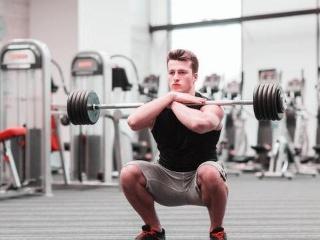
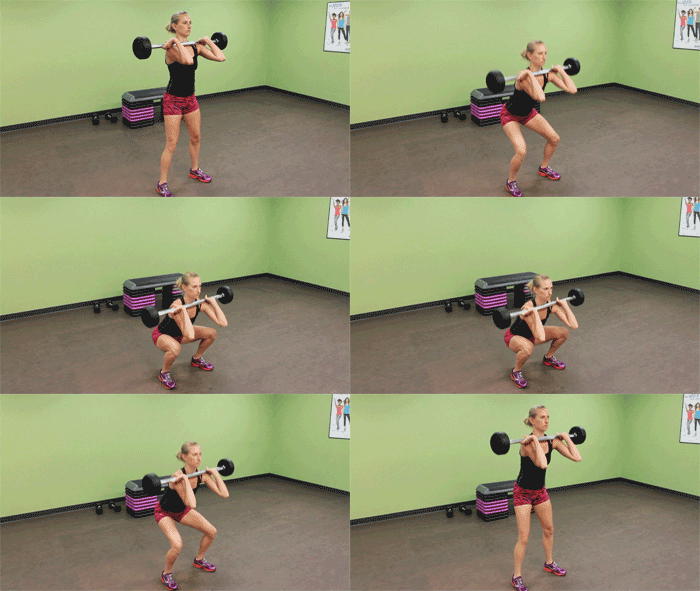
Among the most common compound exercises in leg training are front-bar squats and back-bar squats. Many people have practiced these two types of squats during their leg training. So, which type of squat is better? Front-bar squats can use lighter weights, effectively stimulating the quadriceps. The curve of front-bar squats differs from that of back-bar squats; you just need to fix the barbell on the anterior bundle of the triceps, and you can start training with your hands crossed.
If you feel that the movement is risky, you can use assistance to complete the training. During the movement, keep your elbows pointing up, and step back slightly during the lifting process. Your feet should be slightly outward, and the distance between your feet should be slightly wider than your hip width.
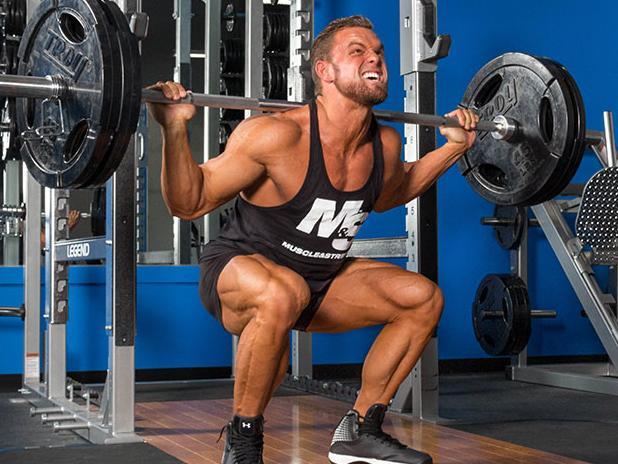
When lowering the barbell, keep your elbows open, and try to perform as much movement range as possible. At the same time, focus your body's center of gravity in the center position, keep your back completely straight, and the direction of your knees and feet should be consistent. When you reach the highest point, don't lock your knees.
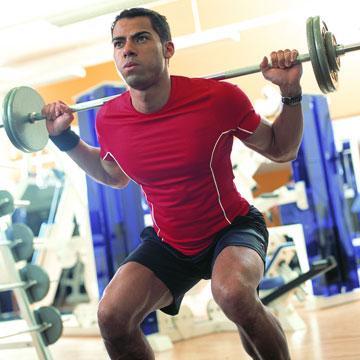
The advantages of front-bar squats are that they can better stimulate the quadriceps, and they use lighter weights, so the risk of injury is also small. If you want to better stimulate the quadriceps, front-bar squats are a safer choice. In addition, front-bar squats also require you to maintain stability with your core.
If your core is weak, you need to support with your abdominal muscles, and the whole squat will become very difficult. Therefore, if your core does not have the ability to stabilize the body, the center of gravity will be unstable, and it will be difficult to maintain balance.
Front-bar squats:
Back-bar squats can stimulate most muscles in the body, such as the quadriceps, hamstrings, glutes, calf muscles, lower back and upper back muscles, and the trapezoid muscles. To improve the effect of squats, you can place the barbell on the trapezoid, use a wider grip, and slightly open your feet. During the lowering of the hip, keep your back straight, and your knees and feet should be in the same direction, and you should squat as deep as possible, until your thighs are parallel to the ground. Another way is to squat until your hamstrings and calf muscles touch. Keep your hips stable, and at the highest point, don't let your knees bend completely.
Back-bar squats:
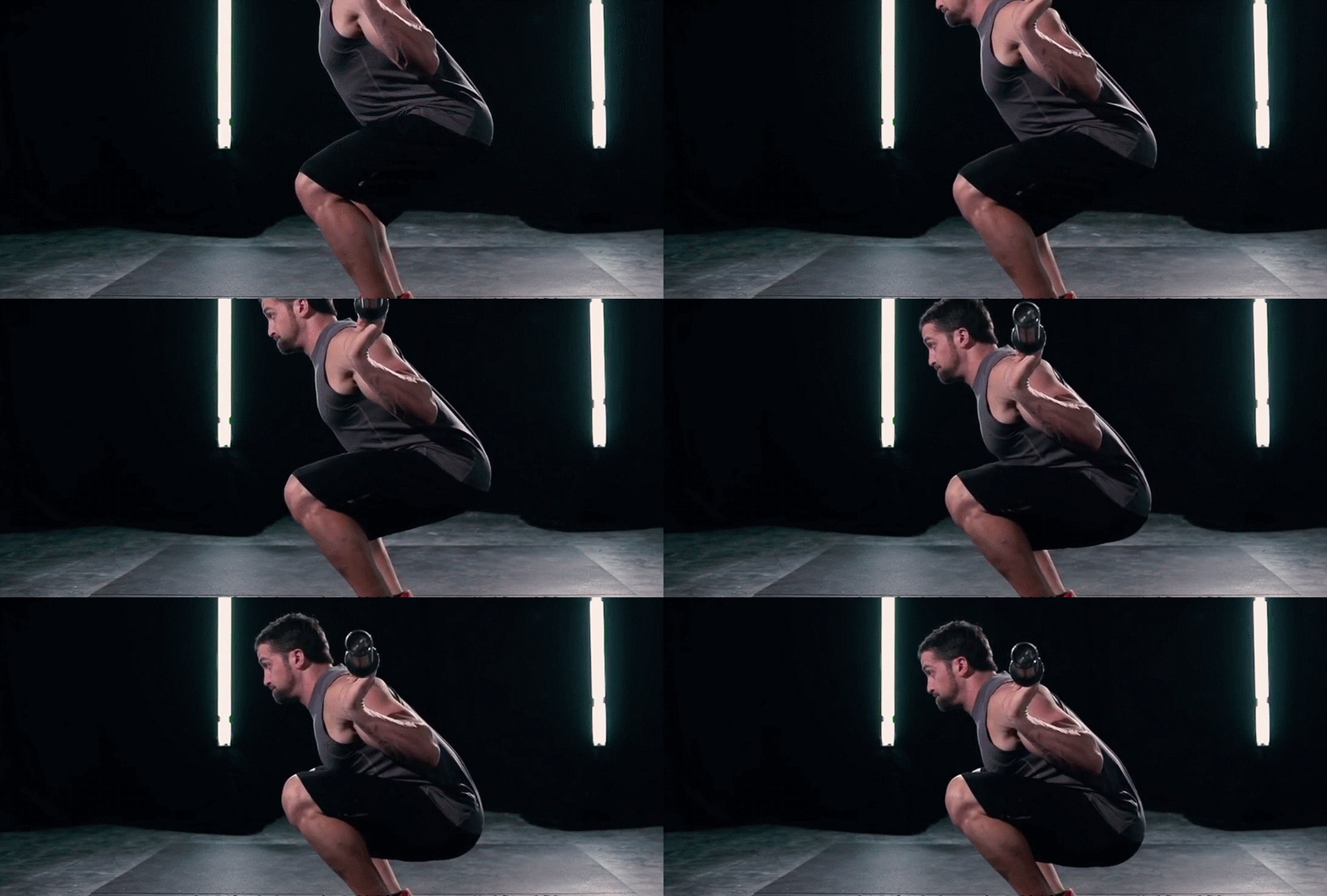
Back-bar squats can effectively shape the body and stimulate the production of growth hormone. They can also handle greater weights than other squats and have obvious assistance effects. If you do the right posture, you can increase the entire lower body muscle, but the technique is very high, especially for those with taller physiques, the movement track is long, and it is very difficult to do because it will limit the movement range.
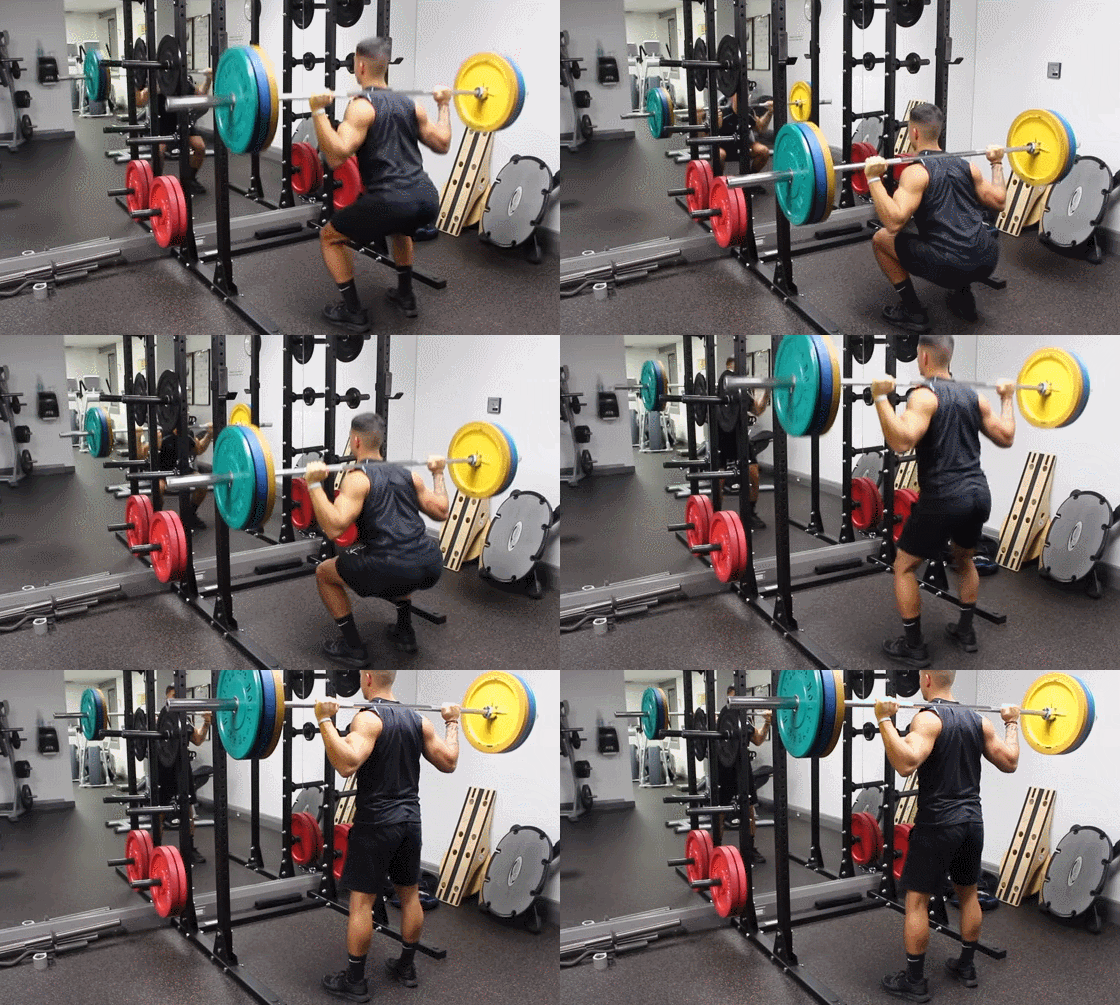
Both exercises have their own advantages and disadvantages. To make muscles stronger, we need to choose exercises specifically. The best choice is to alternate, and during leg training, you can complete a larger number of front-bar and back-bar squats. If you want to make a firm decision to change, you need to make a training plan and complete the training regularly and seriously every time.