Subscapularis: One of the Four Guardians of the Shoulder
Today we're going to chat about's neighbor, . belongs to the shoulder’s “four guardians,” and its main responsibilities are to protect and stabilize the shoulder joint; specifically, it can effectively keep the humerus stable within the joint.
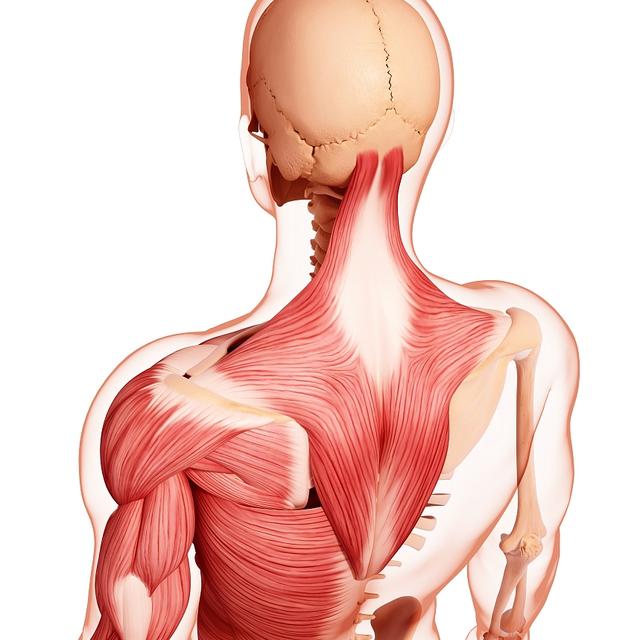
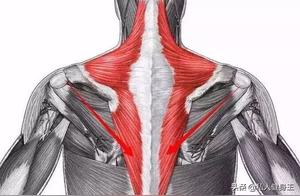
Understand the distribution of surrounding muscles of
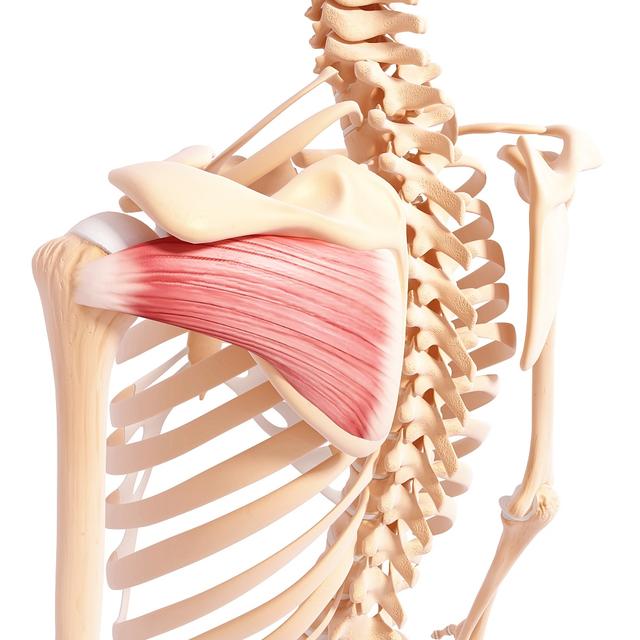
The shape of is flat, located in the , with the attachment point attaching to the middle surface of the greater tubercle of the humerus, it is a strong external rotator of the shoulder joint.Especially in the last stage of abduction, it pulls the greater tubercle of the humerus outward to prevent it from hitting the acromion and the humerus-shoulder joint tendon.If is injured, the shoulder will certainly not “get through it,” and the range of motion of the shoulder joint will also be limited.
Causes and symptoms of injury:
Causes of injury:
- External force damage; such as acute strain, or over-load training, falling and twisting.
- Muscle imbalance (influence of posture); most commonly shoulder excessive internal rotation.
- Neurological damage; such as the suprascapular nerve is compressed, leading to paralysis or weakness of .
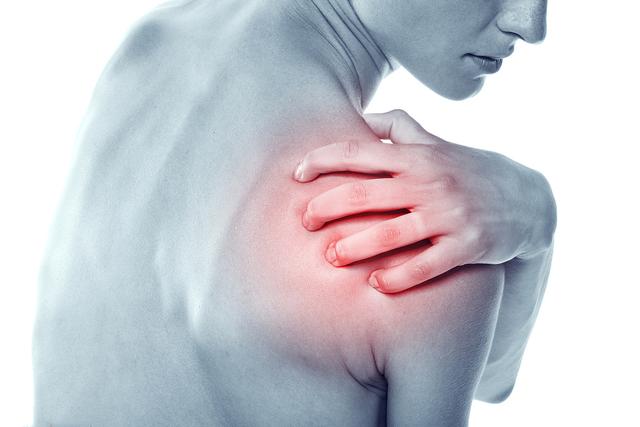
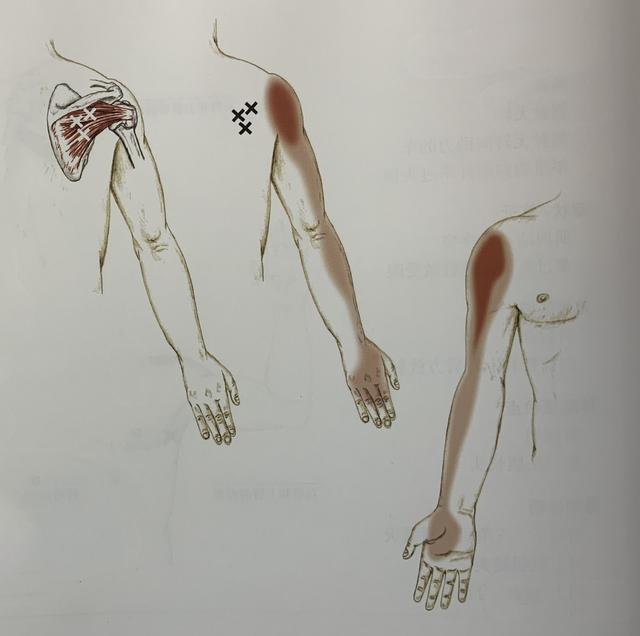
can cause many referred pain, although it is located at the back of the shoulder, it often causes pain in the front of the shoulder, this pain is usually felt like in the joint, and it will also transmit to the long head of the biceps, it is easy to misdiagnose as long head of the biceps tendonitis. ’s painful trigger points will also transmit pain to the outer side of the shoulder, and downward to the forearm and thumb side.
No assessment, no treatment
muscle strength test
1/0 level
Starting position:The test subject is in a supine position. After the shoulder joint is abducted 90° and the elbow is flexed 90°, the forearm is dropped to the side of the bed.
Test method:The tester palpates the with their fingers (light pressure, touch)
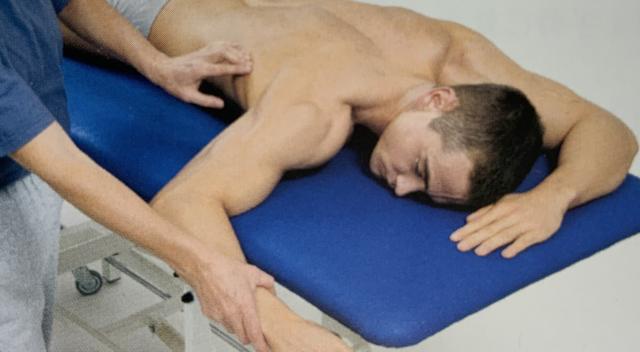
Action instruction:"Try to lift the forearm forward and upward."
1/0 level muscle strength test, mainly to see if has contraction
2 level
Starting position:The test subject is in a side lying position, after the shoulder joint is abducted 90°, the elbow joint is flexed 90°
Test method:The tester supports the forearm of the tested side with both hands.
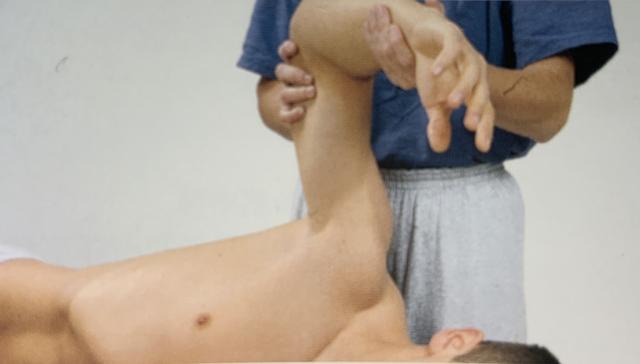
Action instruction:"Try to turn the forearm as far as possible to your head."
2 level muscle strength indicates that without bearing the self-weight, the ability to complete the full range of motion.
3 level
Starting position:The test subject is in a supine position. After the shoulder joint is abducted 90°, the elbow is flexed 90°, the forearm is dropped to the side of the bed.
Test method:The tester uses one hand to fix the forearm of the tested side
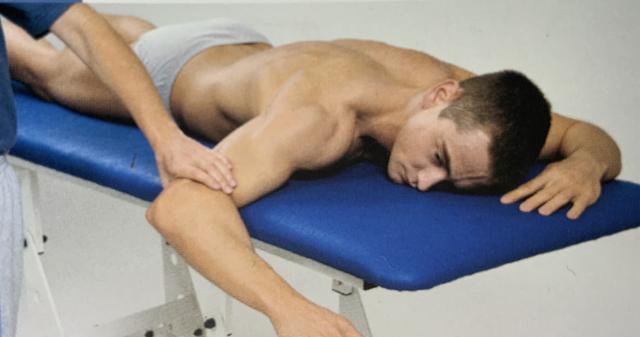
Action instruction:"Try to lift the forearm forward, upward, then hold it steady."
3 level muscle strength indicates the ability to overcome the self-weight to complete the full range of motion
4/5 level
Starting position:The test subject is in a supine position. After the shoulder joint is abducted 90°, the elbow is flexed 90°, the forearm is dropped to the side of the bed.
Test method:The tester fixes the upper arm of the tested side with one hand and applies a force to internally rotate the shoulder joint.
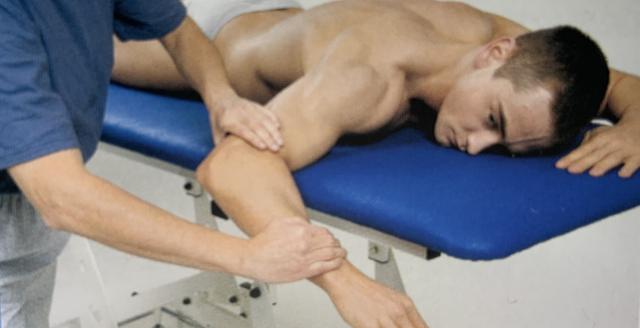
Action instruction:"Against my applied resistance, lift the forearm forward, upward and hold it steady."
4 level indicates that under a small resistance, the full range of motion can be completed, and 5 level indicates normal muscle strength, and it can be completed with a larger resistance full range of motion.
functional recovery training
Massage exercises
1
It is recommended to put massage before resistance training and stretching, because massage can effectively relieve muscle stiffness, restore muscle and fascia elasticity, especially for trigger points. Without eliminating the trigger point, directly stretching or resistance training may be counterproductive. You can manually massage, or use a therapy ball.
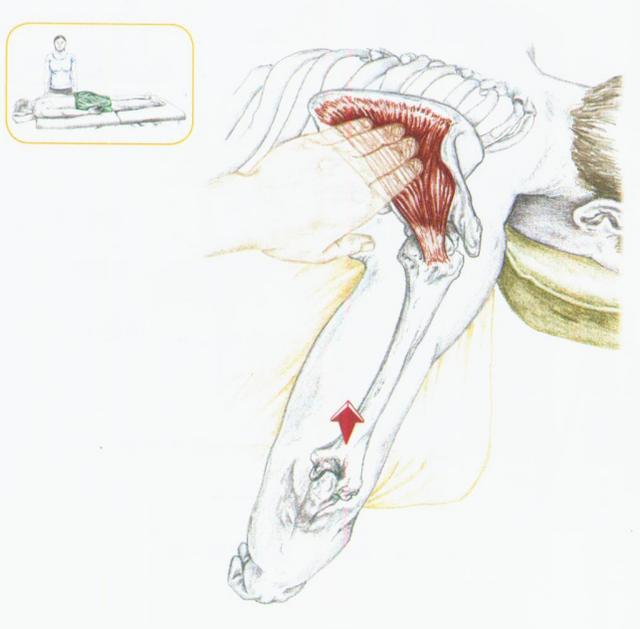
- The patient is in a supine position, the forearm is placed on both sides of the massage bed. Use bony landmarks to locate , which are the greater tubercle of the humerus, the inner side of the acromion, and the outer side of the acromion.
- Let the patient externally rotate the shoulder joint, feel the contraction of .
- Make a pause at the trigger point until the pain is slightly reduced. Pay attention to the strength of the massage, it should be gentle, slow, continuous, not excessive force.
Relax antagonist muscles
2
The main function of is to externally rotate the shoulder joint, through the relaxation of antagonist muscles to reduce the burden of .
Muscles that externally rotate the shoulder joint: , teres minor, posterior triangle, triceps long head.
Muscles that internally rotate the shoulder joint: infraspinatus, subscapularis, anterior triangle, posterior deltoid, teres major, subscapularis.
Resistance training
3
If is severely injured, it must start with overcoming the self-weight to train, and then gradually increase the resistance. is mainly externally rotating the shoulder joint, but the upper bundle also participates in the abduction of the shoulder joint, and the lower bundle participates in the adduction of the shoulder joint.
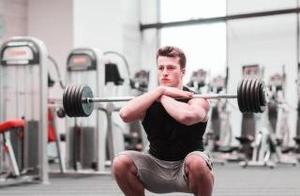
- When resistance training, do not use a single movement, youd better coordinate to train different angles and equipment, this is helpful for recovering muscle function and coordination.
- Without pain, do full range of motion training.
- Based on these principles, we can design many actions
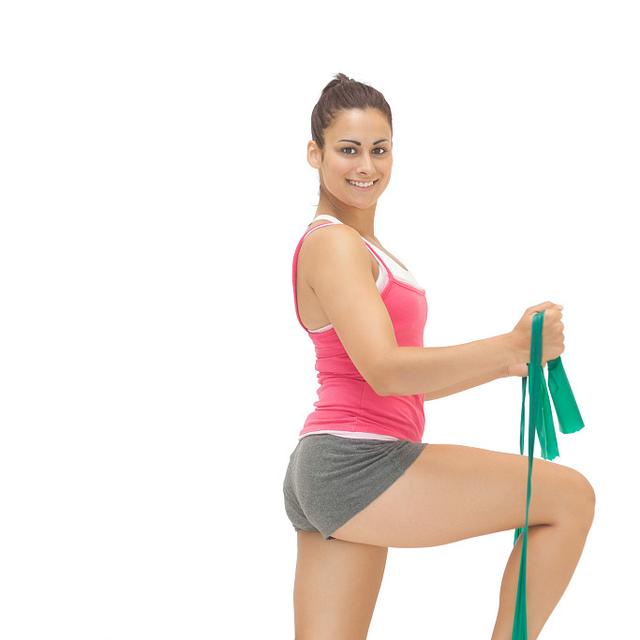
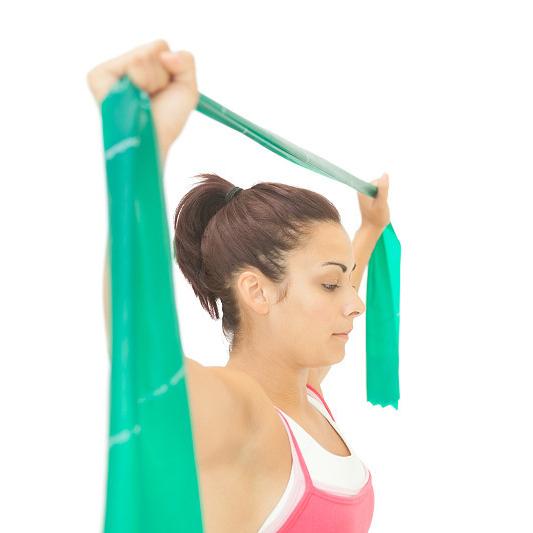
In daily life, maintaining a good posture and body shape is also very important for maintaining muscle strength after rehabilitation training. Because the most important thing is to have a healthy awareness.
1
END
1