:
The sport of pigeon racing is not just about racing pigeons, but also about the hands and head of pigeon fanciers. A pigeon's victory is not due to its having perfect eyes, but rather because the pigeon has a coordinated body. The coordination between the various parts of the body is of utmost importance and should not be pursued solely based on personal preferences.
The power of a pigeon's flight comes from muscle, which is attached to the keel. Therefore, this article will provide an overview of the muscle types and their quality based on the keel. All of the arguments in this article are based on the premise that the keel must be hard and strong, and it should not feel sharp when the pigeon is held in hand. Pigeons with a long keel are typically long-distance pigeons, with a large body shape and the keel nearly approaching the pubic bone. However, when the keel is too long, that is, close to the pubic bone, it is a bad phenomenon, and as the flight time increases, the tail of the pigeon will cause pain, which will then affect the pigeon's speed. These pigeons' muscles are like shells attached to the keel, with muscles that are often lacking in elasticity, feel bumpy, and have poor contraction. These pigeons are suitable for endurance races. If they participate in short-distance races, their speed is relatively slow, but their return rate is higher, and they have a higher chance of winning in medium-and-long-distance races.
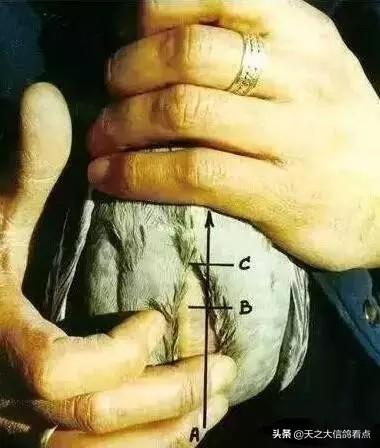
Medium keel type
The curvature at the end of this keel is smaller than that of the long keel, and it is often a medium-and-short-distance pigeon. Its muscles are divided into W-shaped, O-shaped and V-shaped. The W-shaped keel is straight, with medium length and small curvature, with ample muscle mass, drooping in the peak period, soft and elastic, and covered the keel. These pigeons have a high probability of winning in short-distance races and have a fast speed. The O-type is elastic, compact, has good flutter, fast contraction, muscle quantity is less, and the body shape is correspondingly small. Short-distance champion pigeons often have this type of muscle. The V-type has a large body shape, high keel, thin muscle attached to the sternum, and is mostly a short-distance pigeon with burst power. However, when flying long distances, they often go without return. They are easily stimulated, and their speed is often very high, but after a long distance, they often have no return.
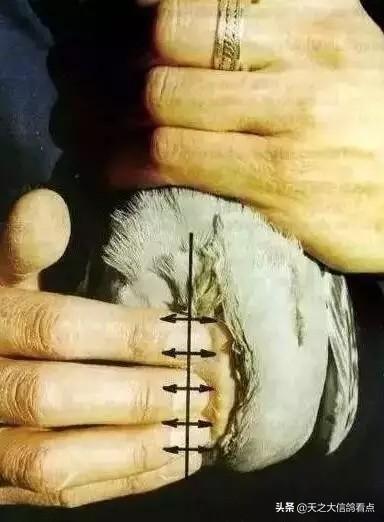
Short keel type
Short keel type pigeons have a keel that always decreases from the keel front to the keel end, and has no curvature at the end, and the distance between the egg pouch and the pubic bone is more than three fingers. These pigeons rarely achieve good results.In total, a pigeon's strengths and weaknesses should be identified by considering the system of various aspects, and cannot be judged solely based on a single aspect. Only through comprehensive consideration and continuous improvement through racing can outstanding pigeons be selected. The keel is the focus of the bone, and the muscles attached to the keel have a great relationship with the keel. Therefore, a pigeon's speed and endurance are closely related to the keel. Of course, high-scoring pigeons, except for the keel, have other major influences. Here we focus on the keel.
1. Keel Selection: Mainly choose thick and hard, then select angle and length.A hard and thick keel has strong muscle attachment and toughness. Pigeons with a hard keel also have a stiff and solid bone frame. Of course, it is also necessary to consider the local racing terrain and climate factors to choose the hardness of the keel. For long-distance endurance races, the bones need to be strong and lightweight. However, if it is too light, it will compress the internal organs during high-speed flight, which will slow down the speed. The angle of the keel should be as much as possible forward, slightly curved back towards the pubic bone and ischium, and it should be connected to the pubic bone at a level, with a gap of about the width of a finger. This is because when pigeons fly at high speed, the internal organs shift back, and a strong support is needed to maintain speed and endurance. The front of the keel (the front of the chest) should be thick between the backbone and the spine, and these pigeons have ample muscle mass and good endurance. From the side, the pigeon's skeleton should be a triangular shape. A pigeon's flight comes from muscle, and muscle development determines the speed. Therefore, the keel of speed pigeons will have a trend of 'low' in the front and 'high' in the back, and the keel shape trend of endurance pigeons will be relatively stable. 2. Analysis of three keel shapes
(1) Long Keel Type: Usually long-distance pigeons, with a large body shape and the keel nearly approaching the pubic bone. These pigeons' muscles are lacking in elasticity, have poor contraction, and their speed is relatively slow, but their return rate is higher, and they have a higher chance of winning in medium-and-long-distance races. (2) Medium Keel Type: The curvature at the end of this keel is smaller than that of the long keel, and it is often a medium-and-short-distance pigeon. Its muscles are divided into W-shaped, O-shaped and V-shaped. The W-shaped keel is straight, with medium length and small curvature, with ample muscle mass, drooping in the peak period, soft and elastic, and covered the keel. These pigeons have a high probability of winning in short-distance races and have a fast speed. The O-type is elastic, compact, has good flutter, fast contraction, muscle quantity is less, and the body shape is correspondingly small. Short-distance champion pigeons often have this type of muscle. The V-type has a large body shape, high keel, thin muscle attached to the sternum, and is mostly a short-distance pigeon with burst power. However, when flying long distances, they often go without return. They are easily stimulated, and their speed is often very high, but after a long distance, they often go without return. (3) Short Keel Type: The keel is always decreasing from the keel front to the keel end, and has no curvature at the end, and the distance between the egg pouch and the pubic bone is more than three fingers. These pigeons rarely achieve good results.3. Beware of Keel Deformation in Young Pigeons