Have you ever heard of weight set points? What factors determine them, do you know?
We all know that human weight tends to stay within a specific range over a long period. We also know that 'dieting' doesn't work for most people. Of course, it can lead to weight loss, but when you stop dieting, the weight quickly rebounds.

In fact, all of this is related to one concept, the set-point theory. Understanding it can help you better understand your body and, consequently, help you with better weight loss.
So, in the following content, we will discuss the 'set-point theory' with everyone.
1. What is the set-point theory?

This is simple: our bodies use hormones, hunger, behavioral changes, and other physiological mechanisms to 'protect' a specific weight range.
Our body operates with an asymmetric weight regulation system, which resists weight loss rather than weight gain. This is why weight loss is harder for most people than weight gain, and why people gradually gain weight instead of gradually lose it.
At this point, you might be wondering, 'How do people who eat a lot without gaining weight?'

Firstly, some studies show that some people react to overeating more like mice, they unconsciously increase non-exercise energy expenditure. People with high calorie intakes can burn 2000 calories more per day than those with low calorie intakes.
Secondly, when calculating calorie intake, 'people who eat a lot and don't gain weight' actually eat less than they think. They might only eat 1-2 large meals a day, without eating anything in between and they don't feel hungry.
Combined with high NEAT and strong appetite control 'switches', they don't easily gain weight, both fat and muscle.
In summary, you need to know that our body has a complex system for regulating weight.
2. What determines the set-point?
1. Genes

Many people believe that obesity is not their fault, it's something they're born with and destined to be overweight. However, for most people, this isn't the case.
Yes, there are some genetic differences that can make us tend towards higher or lower set-points, but they have little effect. Moreover, epigenetic studies show that 'obesity genes' can be 'turned off' by exercise alone.
The fact is, even if your genes make you prone to some degree of obesity, you can conquer it with the right lifestyle.
2. Physical activity level
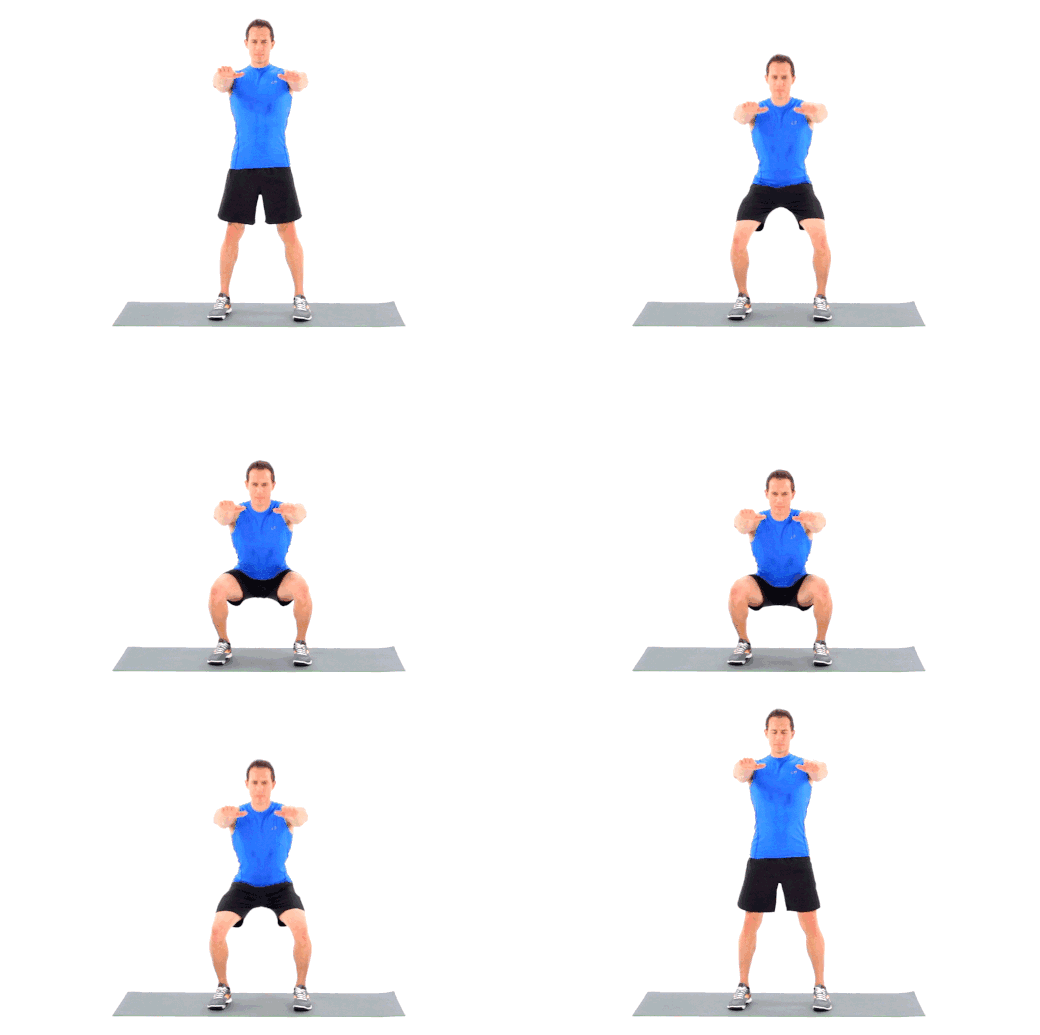
Maintaining a specific weight requires energy balance, meaning that energy intake or output matches energy expenditure. Whether your weight set-point is 100 kg or 80 kg, overeating or undereating will correspondingly increase or decrease your weight.
Our physical activity level has an impact on the set-point. People with high levels of activity burn more energy, and their set-point is generally lower than people who are sedentary.
3. Diet

Since we've been discussing how energy balance affects the set-point, let's look at diet.
Based on what I've said above, you can assume that energy intake itself doesn't determine the set-point, meaning that eating a lot of food won't raise or maintain the set-point high, and cutting back on food won't lower or maintain the set-point low.
Therefore, as you already know, energy intake and output are what determine weight, and if you consistently take in more energy than you burn, even if it's only 100 calories more, you will gradually gain weight.
When you gain weight, your body takes some measures to balance excess energy and prevent further weight gain, but this innate 'anti-obesity mechanism' doesn't fit our modern lifestyle.
As you get fatter, your set-point will rise correspondingly, and the longer you stay within a certain weight range, the easier it is for your body to 'get stuck' there.