Why My Deadlifts Are Always Failing – Here Are the 5 Mistakes You’re Probably Making
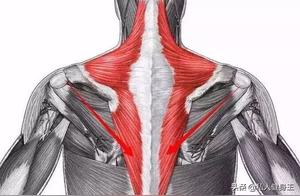
If you want to learn how to deadlift to maximize muscle growth and reduce injury risk, you need to read this article. If you want to build a V-shaped back and create a cool back, deadlifts are definitely the best choice for you. In short, deadlifts are one of the best compound exercises for developing the posterior chain muscles.
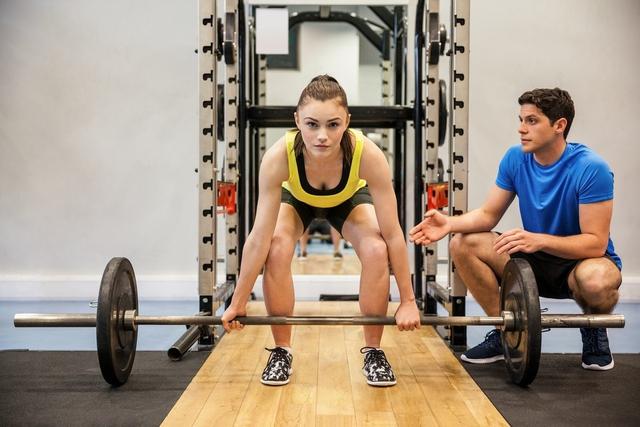
According to the 'Journal of Strength and Conditioning Research,' 'Compared to other free weight exercises, deadlifts can allow you to move more weight.' Compared to other exercises, it can make muscles grow faster. Studies have also shown that deadlifts are effective for improving athletic performance and vertical jump performance. Surrounding size, strength and athletic ability, this is an essential exercise in your daily workout.
However, despite the apparent simplicity of deadlifts, most people do them poorly, especially if you've never had professional training.
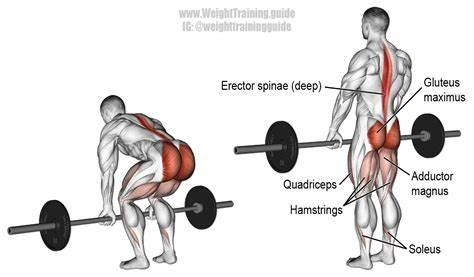
Because if you want to maximize its effectiveness while reducing the risk of injury, you need to pay attention to many action standards, besides simply lifting the barbell from the floor.
Error one: 'Squat' deadlift
People most often make a common mistake when performing deadlifts is to turn it into a squatting movement.
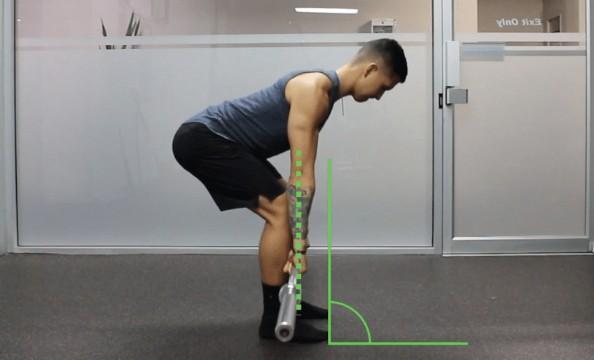
As shown below, this is done by placing the hips too low and keeping the back erect during the movement:
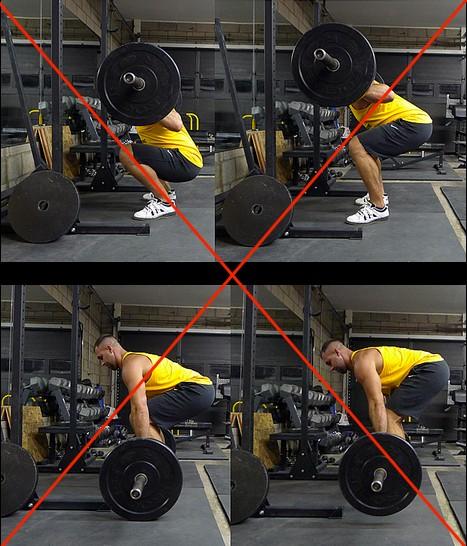
This is problematic because when the hip position is too low, your body is placed more heavily behind the barbell. Conversely, this will also create a disadvantageous lever effect, leading to increased pressure on the lower back and reduced weight you can lift due to improper positioning of the center of gravity.
So what should you do?
When starting the position, please pay attention to the following two key points:
1)While maintaining a straight chest, make sure your hips are between your knees and head (not your hips are too low or too high)
2)Make sure the bar is directly below your shoulder blades. If your hips are too low, you will notice that the bar is now in front of your shoulder blades, indicating that you need to re-adjust your hip position
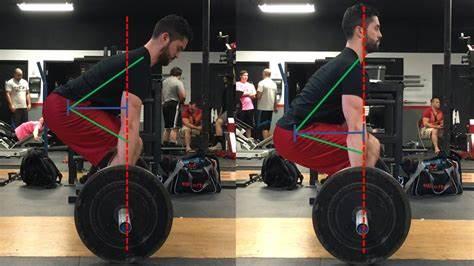
Stick to these two points to help ensure your hips are in the correct position, so that you can be more powerful and safer deadlifts.
Error two: Roundback
I'm sure you've all witnessed the very common roundback deadlift in the gym. This is the most serious mistake you can make if you're not paying attention to back injury.
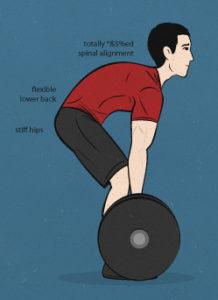
Ideally, throughout the deadlift, especially during the pull, your spine should remain straight, with your head, hips and back all moving inward. But if you struggle to do this and are sure you're not using a weight that's too heavy for you, you need to do a few things.
First, you need to change the way you initiate the deadlift.
Instead of thinking about lifting the weight from the floor, think about using your feet to 'push' the floor away as you raise the bar, just like you do when pressing out in a leg press. Use this push-rod for the first 3-4 inches, then push your hips forward to continue the pull. This subtle and effective technique can help prevent your hips from rounding too quickly, which can prevent your hips from rounding during the pull.
Secondly, you may also need to strengthen your glutes.
Roundback deadlifts are essentially a compensation for weak glutes. As shown below, bending backward actually brings your hips closer to the barbell. This gives the glutes a better mechanical advantage, and the glutes don't have to strain to lift the weight. Therefore, to solve this problem, you need to incorporate more hip strengthening exercises into your daily workout. Hip raises, squats and glute thrusts are all good choices.
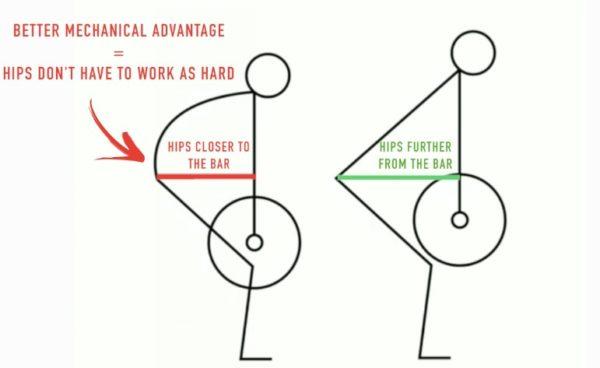
Combining these exercises with the tips mentioned earlier will greatly impact your lifting performance.
Error three: Maintaining a Vertical Deadlift Path
To perform an effective deadlift, the barbell path should be as short as possible from start to finish. Ideally, it needs to move vertically to move the barbell up and down at a single point, in order to maximize efficiency.
However, people often make a mistake by, when on the ground, the bar's starting point is too far from them, or when performing repeated movements, the bar position is as close as possible to the body.
Instead, you want to first place the barbell on your feet. Then, when lifting the weight from the floor, try to drag it as close as possible to the position of your ankles and legs, to ensure that it is lifted vertically.
However, to do this most effectively, you need to focus on making contact with your abs throughout the movement. To do this, before pulling, consider making a straight-arm pull to join the abs with the pulling rod.
As shown below, you will feel your abs are activated and opened:
In each repetition, you want to maintain a level joint connection when lifting the barbell from the floor, because this will help your barbell path and overall stability.
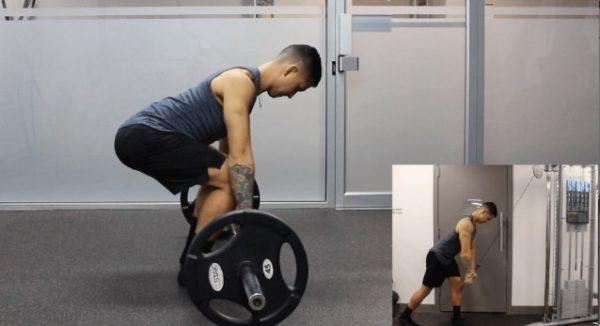
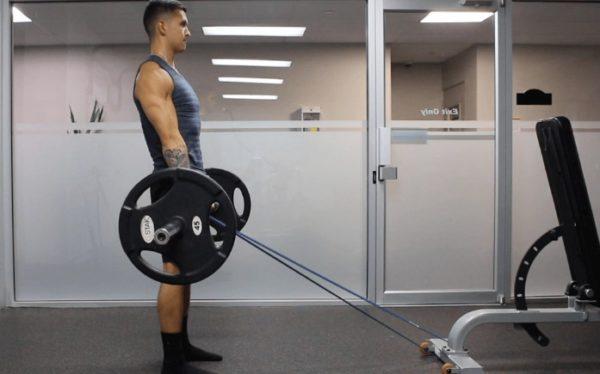
Now, if you still can't, as shown below, you can fix resistance bands on the bar and use your abs to pull the resistance band back. Then perform a few light movements while keeping your abs moving.
This should help you understand the feeling of using your abs correctly during the deadlift.
Error four: Slamming the Bar Off the Floor
Another common mistake people make when deadlifting is to simply heave the bar up from the floor. When doing this, you don't create the necessary muscle tension before lifting. The result is often back pain or discomfort, and makes it more likely that your lower back will round when you lift the bar.
Instead, what you need to do before lifting is to raise your chest while slightly pulling up the bar to create tension before the pull. Only after performing this small step can you continue to pull up.
Error five: Overextension
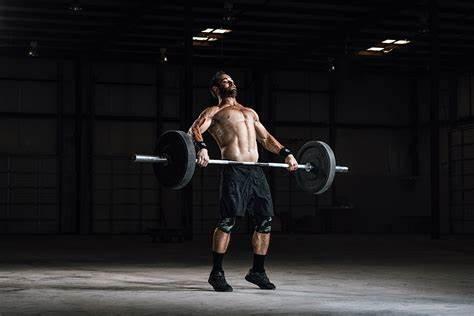
Deadlifts should be performed with a solid hip extension, meaning you contract your glutes and activate your glutes. The hips are pushed forward until the bar blocks further movement. However, as shown below, many people continue to over-extend their lower back and lean back to the highest position.
This is completely unnecessary and puts a lot of pressure on the lower back. For some people, it's simply a matter of technical error, which can be solved by simply avoiding over-leaning. But for many people, it's a matter of
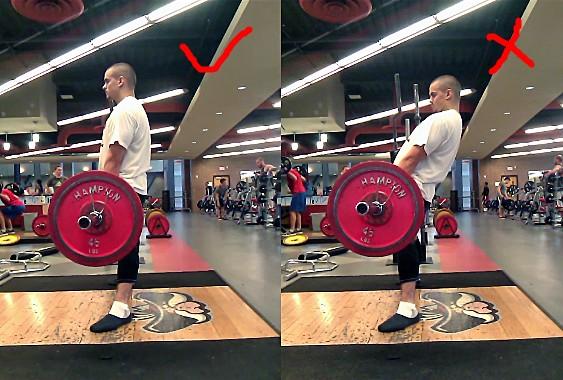
Pelvic anterior tiltproblem, or how to properly contract the glutes by leaning back during the deadlift. It is strongly recommended to read my article on pelvic tilt, which will help you.Finally,
For strong physique, exercise is essential, and it is key to perform exercise correctly.
If you want to improve your deadlift based on deadlifts, this article clearly shows how to perform this action correctly, so that you can maximize your deadlift performance and benefits, and I hope you like it, welcome to leave a comment and forward.