Free Swimmer's Knee and Hip Joint Muscle Soreness? A Solution Set to Help You Return to Correct Technique
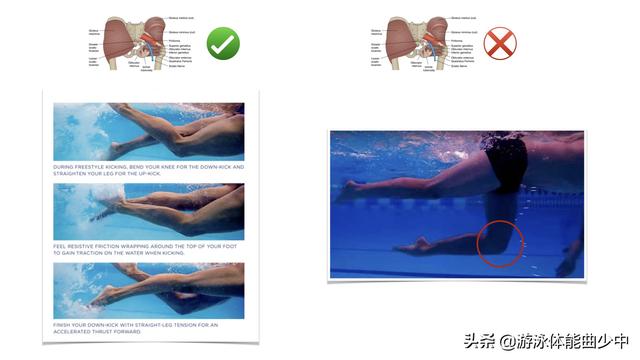
The overextension of the knees and excessive force in freestyle kicking, and the tension and soreness in the lower back, this problem, in addition to the abdominal muscles not being tight enough, has a significant reason – dysfunction of the hips. Perhaps the coaches and friends who have guided you have told you the correct technical actions, but the sedentary hips don’t “support” the work. You may also be familiar with many activation methods of the hips, but they don’t necessarily yield results. Let’s talk about the ‘activation’ of the hips together this time, focusing more on – exercise sequence.
Weak hips lead to a lack of power in kick-leg movements
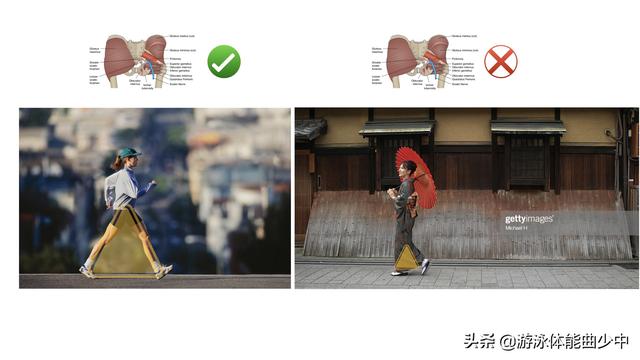
Let’s elaborate on the impact of hip muscle dysfunction on freestyle leg technical movements. Just as we do walking on land, the flexion and extension of the hip allows us to “step out”. If our hips are functionally deficient, we may be like wearing a “kimono”, only moving from the knee down, which increases pressure on the knee joint. This is the same as the up and down kicking of our freestyle legs.
To solve this problem, we must restore the functionality of our hips and involve them in the coordinated action.
There are many ways to activate the hips, but not all are suitable
In the approach of first ‘activating’ and then ‘integrating coordination’, I have seen and tried many methods. For example, directly targeting the pain point and letting the hips have obvious tension before performing ground exercises and water exercises, but it doesn’t always completely solve the problem.
Later, through consulting with the mentor and reviewing materials, I realized that in addition to addressing this ‘point’ specifically, it’s also necessary to understand the ‘face’ of muscle musculoskeletal subsystems – understanding its movement sequence is key.
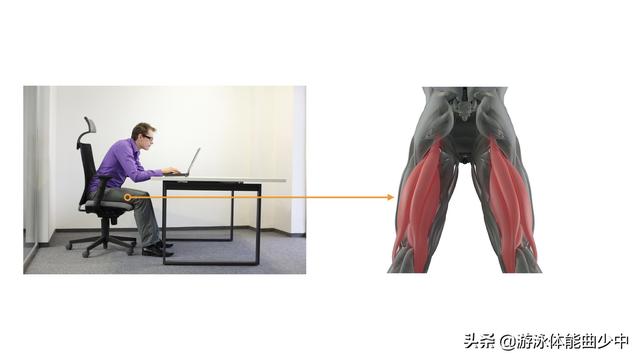
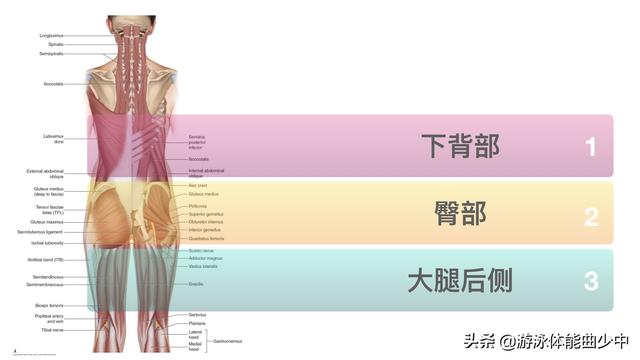
Within the muscle subsystem of downback, hips and back of the thigh, the hips should occupy the dominant position, playing a role in starting and stabilizing. However, because we have been sedentary, both the lower back and hip muscle groups have become slack, while the muscles on the back of the thigh have become more active. This makes us use these muscle groups more when walking and swimming.
We might feel that if a weak spot is strengthened, it’s okay, but facing lower back relaxation and tension in the back of the thigh, simply activating the hips isn’t enough. Many direct activation schemes ultimately end with further strengthening of the hamstring muscles.
Try ‘from top to bottom’ exercise sequence
So how to exercise more effectively? Let’s try ‘from top to bottom’ sequence. However, before that, I still recommend first relaxing the hamstring muscles on the back of your thigh.
1. Hamstring muscles relaxation
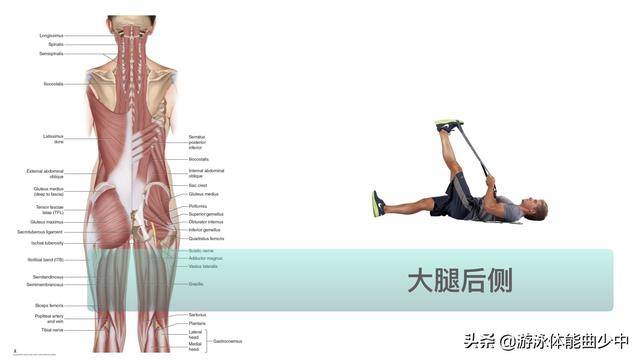
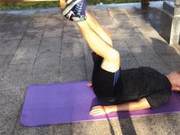
We can choose two ways to adjust the tension of the back of the thigh – the first is active isolation stretching; the second is static stretching. The principle of active isolation stretching is to use muscle interactions. When we contract the muscles on the front of the thigh, the control of the nerve over the back of the thigh decreases, and the muscles are relaxed. Static stretching is simpler, sitting forward, feeling the back of the thigh is stretched.
2. Tighten the muscles of the lower back
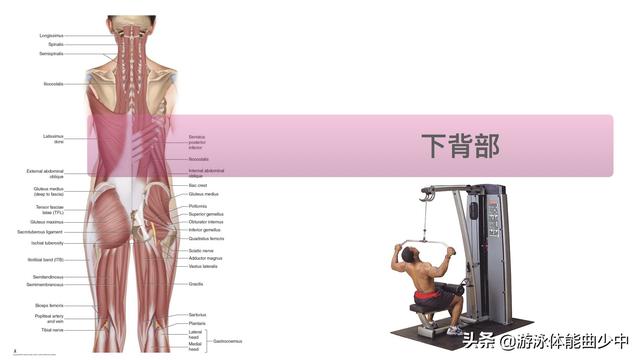
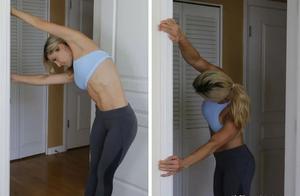
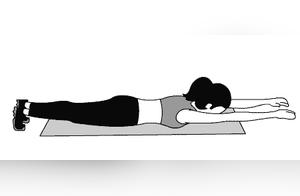
Some back extension movements are mainly initiated by the lower back muscle group, so it is better to first try some back extension movements. In addition, you can also consider doing a few sets of high-back extension movements to activate the latissimus dorsi muscle, so that our back feels more tightened. When we complete these exercises, if we feel that we are also in a “chest-up” state when standing, that’s the standard.
3. Activate hip muscles
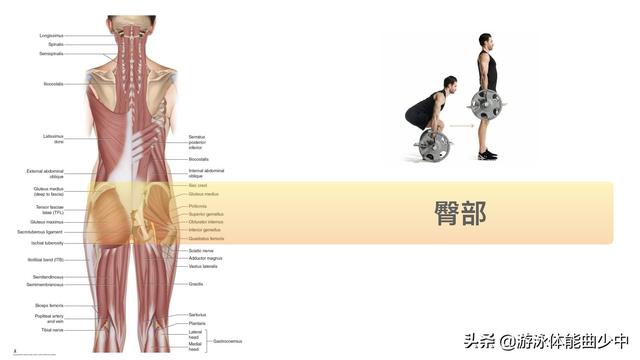
Compared to the hamstring muscles that easily cause lower back relaxation, I recommend doing hip flexion exercises, also known as hip extensions, after addressing the ‘top’ issue, to truly feel the force of the hips. Here, we don’t emphasize the technical details of the hip extension movement, we need to focus on two points: one is whether the strengthened back muscle group has been tightened; two is whether the knee has been bent. On this basis, we can fully feel whether the hips are exerting force.
4. Combine freestyle technical movements
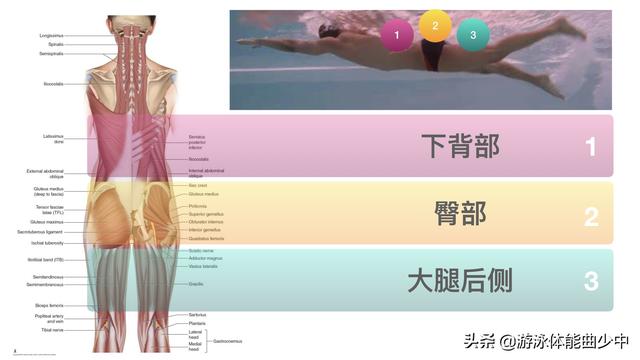
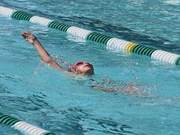
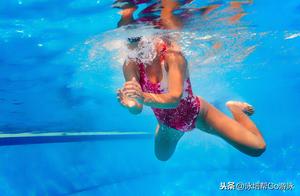
All the above three actions can be solved on a yoga mat and a resistance band by the swimming pool. The remaining exercises are to bring these feelings into the technical movements. I recommend prioritizing freestyle kicking, as this technical movement has a smaller hip flexion and extension range, making it easier for the activated hip muscles to participate.
Summary
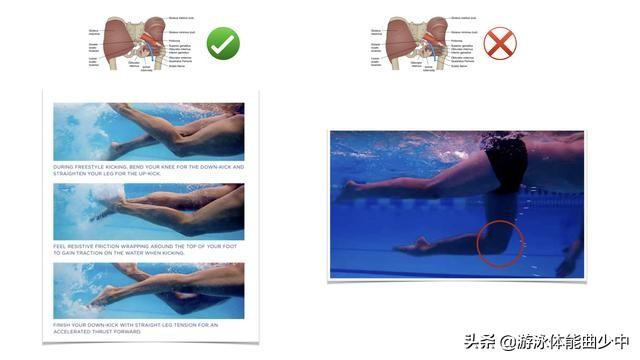
The hips are a common weak link for most people, and it’s ineffective to simply strengthen the problem after discovering it; it needs to be linked to the overall effect. This is how we can fundamentally improve our freestyle kicking technical movements, allowing us to improve speed and reduce sports injuries.
Copyrighted, please indicate the source when.