Heavy Dumbbell Press Technique: To Avoid Shoulder Injuries, We Recommend a ‘Three-Step’ Preparation Method
To have broad and muscular shoulders, going to the gym and doing a few sets of overhead presses is a good idea.
Facing all kinds of equipment, many little buddies are a bit hesitant when choosing dumbbells for pressing because: on the one hand, the dumbbells are too light and don't have a sense of force; on the other hand, the dumbbells have a relatively high degree of flexibility, which requires a certain level of stability for the shoulder joint.
Today we're going to share with everyone how to cleverly use the strength of the lower limbs to 'lock' the dumbbell weight in three steps, creating a safe premise for subsequent pressing actions.
First step: Lift the dumbbell from the rack, sit on a right-angle stool, and place the dumbbell above the knees of your thighs.
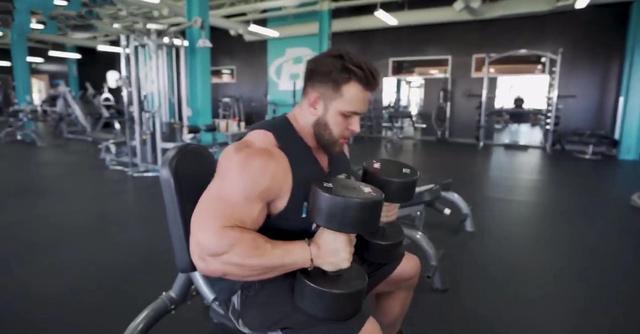
Second step: Focus your attention on your left arm and left leg. Extend the left leg and push upward with the hand on the leg, continuously moving upward with the dumbbell to reach a position where the upper arm is parallel to the ground and the wrist is perpendicular to the elbow.
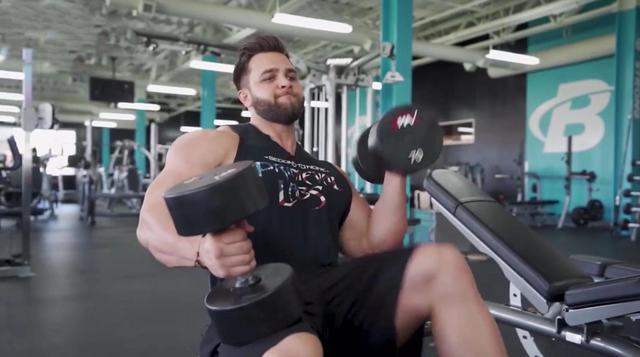
Third step: After the left leg lowers, step on the ground with the left foot, and the right foot repeats the same pattern to bring the right hand dumbbell to the same height as the left dumbbell.
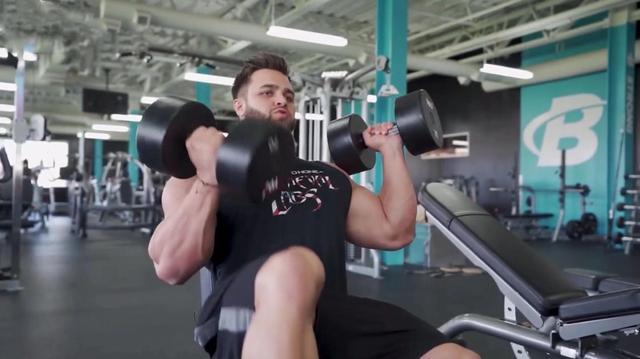
The first step is very simple – it's to give the hands holding the dumbbell a supporting position. This way, the weight of the dumbbell acts vertically downward on the legs, and won't put more pressure on the upper arm when you're in a seated position.
The second and third steps are relatively simple to explain, but the actual operation requires the trainer to have a good grasp of the coordinated force between the arm and the leg. If you just lift the leg to raise the weight, but the arm doesn't use its leverage to rise, then this leg extension process has no effect.
This technique is suitable for: When the dumbbell weight is the maximum weight you can lift, or slightly lighter or heavier than the limit weight when you want to push the bottle neck.
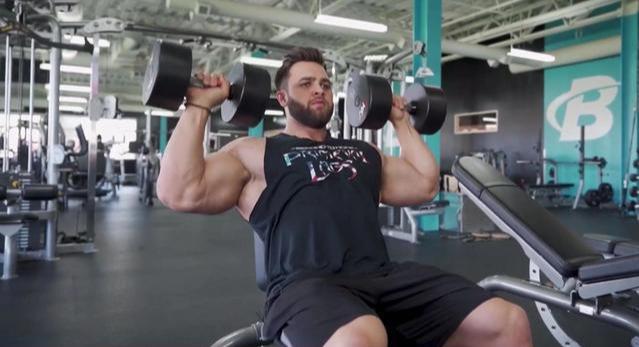
For example: If you use a dumbbell for pressing with a weight of 12kg, when you want to use a 12kg dumbbell for training when you're in a good state, and you want to use a 14kg dumbbell to break the bottleneck, or when you're in the later stage of training and you're short of strength to use a 10kg dumbbell to finish, you can use this technique.
We want to popularize this technique because many trainers only use the strength of the upper arm to lift the dumbbell, and even use the dumbbell to throw the weight up from bottom to top with inertia, which is very unsafe. Relying on inertia to bring the weight from a low position to a high position without using leverage puts a lot of pressure on the shoulder joint.
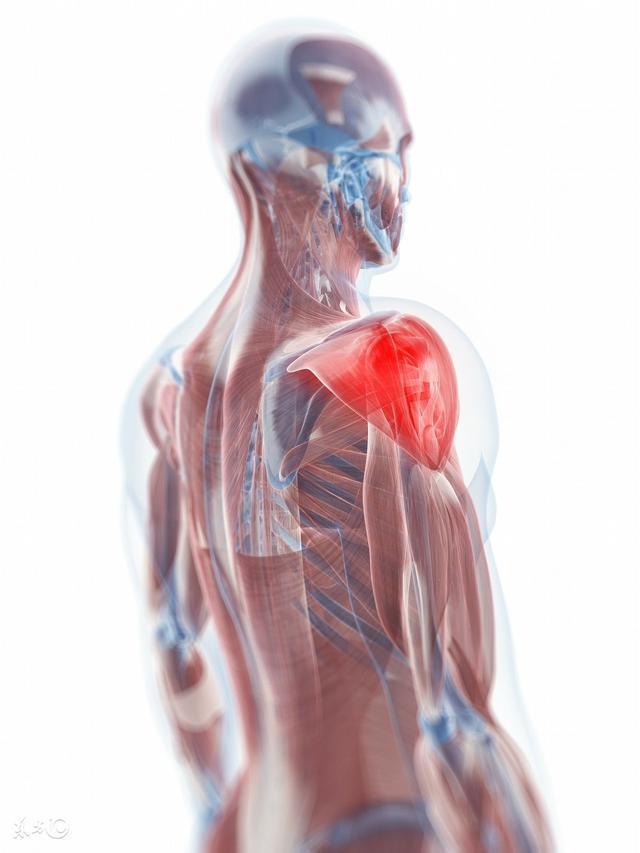
When you sit on a right-angle stool with dumbbells, and you bring the dumbbell to the starting position of the pressing action, if there's a friend to assist you, you'll find it easier to lift the dumbbell.
For those who have never used this technique, it's best to start with lighter dumbbells to cultivate the awareness of coordinated upward force between the leg and arm. When you can smoothly transition the weight on your leg to the starting position of the press in a short period of time, you can choose a larger weight for training.
2. After completing the press action, you can still lift your leg to receive the weight of the dumbbell, which is safer than dropping the dumbbell to the ground.
3. Overhead presses with heavy dumbbells are not suitable. If you want to get the pump from a large weight, you can use Smith presses or equipment presses, which are more stable actions.
Don't worry about shoulder training, training techniques will help you.
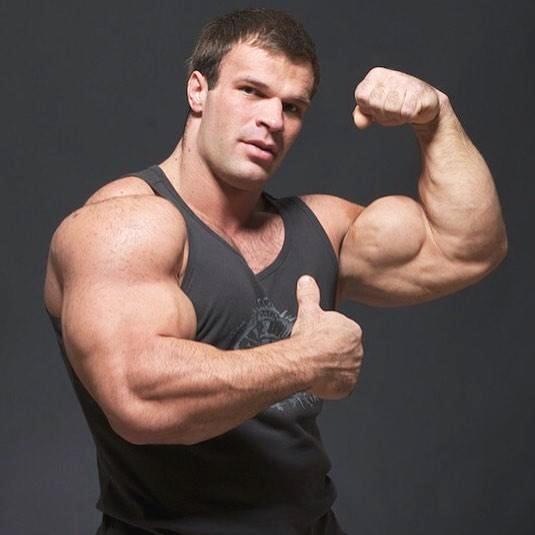
To choose a larger weight to break through the bottleneck on a safe and stable basis, we recommend you try this small technique and apply it to seated dumbbell presses and flat dumbbell presses, according to your own physical condition, arrange training and achieve significant progress!
That's all for today's content. Created with sincerity, sincerely thank you for every like, forward and collection. Comment and interact in the comments, we will output more practical content in the follow-up.
Follow China Health & Fitness, training knowledge, fitness information, bodybuilding & fitness, there's always content suitable for you~
~