Training | How to Calculate Training Volume? Learn to Quantify Your Fitness, and You'll Be More Likely to Achieve Breakthroughs!
Introduction: When fitness enthusiasts meet, greetings often include exchanges like, 'You look so good, how long have you been training?' Sometimes the answers you receive may be discouraging. A beginner who has trained for half a year can easily outperform you in terms of athletic performance and muscle mass. What's the reason?'

() Efficiency: Starting with Quantified Fitness
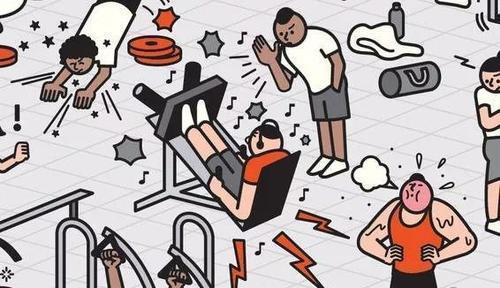
This is a common phenomenon for many fitness enthusiasts: bringing a gym bag to the gym, seeing which equipment is unoccupied, quickly occupying it, and then working out every part of the body. After training, they don't stretch, and then take a shower and change clothes to go home.

They then foolishly believe that as long as they continue like this, they will eventually see changes in their physique. Until they practice for two years, they find that not only is there no progress in terms of weight, but their physique has not changed noticeably. So, they become a state of abandoning fitness.
In fact, this is becausethere is no systematic planand secondly, there is no sustained stimulation.Both of these lead to one point, which is quantified fitness, accurately including two parts:namely, training volume and training intensity.
Why are these two points considered core? Because the purpose of all training aimed at improving athletic performance and improving physical appearance is to provide the body with stimulation in the first and second stages of the Selye stress model, triggering the body's adaptive state, while also striving to avoid the third stage – exhaustion.
() Training Volume and Training Intensity
Training volume is easy to understand. In strength training, it represents the total weight you bear in a single set or group of training; that is:
single weight x repetition count = training volume.In fact, there is often another commonly used index added during training, which is sets. So the training volume becomes:single weight x repetition count x set count = training volume.Training intensity, on the other hand, refers to the
weight used in a single training session.It is determined by the percentage of 1RM. For example, 60% of 1RM is considered 'low' intensity, and 80% of 1RM is considered 'high' intensity.
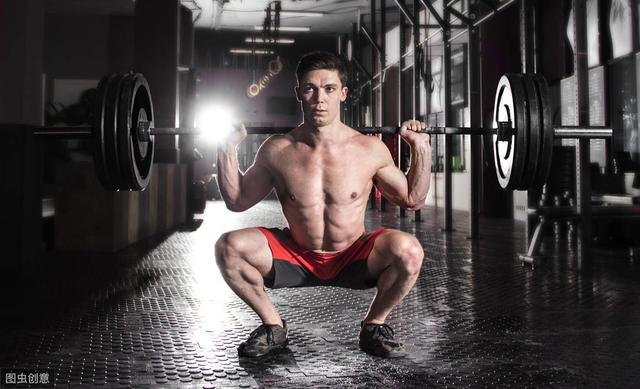
For example, in a squat training, the 1RM weight is set to 100kg. Using barbell squats to do a single set of intensity at 50%RM, 10 repetitions, and a total of 5 sets of training, then the training volume is very clear:that is 5 x 10 x 100 x 50% = 2500kg.() The Benefits of Quantifying Training
Why do we need to clearly understand and record our training volume? The reason is simple, as we know from scientific literature that
training volume is related to muscle growth
and after reaching a certain level, it can be said that the higher the training volume, the better. We also know that different training volumes will differently affect
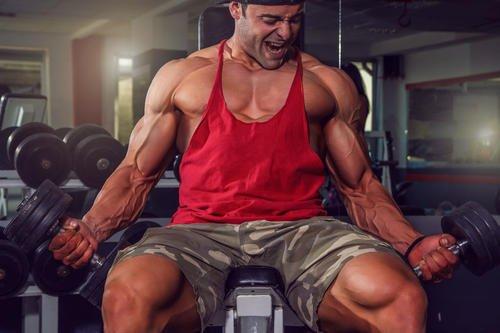
recovery abilityand it will differently stimulate the body's growth system.Because of this, you need to balance training volume and training intensity in a strength training plan to achieve a good balance. Once one aspect is out of balance, you are likely to experience 'overtraining' caused by either of them.For example, a very extreme training style, 'either give up or choose a large weight,' will lead to overtraining due to training intensity; while another style 'train until exhaustion every time,' it may lead to overtraining based on training volume.Understanding the recovery rate triggered by these two variables is equally important, because overtraining caused by
training volume
primarily affects the contractile components and metabolic system of muscle cells; while overtraining caused by
training intensityprimarily affects the function of the nervous system and its interaction with the muscular system.Conclusion: If you want to make a bigger breakthrough, you must understand your strength level before providing a quantifiable parameter for each of your training sessions, and adjust the training volume and training intensity at any time. Then, everything you want can be handed over to time to ferment slowly!