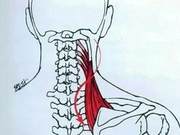
Why a Good Water Catch is So Difficult to Master
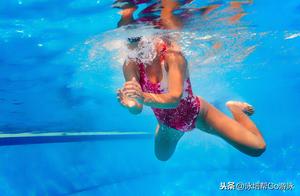
When you lower your hand and bend your elbow to grip the water, your 'catch' is in front of your body:
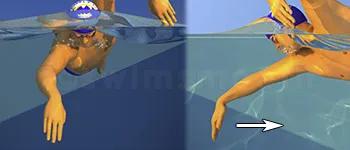
A good catch involves pushing the water back to propel you forward. Catching the water is crucial in swimming; if you don't fully grip the water before stroking, you'll lose most of your thrust.
Many swimmers don't push the water back; instead, they push the water down—even worse, they let their wrists sink forward pushing the water! If you're an overwaterer, you're likely doing this:
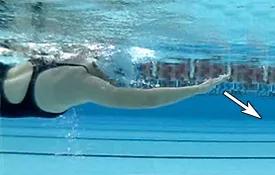
If you let your wrists sink, you'll feel the water impact your palm when you're moving forward. This creates pressure on your palm, but it's a braking force, not a propelling force. If you push down on the water, because the water is heavy and immovable, you'll also feel a lot of pressure on your palm:
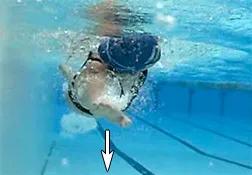
The problem is that many swimmers think that when they catch the water well, they feel a strong locking sensation or a firm connection with the water. Because they are pushing down or letting their wrists sink and pushing forward, they feel pressure on their hands, which feels good. Do you feel this when you swim?
As you improve your catch and start pushing the water back, you'll actually feel less pressure on your palms, because you're helping the water flow through your body. If you're looking for a firm connection with the water, pushing the water back may feel strange at first. This may be the biggest reason why a good catch is so elusive:
To improve your catch, as shown in the diagram, you need to focus on tilting your wrists downward and bending your elbows early in front of your head. This will help you push the water back. As you develop this technique, you may initially feel 'locked' or 'anchored,' but don't worry:
Many overwaterers need to increase their stroke rate to swim faster. However, if letting your wrists sink is a very strenuous effort, it's like driving with the brakes open. By canceling the braking action, your stroke rate will naturally increase without any effort:
The last point: technically it's difficult to achieve excellent catches, and this is where you can distinguish between excellent swimmers and general swimmers. However, to significantly improve your speed, you don't need perfect catches—just starting to push the water back, you can achieve decent gains in speed and efficiency.