Boxing Training Introduction: Basic Solid Ball Techniques
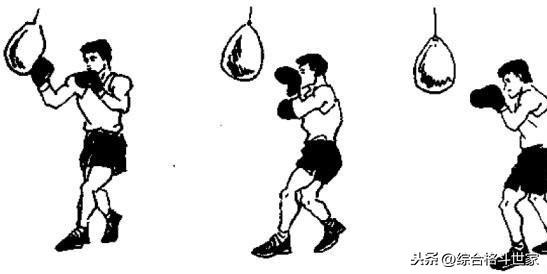
Solid balls are primarily used to practice distance, accuracy, and speed in boxing. When striking a solid ball, speed is crucial, and the faster the jab, the more powerful it becomes. When practicing with solid balls, pay close attention to maintaining the correct striking posture, coordinating footwork with your punches, and adjusting your distance as the ball swings. Mastering the distance for various punches is key.
The suspension height of the solid ball should be determined by the practitioner’s height, and can be adjusted at any time based on the situation of the opponent.
(1) Left Straight Punch with Lead Hand (Figure 116)
The lead hand should be aimed at the lower third of the ball’s front end when the ball swings into the punch’s range. Strike with the lead straight punch or half-step punch when the ball initiates its forward swing.
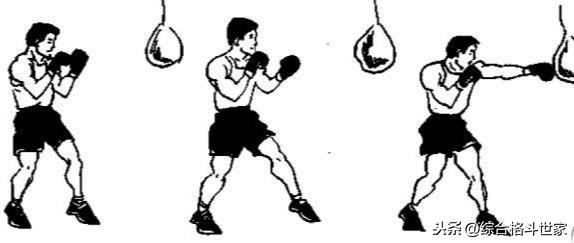
(2) Right Straight Punch with Rear Hand (Figure 117)
When the ball swings into the punch’s range, strike with the rear straight punch.
Combination of Left and Right Straight Punches: First, aim at one-third of the ball’s surface, and simultaneously strike with the lead straight punch. When the ball is just starting to swing forward, immediately follow with the rear straight punch, or when the ball returns to a vertical line, strike with the rear straight punch.
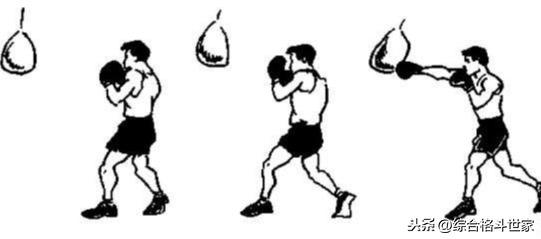
(3) Left Hook Punch with Lead Hand (Figure 118)
When the ball swings into the punch’s range, the lead hand should be aimed at the side lower end of the ball one-third of the way and strike. During the strike, slightly turn your body to the left, and raise your shoulder to increase the strike power.
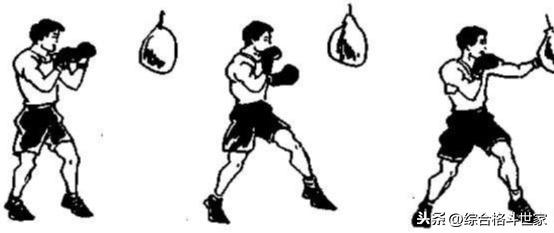
(4) Right Hook Punch with Rear Hand (Figure 119)
When the ball swings into the punch’s range, the rear hand should be aimed at the side lower end of the ball one-third of the way and strike. Do not lift your elbow before striking; instead, follow the punch with your arm to shoulder level. Slightly turn your body to the right and raise your shoulder to increase the strike power.
Combination of Left and Right Hook Punches: When striking, slightly twist your body with the punch to increase the strike power.
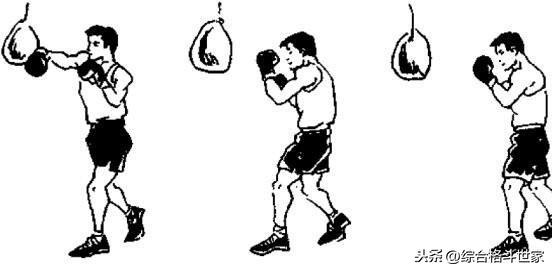
(5) Left Uppercut Punch with Lead Hand (Figure 120)
The lead hand should be aimed at the ball’s bottom end and strike while simultaneously turning your body slightly to the right and raising your upper body to increase the strike power.
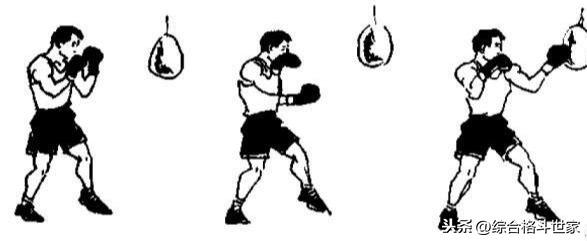
(6) Right Uppercut Punch with Rear Hand (Figure 121)
Same as the left uppercut, but in the opposite direction.
Combination punches with solid balls can be flexibly combined according to your intentions. Adaptively strike based on the swaying of the solid ball.