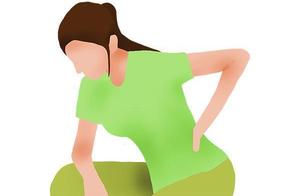
In fact, there is no ‘fitness is complete’

During my previous fitness training, I was afraid that I wasn't working hard enough, afraid that I wasn't seeing results.
So I was always searching for the question, 'What does it mean to be truly fit?'
I wanted to train to a certain degree, to achieve the maximum muscle gain effect, to achieve the greatest possible strength progress.

Therefore, if you were to search for the term 'fitness is complete' now, you'll find that a large part of it comes from my hands.
However, my current view has changed; discussing 'fitness is complete' doesn't make sense, and there isn't such a thing as 'fitness is complete.'
Let's compare my original view and my current view to help later generations.
My original idea of fitness is complete
I originally thought there were standards for everything, so the extent to which you train to must have a measurement.
I came up with 3 measurement standards, and when you reach these 3 levels, you're considered 'complete.'
(1) Muscle pump
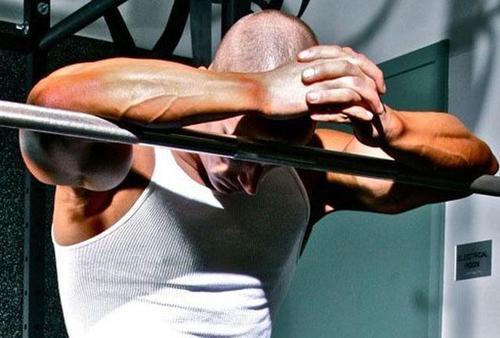
A muscle pump is when your muscles become bloodshot. You feel a strong sensation of muscle swelling. At this time, you are considered 'complete.'
For example, when doing back exercises, if you train to the point where you unconsciously arch your arms, then that level is considered 'complete.'
But this judgment standard has a problem: the chest muscles and arms are easily bloodshot. So should you continue training at this point?

(2) Death Limit 2.5
Simply put, death limit 2.5 is when the muscles are close to complete muscle fatigue, that is, when your muscles are close to a state of no tension.
For example, when doing back exercises, you train until your muscles twitch, then your muscle strength will decline a lot.
Again, you can train your chest muscles until you can't squeeze them anymore. At this time, the chest muscles are considered to be fatigued.
For example, when doing dumbbell curls, you train until you can't lift 2.5 kg dumbbells, these states are called death limit 2.5.
There is also a problem, how can you guarantee that you are training to this state without causing muscle breakdown greater than muscle recovery?

(3) Joint Instability
Joint instability is a good way to judge. This method can judge overtraining or injury prediction.
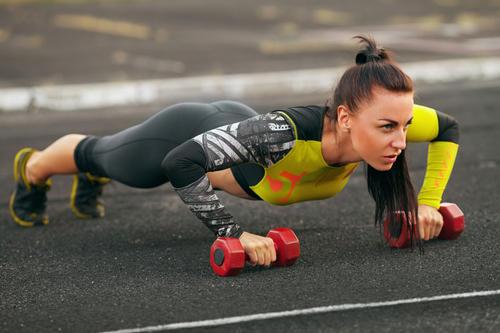
For example, when doing push-ups, if you train until your elbows start to tremble, you shouldn't continue.
But this state doesn't mean better muscle gain effect, it doesn't mean your strength will improve. It only represents a problem, which is that you cannot cope with the current training.
You can use these three aspects as reference during training, but don't think that this is 'fitness is complete.'
Don't think that training to these levels will maximize your muscle gain and strength improvement.
Actually, there is no 'fitness is complete'
The three states we understand from the training process can be considered 'fitness is complete,' as long as you reach these states, you feel like you've trained well.
But feeling like you've trained well doesn't mean your strength will improve better, and muscle gain doesn't mean better.
So if you're trying to improve muscle gain and strength, there's no such thing as 'fitness is complete.'
Instead, our training shouldn't focus on how long we train, how many sets we train, or what state we train to. We should focus on 2 aspects.

(1) Weight
From the muscle gain effect, the most basic principle is that your muscles can withstand a greater load, which means your muscle fibers are getting thicker, and your muscle gain effect will be better.
So when training, we should focus on the weight your muscles can withstand.
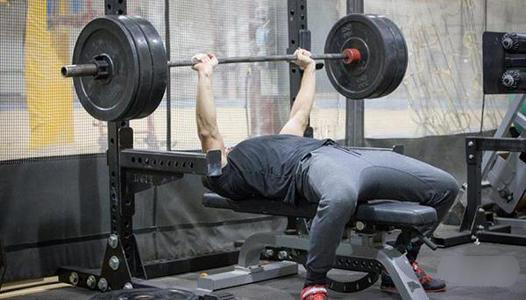
Simply put, the weight your muscles can withstand, if you do one-handed push-ups compared to two-handed push-ups, one-handed push-ups have a better muscle gain effect.
So we specifically do exercises, we should record our training weight, the most basic is the three major exercises weight.
(2)Control Ability
The second aspect is whether your control ability of a certain exercise has improved.
For example, when doing pull-ups, when we first start training, we feel awkward. But as we train, we can easily do it. This is the performance of improved control ability.
If your training plan trains for a long time every day, but your control ability of each exercise doesn't improve, then this shows that you just feel like you've trained well, and you haven't trained 'complete.'
At this time, you should re-arrange the exercise order, and reduce the number of exercises and capacity.
Today, we're simply mentioning it, without in-depth explanation of 'fitness is complete,' because it's actually not important, the degree to which you train is not important.
The most important thing about fitness is whether you've made progress, not to what extent you've trained.