Running Pre-Workout Dynamic Stretching Warm-up Exercises, Collect Now!
According to the theory, when a society enters a rising period, more and more people will fall in love with running, this simple and pure sport. Because through running, you not only exercise your body, but also forge your willpower. In modern society, competition is so fierce, if you want to achieve a great career, you need good planning ability and strong willpower, these qualities can all be learned through long-distance running. But what kind of running can 'long-distance run and thrive'? We need to learn the science of 'running stretching'.
1: Dynamic stretching before running (Part 1)
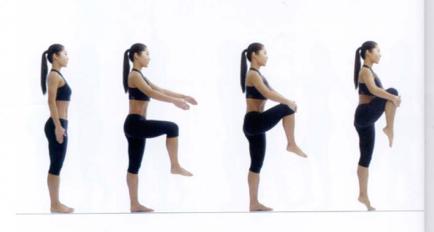
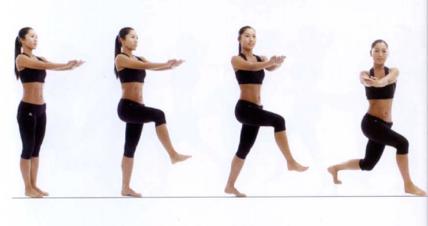
Action 1: Leg raises and heel walks forward
Effect 1: Stretch the hip muscles, increase the range of motion of the hip joint
Key Point 1: We perform dynamic stretching while walking; the torso remains upright; hold one side of the leg with your hands, try to bring the leg as close as possible to your chest, support the leg to perform heel walking; alternating left and right, repeat the action 8-12 times, each time gradually increase the amplitude and force. This action can help us stretch the hip muscles, increase the range of motion of the hip joint, activate the ankle joint muscles, improve the balance and stability of the ankle.
According to the theory, when a society enters a rising period, more and more people will fall in love with running, this simple and pure sport. Because through running, you not only exercise your body, but also forge your willpower. In modern society, competition is so fierce, if you want to achieve a great career, you need good planning ability and strong willpower, these qualities can all be learned through long-distance running. But what kind of running can 'long-distance run and thrive'? We need to learn the science of 'running stretching'.
You may have heard that stretching before running is a big mistake. In fact, studies have shown that if you do static stretching – holding a muscle at an extended, fixed position for more than 30 seconds – it may impair performance. (These stretches can be done after running). But dynamic stretching – using controlled movements of the legs to improve range of motion – can relax muscles, increase heart rate, body temperature, and blood flow, which can help you run more efficiently.
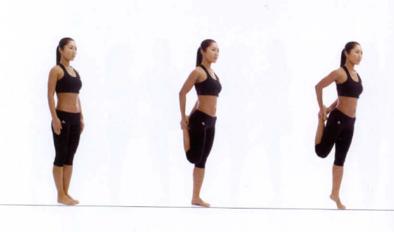
Action 2: Knee heel walk
Effect 2: Stretch the muscles on the front of the thigh, activate the ankle joint muscles
Key Point 2: Stand upright, the hip joint remains stationary; use your fingers to grasp the ankle, extend the knee joint as far back as possible, while supporting the foot to perform heel walking; alternating left and right, repeat the action 8-12 times, each time gradually increase the amplitude and force. This action can help us stretch the muscles on the front of the thigh, activate the ankle joint muscles, improve the balance and stability of the ankle.
Before running, stretching is important to improve muscle and core temperature, increase blood flow speed, reduce muscle and joint viscosity, and prepare the body and mind for a higher intensity training, try to minimize the risk of muscle and joint injury, therefore, everyone who engages in sports should include stretching as an important part of their goals.
Action 3: Turn and step forward with arms and legs
Effect 3: Stretch the waist and abdomen muscles; increase the range of motion of the hip joint; increase the range of motion of the spinal rotation; increase the stability of the pelvis
Key Point 3: During the exercise, the torso remains vertical to the ground, using the spine as an axis for rotation; cross your hands; bend forward at the waist, one side of the leg steps forward, the body rotates to open your arms to a maximum activity range; when squatting, the knee of the front leg should face the toes; alternate left and right, repeat the action 8-12 times, each time gradually increase the amplitude and force. This action can help us stretch the waist and abdomen muscles; increase the range of motion of the hip joint; increase the range of motion of the spinal rotation; increase the stability of the pelvis.
If you just start running and feel pain, the pain is usually in the joint or tendon attachment to the bone. Pain in the joint is mainly caused by not warming up before running, and directly running, which leads to insufficient synovial fluid secretion in the joint, poor joint lubrication, and friction.
Warm-up is a simple and relaxed movement to gradually accept higher intensity training, promote the body and mind to reach peak state, and minimize the risk of muscle and joint injury, so stretching should be included as an important part of everyone's goals.
Part 2: Pre-running dynamic stretching
Action 1: Hip external rotation heel walk forward
Effect 1: Stretch the hip muscles; activate the ankle joint muscles
Key Point 1: We perform dynamic stretching while walking; the torso remains upright; hip joint external rotation to parallel with the little toe, use your hands to hold the little toe and pull it upwards, while supporting the leg to perform heel walking; alternating left and right, repeat the action 8-12 times, each time gradually increase the amplitude and force. This action can help us stretch the hip muscles; increase the range of motion of the hip joint, activate the ankle joint muscles, improve the balance and stability of the ankle.
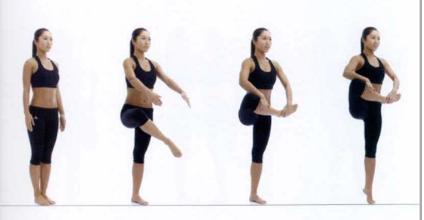
Suitable feeling is a slight pulling and stretching sensation in the stretched muscles, the feeling disappears after the action ends, do not use too much force to easily cause muscle strain.
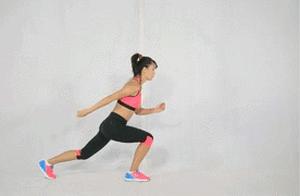
Action 2: Turn and step forward with arms and legs
Effect 2: Increase the range of motion of the hip joint, activate the back extension muscles
Key Point 2: Stand upright, one side of the leg steps forward, when squatting, the knee of the front leg faces the toes, the knee is bent about 90 degrees, do not exceed the toes; during the exercise, lean forward, the elbow of the corresponding arm reaches the inside of the little toe as close as possible, and maintain the arm extended; the torso rotates to open the arms to a maximum activity range; restore the upright position and continue to step forward with the other leg, alternating left and right, repeat the action 8-12 times, each time gradually increase the amplitude and force. This action can help us increase the range of motion of the hip joint, activate the back extension muscles.
Suitable feeling is a slight pulling and stretching sensation in the stretched muscles, the feeling disappears after the action ends, do not use too much force to easily cause muscle strain.
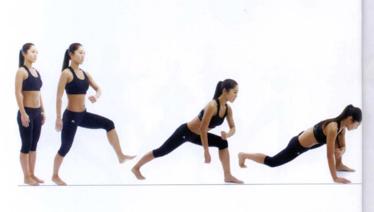
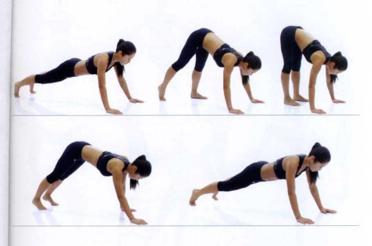
Action 3: Arms and legs forward step
Effect 3: Activate the upper limb and lower limb muscles and the trunk muscles
Key Point 3: First, support your arms on the ground, keep your upper body straight, your legs try to extend as much as possible, step forward with alternating arms and legs, the body bends forward, and then alternately step forward with your arms, keep your body parallel to the ground, repeat the action 8-12 times. This action can help us stretch the muscles on the back of the legs, activate the upper limb and lower limb muscles and the trunk muscles.
Suitable feeling is a slight pulling and stretching sensation in the stretched muscles, the feeling disappears after the action ends, do not use too much force to easily cause muscle strain.
15-2015-20
: