Frequent Exercise Can Keep You Away From Cervical Spondylosis
Cervical spondylosis is a common physical disease that people often encounter. It is not big or small, but it needs our attention. We should exercise and do more fitness.
To relieve cervical spondylosis, first see what wrong postures you have.
Posture one: Slouching with the waist
Experts interpret: This sitting posture is also a common posture used by many friends when playing mobile phones and computers etc.
Low head posture makes the cervical spine prone to fatigue, the lower back has no support point, the waist is in a state of tension, if this continues, it is very easy to induce cervical spondylosis and lumbar spondylosis. At the same time, the distance between the eyes and the screen is too close, which can easily cause vision impairment.
Posture two: Leaning head to look at the screen
Experts interpret: When you feel tired while using a computer, many people use this posture. The head leans against the hand, leaning towards one side. This action puts the cervical spine in an incorrect position and is likely to cause cervical spondylosis.
If you maintain this posture for a long time, all parts of the body will feel uncomfortable, and it may lead to cervical and lumbar spondylosis.
Posture three: Twist the body to play mobile phones
Experts interpret: Many people use this posture when using mobile phones, which they feel comfortable with, but it is not small. The body is in a twisted state, the waist has no supporting point, it is prone to fatigue and injury. This action also damages the hip joint.
Posture four: Talking on the phone while typing
Experts interpret: It is a common sitting posture when working while talking on the phone and using a computer. This sitting posture, the body is bent, the waist bears a lot of pressure, which is likely to cause lumbar spondylosis and hunchback.
Posture five: Laptop placed on the lap

Experts interpret: When using a laptop, many people adopt this posture in order to pursue comfort. The body sways, and the cervical spine and lumbar spine are most likely to be damaged. The lumbar spine and cervical spine are in a flexed state, which is likely to cause lumbar spondylosis and cervical spondylosis.
Posture six: Lying on the sofa to play mobile phones
Experts interpret: This posture is commonly used when using a tablet computer.
This posture has no support point for the waist, the muscles are in a stretched and tense state, which can cause pain in the waist. At the same time, this posture will also affect vision.
Posture seven: No posture changes for a long time
Experts interpret: This posture is common when using mobile phones. If you play mobile phones with this posture for a long time, the shoulder remains in the same posture, which does not relax, it is easy to induce shoulder pain. Elevating the raised legs is not conducive to blood circulation in the legs.
Let's learn a neck fitness exercise
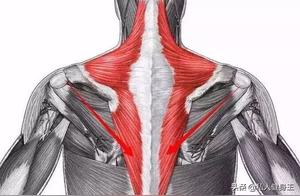
The cervical spine is the 'precious' part of the human body. It supports the head, connects to the torso, is the most active part of the spine, and is also the intersection of the central nervous system and peripheral nervous system. Once it malfunctions, the consequences are serious. We can learn a neck fitness exercise.
Section 1: Lion head
Preparation posture: Two legs apart, two hands crossed on the waist. Action:
Relax the neck and head, and do a large circular movement, alternately in clockwise and counterclockwise directions. Each 6-8 times.
Section 2: Looking at the moon
Preparation posture: Two legs apart, two arms hanging naturally.
Action: ①The legs are slightly bent, the torso leans forward 45 degrees and rotates to the right and back, and the head follows the rotation upwards, making a moon-watching posture, the right hand raises to the head, the right hand is placed behind; ②Return to the preparation posture; ③①② same, but the direction is opposite. Repeat 6-8 times for left and right.
Section 3: Fighting for the neck
Preparation posture: Two elbows bent, two hands with fingers crossed behind the head, two legs apart.
Action: ①The head strains upwards, and the two hands give the head a certain resistance; ②Return to the preparation posture. Repeat 12-16 times.
Section 4: Stretching the neck to look at the sea
Preparation posture: Two legs apart, two hands crossed on the waist.
Action: ①The head and neck stretch forward and look down at the left bottom, and the eyes look forward downwards, like looking into the seabed; ②Return to the preparation posture; ③①② same, but the direction is opposite. Repeat 6-8 times for left and right.
Section 5: Raising the sky to press the earth
Preparation posture: Two legs together, two arms hanging naturally.
Action: ①The right elbow is bent, the palm up raises the hand, and the arm stretches upwards to lift the hand, the left arm slightly bent, the left hand presses down with force, and the head strains upwards to look at the sky; ②Return to the preparation posture; ③①② same, but the left and right hands are exchanged. Repeat 6-8 times for left and right.
Section 6: Stretching the neck to pull the back
Preparation posture: Two legs apart, two hands crossed on the waist.
Action: ①The head stretches upwards, like pulling the head into a ball, each time lasts 3-5 seconds; ②Return to the preparation posture. Repeat 12-16 times.
Copyright statement: No images or text are included, and the article is published for the purpose of transmitting more information. If there are errors in the source or infringements of your legal rights, please contact the copyright holder to make a proof of ownership, and we will promptly correct and delete it, thank you.