Correct Hamstring Exercises (Back of Thigh) to Strengthen Legs and Prevent Knee Injuries
Many hip exercises are not isolated glute exercises, such as: deadlifts, squats, and reverse hip thrusts all train the hamstrings while also training the glutes. The glutes control the hip joint, while the hamstrings control the knee joint. Basic hip and leg training will always use the hip and knee joints, so 'hips and legs go together' is often said.
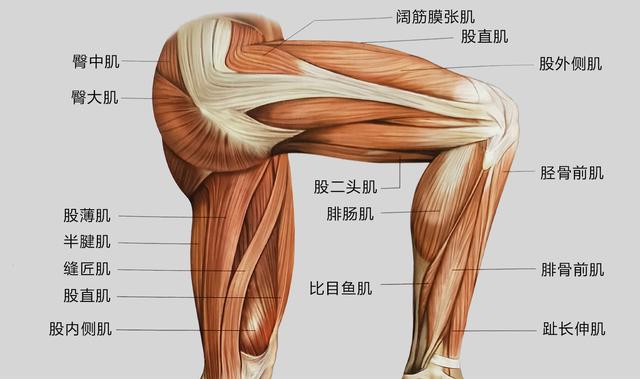
The gluteal muscles include the gluteus maximus, gluteus medius, and gluteus minimus. The gluteus maximus is the largest and most primary muscle involved in hip extension, while the gluteus medius and gluteus minimus (the gluteus minimus can be considered a special gluteus medius) participate in hip abduction; below the glutes (on the back of the thigh) is the hamstring, which consists of three muscles: the biceps femoris, semitendinosus, and semimembranosus.
The biceps femoris, with its long head, and the semitendinosus and semimembranosus contract to perform hip extension and knee flexion. The biceps femoris short head contracts to perform knee flexion. Therefore, the hamstrings contract primarily to flex the knee and extend the hip, maintaining knee joint stability, especially preventing the tibia from excessive anterior displacement.
Below is an introduction to 4 exercises to train the hamstrings and glutes, as well as common mistakes and how to correct them.
Lying Leg Curls:
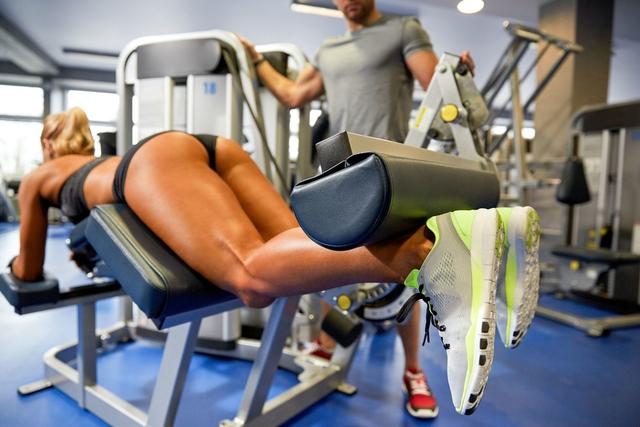
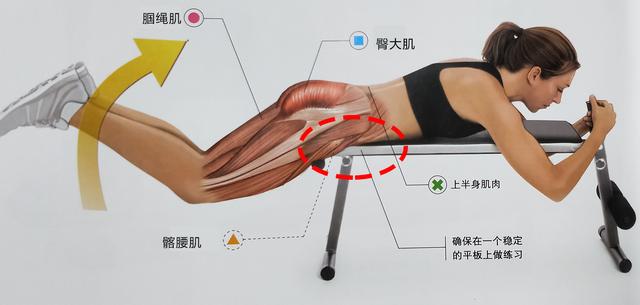
The target muscle for Lying Leg Curls is the hamstring, with the gluteus maximus as a coordinating muscle.
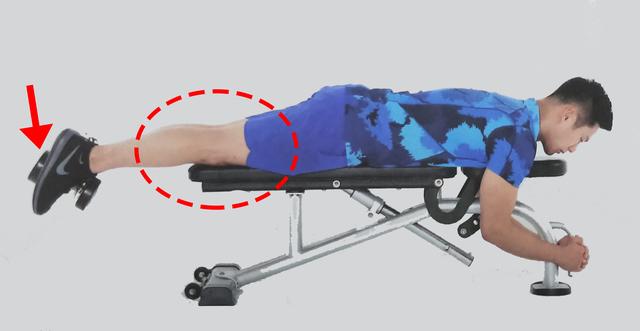
Starting Position: Lie face down on the leg curl machine, keeping your legs straight, with your knees just slightly exceeding the end of the decline pad, adjust the machine so that the resistance pad is located behind the ankle, grasp the handle below your head with both hands and inhale to prepare,Action Process: Exhale, contract the hamstrings to bend your knees to an angle less than 90 degrees, always keep your back straight, at this time the hamstrings contract strongly, squeeze the hamstrings at the top end, then inhale to slowly return to the starting position under the control of the hamstrings, and do not lock your knees, maintain tension, pay attention to the speed of the action, slightly faster when contracting inward, slower when releasing (lift up quickly, release slowly).
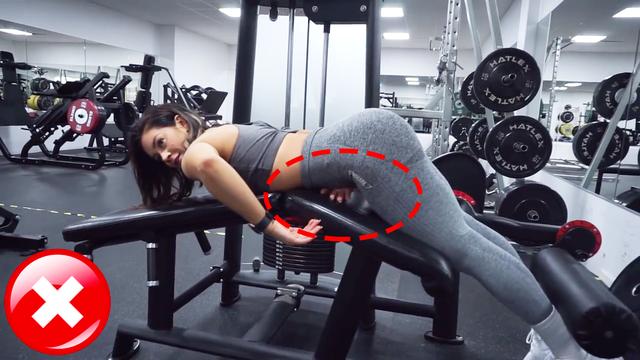
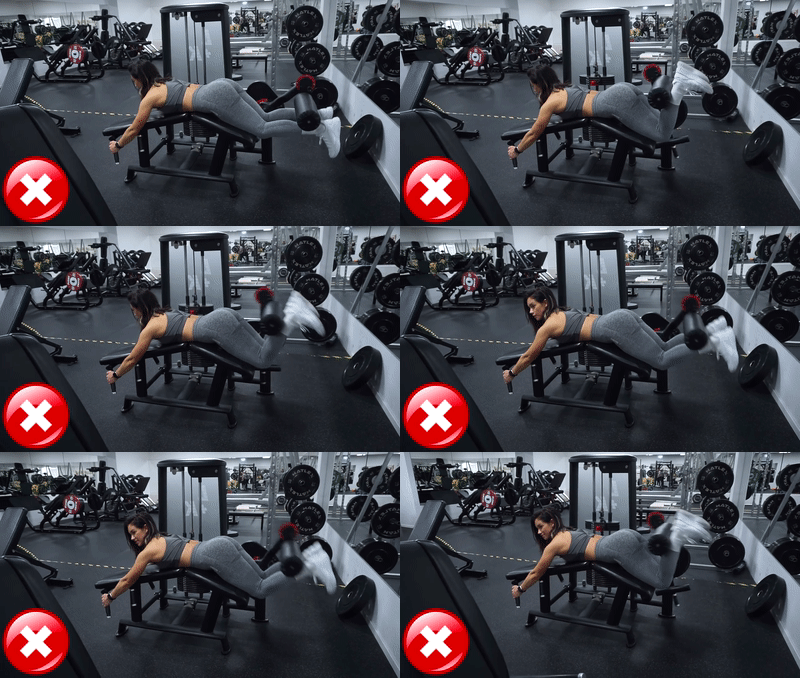
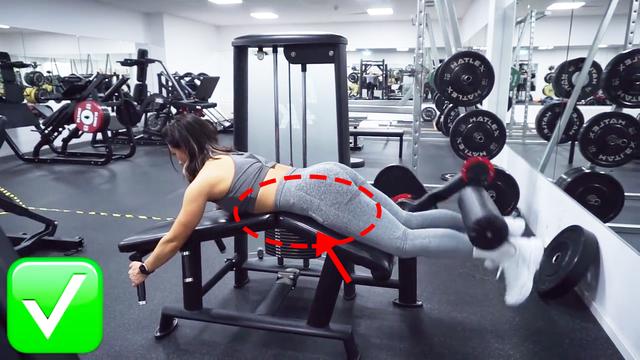
Mistakes and Corrections:Mistake: At the beginning, the hips lift up, the lower abdomen does not stick to the machine. If you lift your hips, you are using momentum instead of the hamstrings.
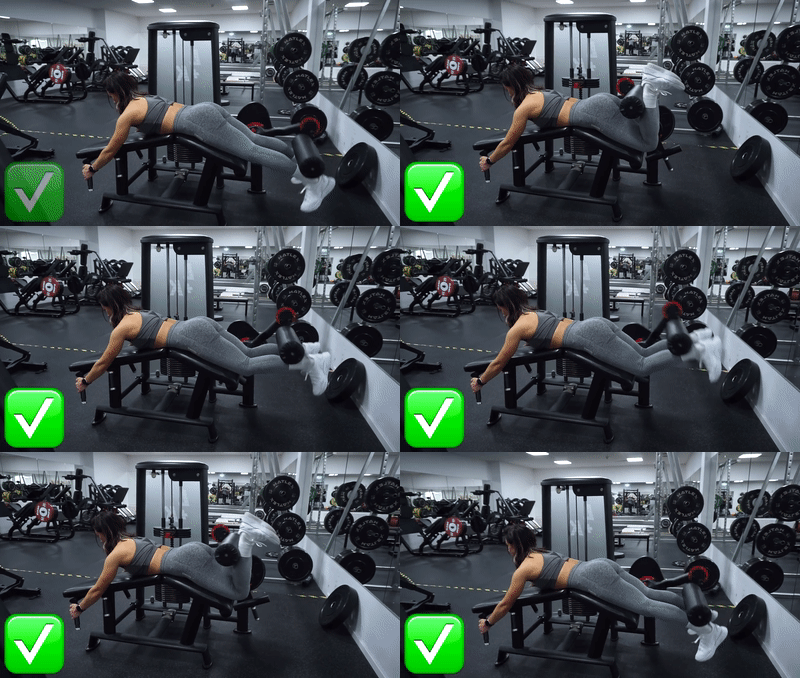
Correction: From the starting position, you should let the hips down, so that the lower abdomen sticks to the machine; if you lift your hips during the process, it means the weight is too heavy, you can reduce the weight.
Dumbbell Lying Leg Curls:
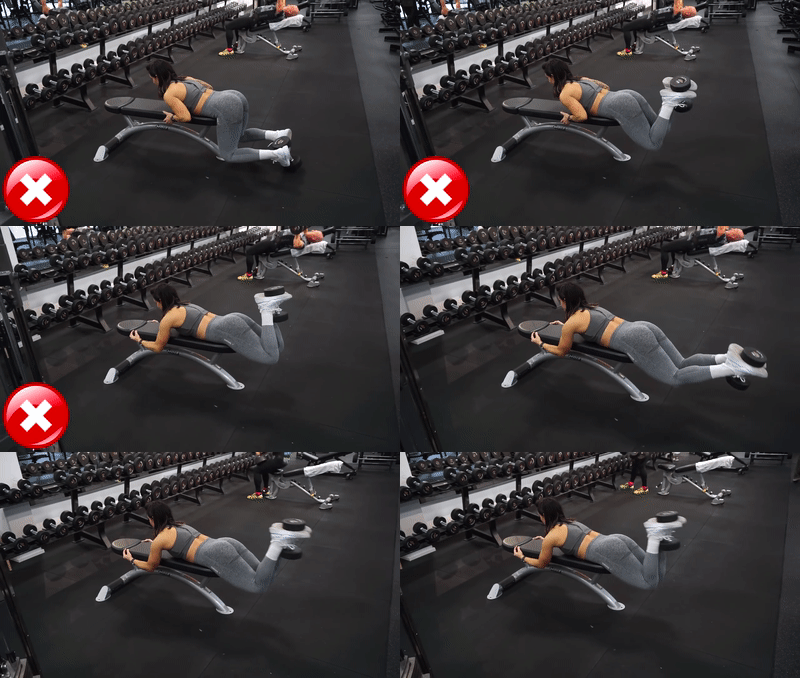
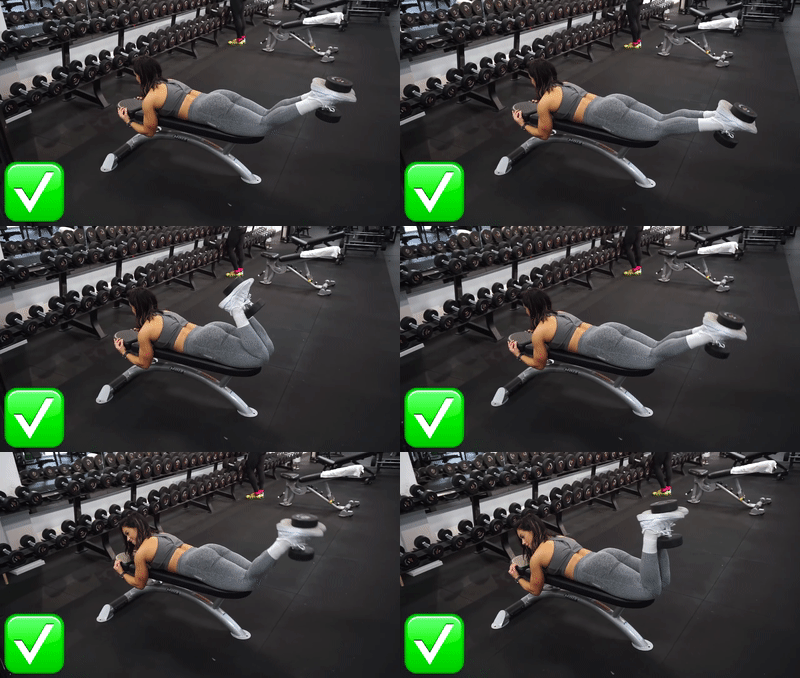
If the leg curl machine above is not available in your gym, you can also complete this action with a dumbbell and a long bench,
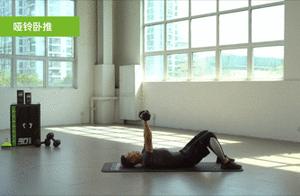
As shown below is Lying Hip Thrust:
The standard action and equipment of Lying Leg Curls are similar, just Dumbbell Lying Leg Curls is a double-legged dumbbell to act as resistance,
Mistakes and Corrections:
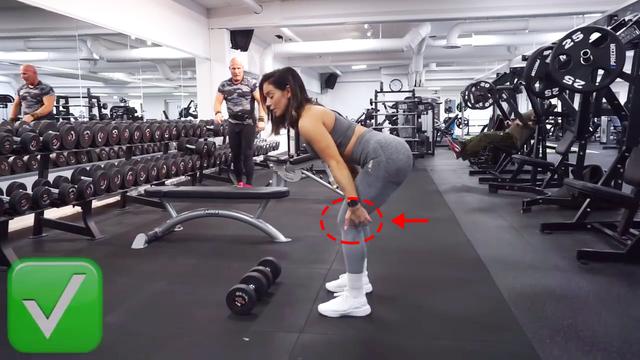
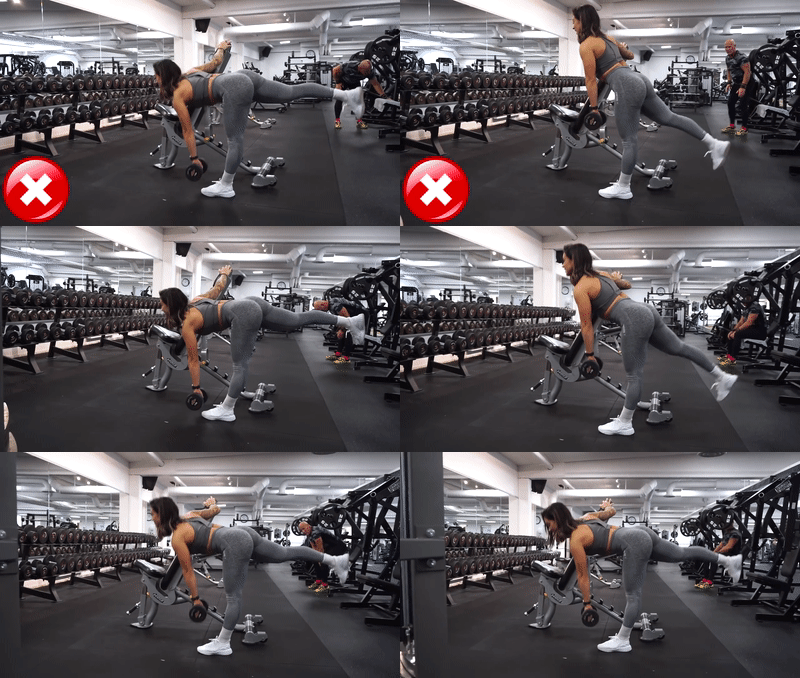
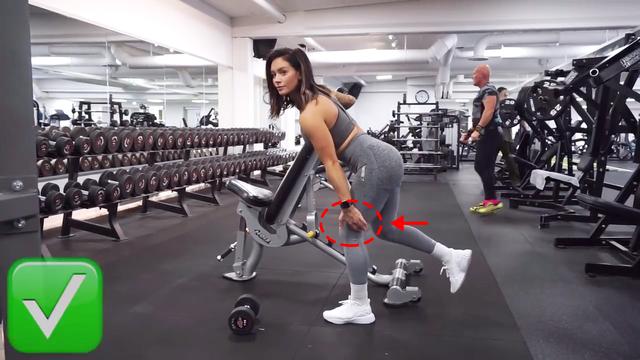
Mistake: Dumbbell Lying Leg Curls, like straight leg deadlifts and dumbbell straight leg deadlifts, it is easy to lock your knees,Correction: Just like straight leg deadlifts, keep the knee of the supporting leg slightly bent do not lock.
Single-Arm Dumbbell Deadlift:
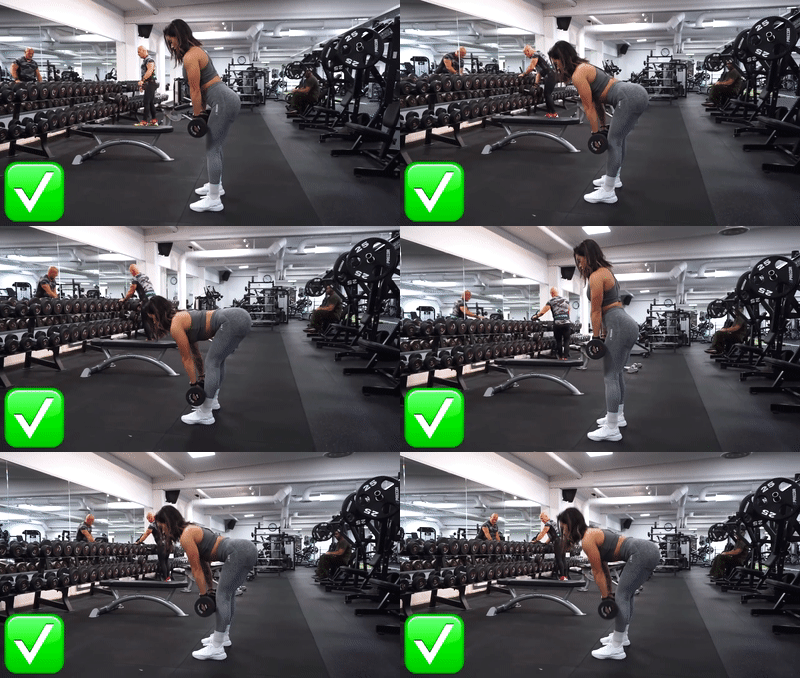
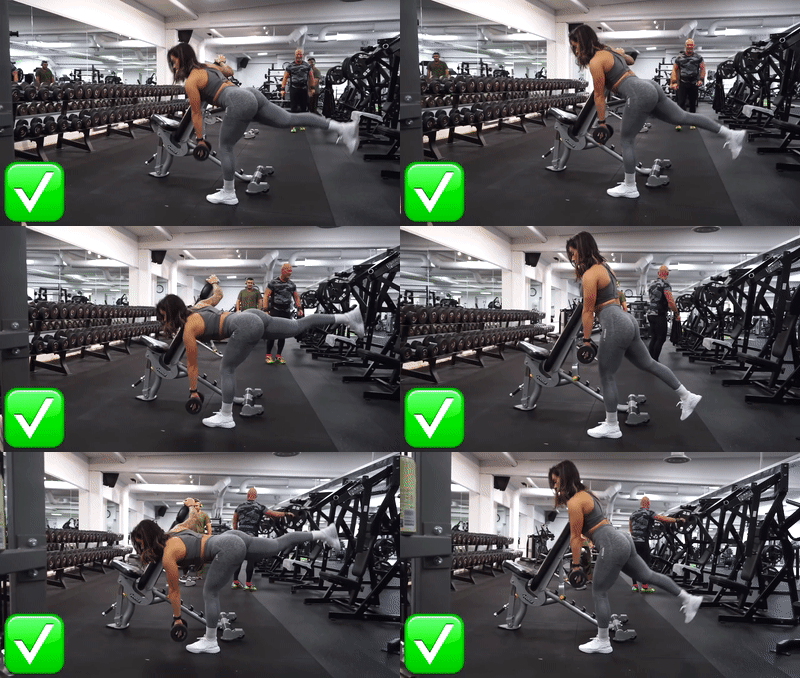
Single-Arm Dumbbell Deadlift can be divided into single-arm dumbbell load and single-leg dumbbell load, in addition to training the hamstrings and glutes like straight leg deadlifts, it can also train core strength and balance ability.
Starting Position: Stand with your legs together or slightly apart with the same width as your shoulders, with a slight bend in your knees, keep your torso upright; hold a dumbbell in both hands, or hold a single dumbbell with one hand, and use the other hand to hold a stable object, such as a sitting shoulder press chair or an inclined press bench.
Action Process: Inhale, support a single leg, keep your knee slightly bent, push your hips back, keep your back straight and upright, lean forward to lower your body, try to lower the dumbbell as low as possible to feel the hamstrings tighten. During the lowering process, always keep your back straight, do not hunch, contract strongly at the lowest point, pause for 1 second, then exhale, contract the hamstrings and gluteus maximus to lift the body and dumbbell back to the original position, pay attention to the dumbbell always vertical to the ground.
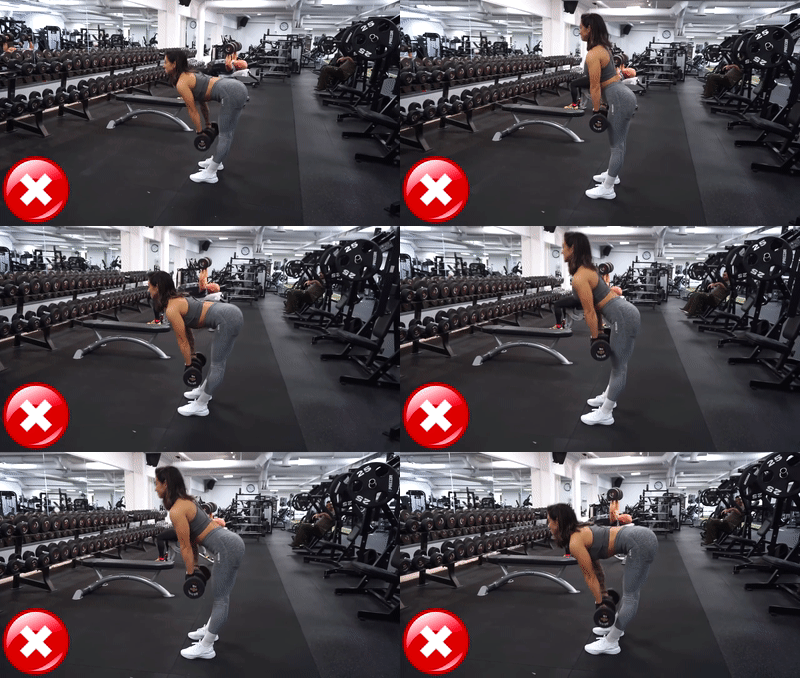
Mistakes and Corrections:
Mistake: Single-Arm Dumbbell Straight Leg Deadlift and Dumbbell Straight Leg Deadlift, it is easy to lock your knees,Correction: Just like straight leg deadlifts, keep the knee of the supporting leg slightly bent do not lock.
Summary:
The above 4 exercises are good for training the hamstrings, correcting the mistakes can train the target muscles more efficiently, and will not cause muscle injury.
1
4