How to Do a Dragon Gate Frame Down-Angle Chest Press: Avoid These 4 Mistakes for Pumped Chest Muscles and Explosive Gains
The dragon gate frame is something that 80% of fitness enthusiasts are familiar with. Its usage is very high, almost all muscles participate in this fixed equipment, no matter which muscle group stands in front of this 'thing', they will have a proud chest circumference. It has a very good effect on growing and shaping the chest muscles.
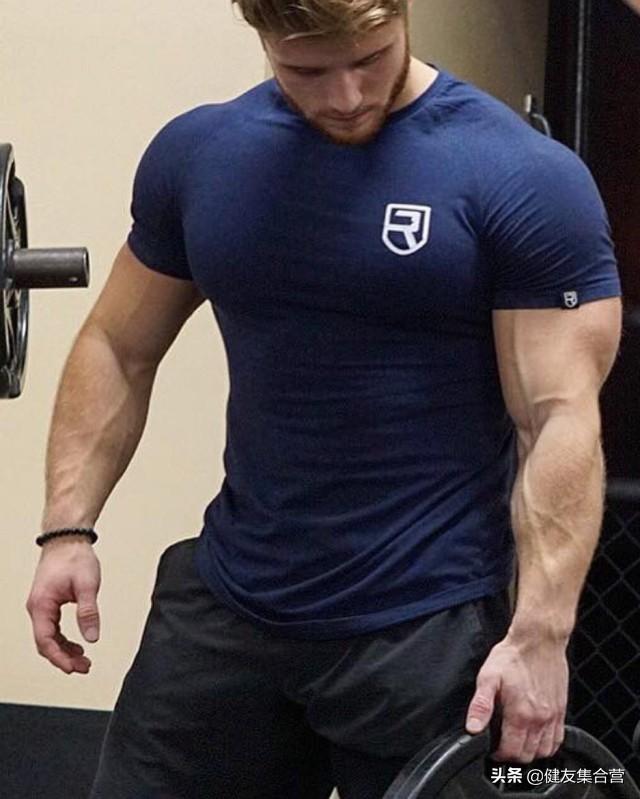
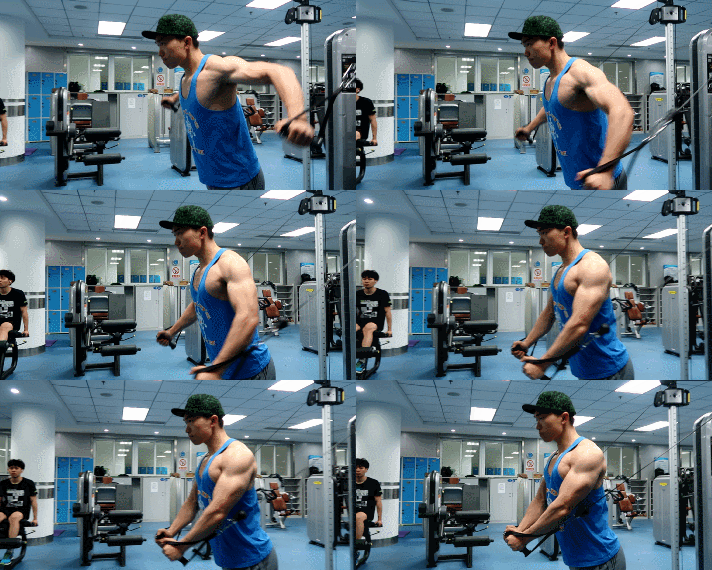
Today we are going to introduce a type of dragon gate frame press –Down-angle rope press.It is an isolated exercise, in the training process, there is no involvement of the anterior head of the deltoid muscle and the triceps brachii. It will provide stronger stimulation to the chest muscles and more obvious pump sensation.
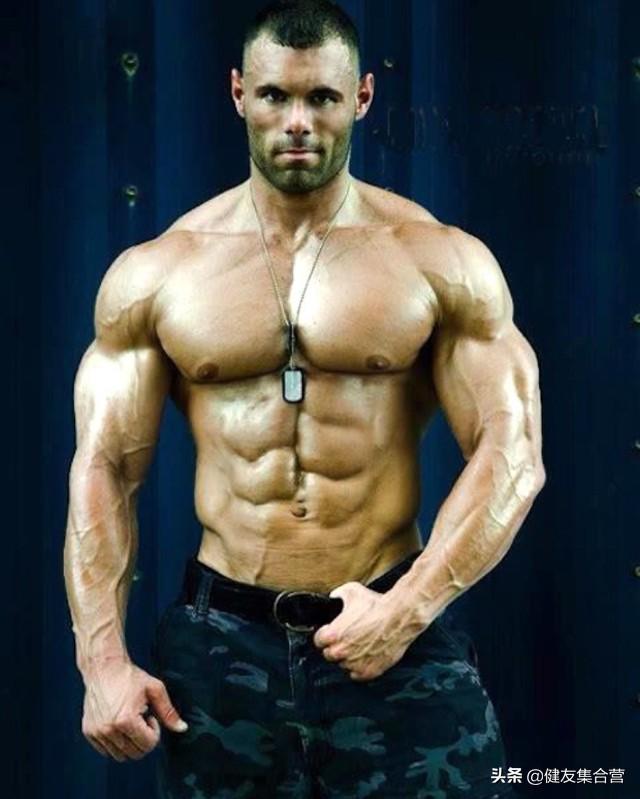
The target muscle is mainly the lower part of the chest muscles, making the chest outline more defined. Previously, fitness enthusiasts considered thick, full chest muscles as beautiful. Now, building three-dimensional chest muscles has become the mainstream of fitness. This action has a good effect whether it is inStance, body tilt, rope heightetc., it all exists indifferenceBelow, let's analyze the details of this actionThe purpose of down-angle rope press

This action will greatly improve the feeling of chest muscle training,
using both feet and bench press stool to point and touch, supporting the body's stability, so you can reduce the use of momentum, and learn how to avoid inertia in the training, so thatthe effect of exercising the chest muscles will be more obviousThe action technique of down-angle rope pressFirst, we should adjust the angle of the bench press stool (the trainer can adjust it according to their needs),
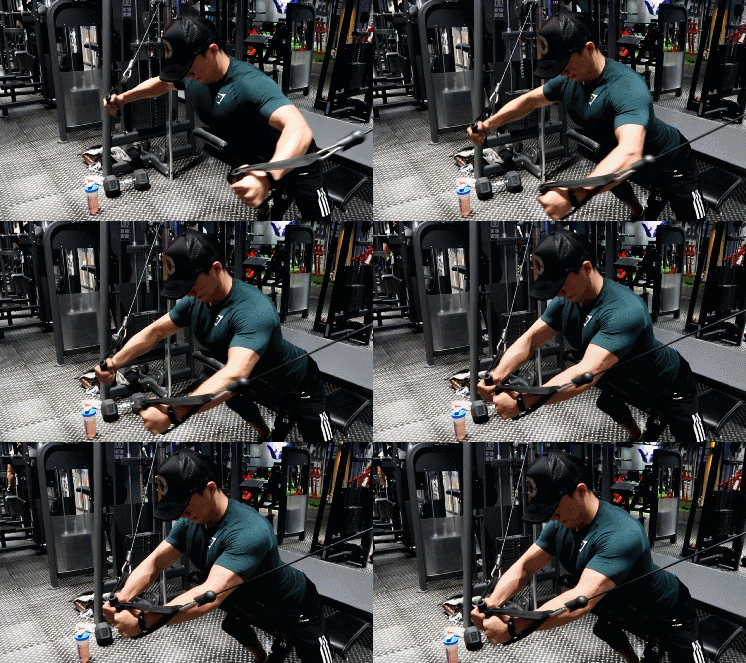
The position of the rope pulley should be at the position where the trainer stands up and their eyes are parallel, or slightly higher
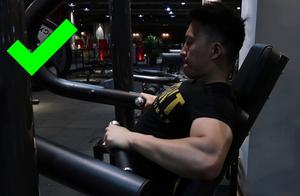
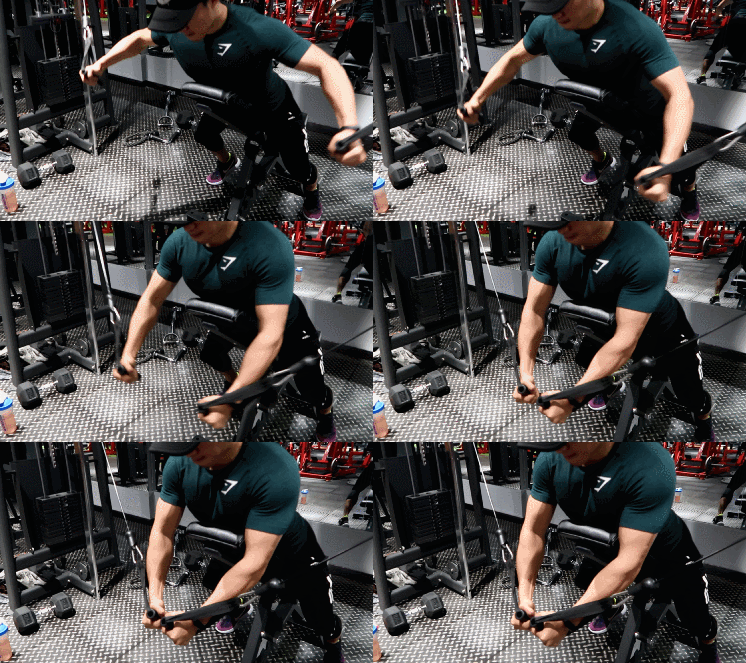
Then, the part below the chest is closely attached to the surface of the flat stool, the feet are separated and the whole foot is on the ground, supporting the whole body's stability. Ready to start your chest press exercise. The feeling at this time will definitely be different.The most common mistake in down-angle rope pressFirst mistake: sending shoulders forward when pressing chest
In this training action, fitness enthusiasts often unconsciously send their shoulders forward, causing the deltoid muscle and back muscles to participate excessively, reducing the stimulation of the chest muscles, causing
the trainer feels that the chest muscles are weak
force, or even no feeling, so the correct approach is to keep the shoulder blades depressed and stable when pressing chest, then contract the chest to perform chest press, so that the chest will contract well.Second mistake: insufficient chest stretchingThe trainer frequently does half-way or too fast during training, which will cause the muscle fibers to not be stretched to the maximum extent, resulting in the damage range of the fine muscle fibers in the muscles being smaller, and the muscles will not grow significantly. Therefore, in the training, you should fully stretch your chest before contraction.
Third mistake: pay attention to the angle of pressing chest
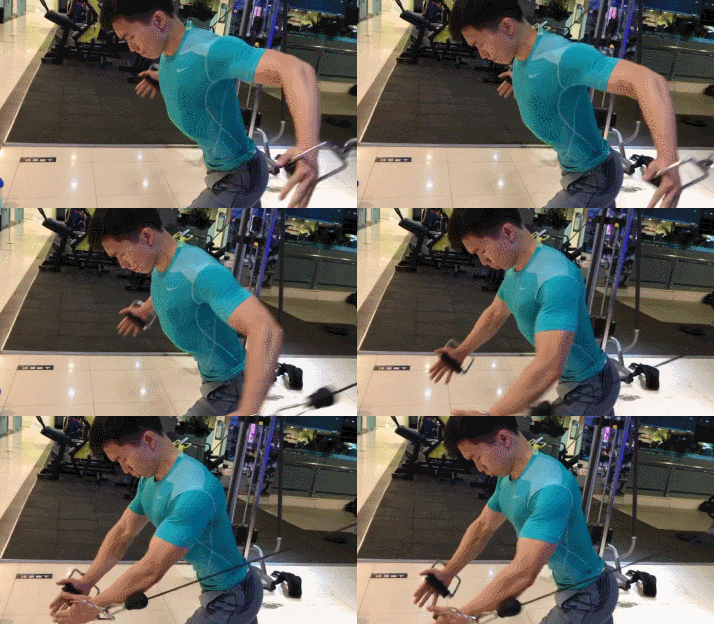
When we do down-angle chest press, we should pay attention to the angle between the arms and the trunk. If we exercise the chest muscles at the lower part of the chest, its angle will be slightly smaller. If we increase the angle between them, it will cause
the upper part of the chest muscles receive more stimulation, which goes against our purpose of exercising.
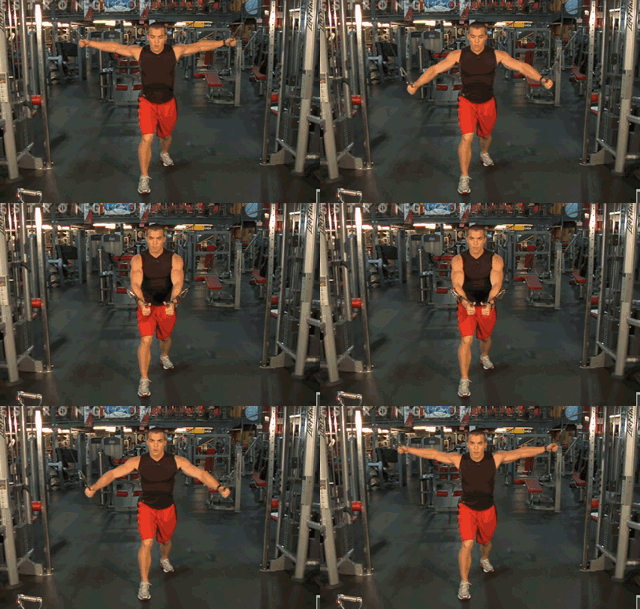
If you want to train the chest muscles from multiple angles, you can change the angle between them, and gain different stimulation in the training.Fourth mistake: Don't be greedy with weightMany fitness enthusiasts believe that as long as you increase the training weight, you can better promote muscle growth. In fact, this is not the case. If we focus on weight, we will ignore the correct grasp of the action, and the effect of mental training will also be lost, resulting in ideal training effects. Therefore, in our training, we should use a slightly lighter weight to train, to ensure the correctness of the action.