3 Steps, 6 Exercises to Correct Pelvic Tilt
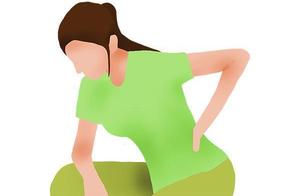
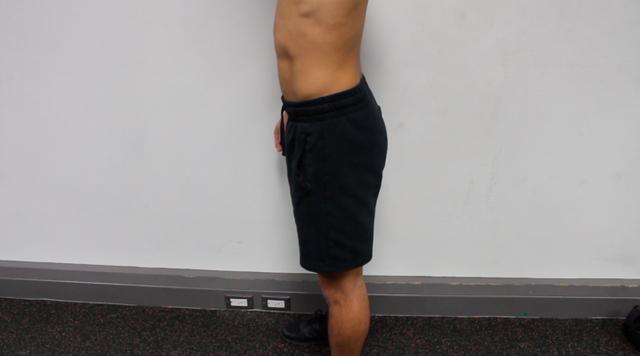
Pelvic tilt (as shown in the picture) affects posture, and you may be frustrated because it can lead to lower back discomfort and inhibit gluteal muscle activity. These effects reduce the range of motion of the hip joint and lower overall daily productivity. Reduced lower body strength can hinder your performance in other exercises, such as compound movements like deadlifts and squats. In this article, a muscle will introduce 3 easy-to-practice steps to gradually repair your pelvic tilt.
Pelvic Tilt Causes
The pelvis is a composite bone formed by multiple bones: the sacrum and coccyx, the ischial bones and pubic bones. The bones of the pelvis are firmly fused through fibrous joints to provide stability. This area is used in all body movements. Pelvic tilt has several reasons.
Reason 1: Prolonged sitting.Many people's work (or hobbies) require prolonged sitting.
Reason 2: Lack of exercise.Control the muscles that maintain body posture are inactive.
Reason 3: Muscle imbalance caused by exercise.Exercise emphasizes the work of certain muscles. Imbalance can cause many problems, these problems may manifest in different ways.
Reason 4: Foot pronation.Many posture problems begin with foot pronation. Improper posture will generate a chain reaction, negatively affecting posture and requiring the rest of the body to compensate for adjustment.
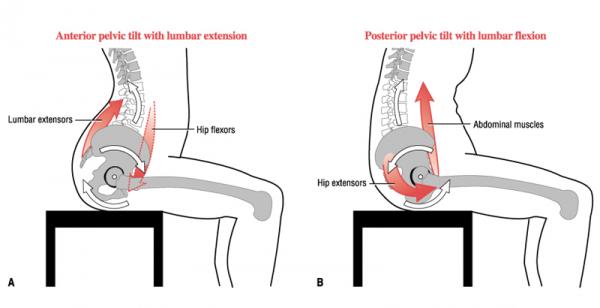
Despite all these potential contributing factors, pelvic tilt is most common due to prolonged incorrect sitting (as shown in the picture).
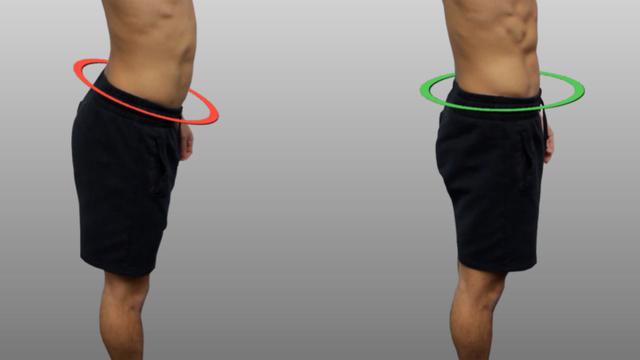
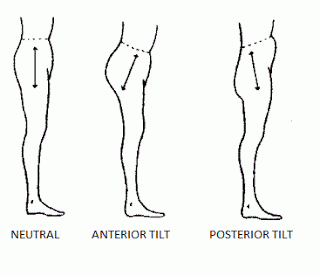
It is important to note that slight pelvic tilt is perfectly normal. About 85% of healthy men and women exhibit slight pelvic tilt. The normal tilt angle is as shown in the picture.
The typical situation is as follows:
- Abdominal muscle group(rectus abdominis, obliques, and internal/external obliques) as well asGluteal muscles(gluteus maximus and minimus)are weak,
- Hip flexors and erector spinae are very active and strong.
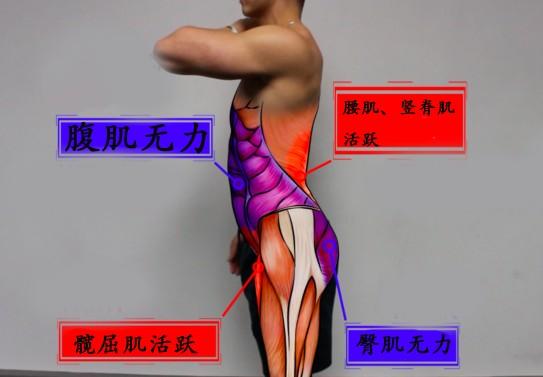
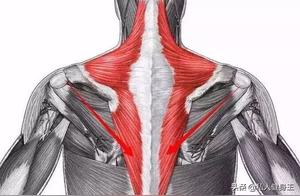
This muscle imbalance causes the pelvis to tilt forward. How to solve this problem? You should focus on the following two principles.Principle 1: Stretch overactive muscles.
Focus on relaxing the hip flexors and erector spinae is key. If you have pelvic tilt, your iliotibial (IT) band will also feel tense. However, this is not the cause, so don't stretch your IT band, which gives you a false impression.
Principle 2: Strengthen inactive muscles.
The abdominal muscle group and gluteal muscles are the two main groups you should focus on strengthening. People with pelvic tilt often find it difficult to activate their glutes and relax their hip flexors.
Practice 3: Hip thrustsThe first exercise is to target the glutes. Hip thrusts are a good exercise.
First, place your shoulders on a bench, with your feet on the floor.
Then, lift your hips. Your shoulder blades should not move away from the bench, placing your feet so that your heels remain vertical.
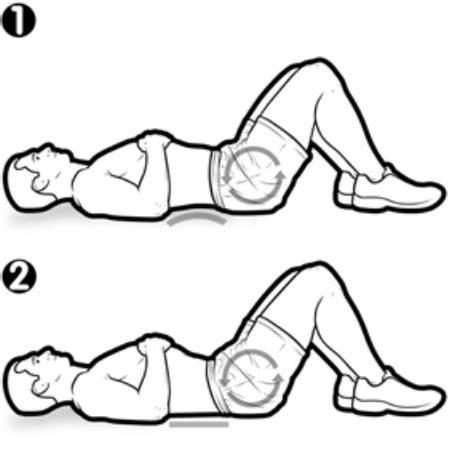
You may need to try a few times to figure out the distance between your feet and the bench. The body will compensate for the lack of stability by bending the lower back. You need to realize this, and the key to this exercise is to maintain a straight back. Pelvic tilt can align your body, so you can be in a straight line from head to knee.
- Repeat.
- Practice 2: Standing pelvic tilt
- Stand with your feet hip-width apart.
- Then, squeeze your glutes to tilt your pelvis back.
The backward movement of your lower back and the tilting of your pelvis will move you from a forward tilt to a backward tilt. Repeat this movement several times (about 10 repetitions) to get good improvement.
- Step 2: Strengthen glutes and abdominal muscles
- Step 1 focuses on learning how to tilt your pelvis back. Use the strength and control you gain in these introductory steps to strengthen the gluteal and abdominal muscle groups.
Practice 3: Hip thrusts
The first exercise is to target the glutes, hip thrusts are a good exercise.
First, place your shoulders on a bench, with your feet on the floor.
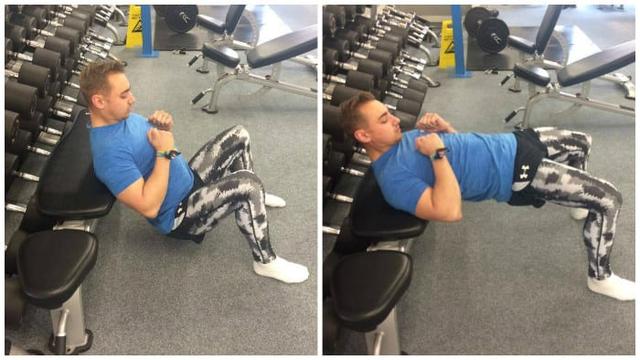
Then, lift your hips. Your shoulder blades should not move away from the bench, placing your feet so that your heels remain vertical.
You may need to try a few times to figure out the distance between your feet and the bench. The body will compensate for the lack of stability by bending the lower back. You need to realize this, and the key to this exercise is to maintain a straight back. Pelvic tilt can align your body, so you can be in a straight line from head to knee.
- Repeat.
- Practice 4: Core Engagement
This exercise focuses on strengthening the abdominal muscles. People with pelvic tilt should choose movements that minimize the involvement of the hip flexors. Plank is a good choice because it can better activate the abdominal muscle group, maximizing the activation of the hip flexors.
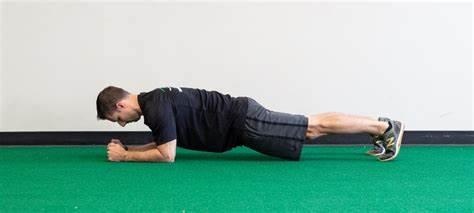
Please note that your arms are locked, your feet are shoulder-width apart, and your pelvis is tilted back to maximize the activation of the glutes and abdominal muscles.
Engage your abdominal muscles by pulling your navel towards your spine.
Try to maintain this posture for as long as possible. Make sure your lower back doesn't curve and keep the glutes engaged.
- Step 3: Stretch hip flexors
- Stretching overactive hip flexors can reduce the degree of pelvic tilt, alleviate tension and pain in this area.
- Practice 5: Hip flexor stretch
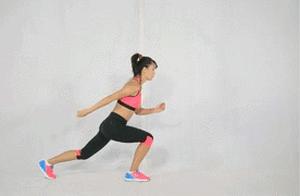
- Get into a hip flexor stretch position. Bend your knees at 90 degrees.
Contract your abdominal muscles. Pull your navel towards your spine. Make sure you're stretching the deep part of the hip flexor on the front of your thigh.
To achieve a deeper stretch, you can rotate your torso from the opposite direction of the leg that's facing forward. This requires more flexibility and postural stability.
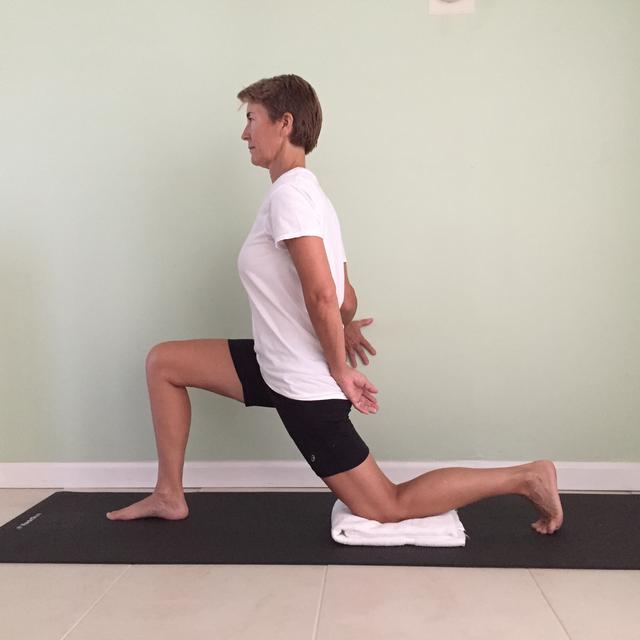
The other foot remains in front, repeating the same stretch, making sure to focus on posture.
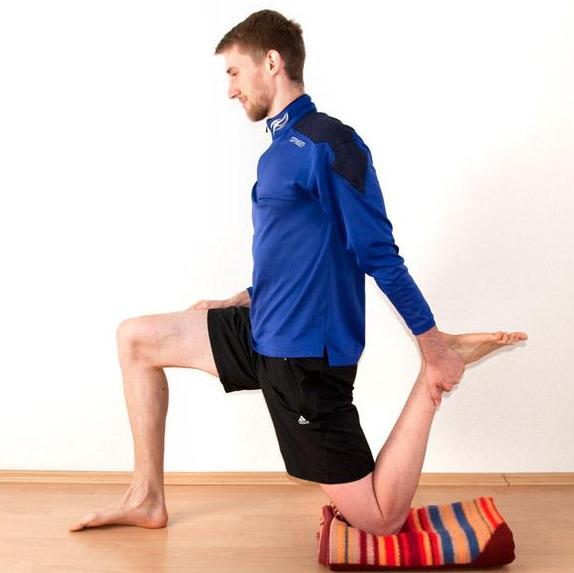
Practice 6: Hip flexor stretch
Place one foot firmly on the ground. Bend your knee, so that the back of your knee is in line with the ground. To increase stability, use a bench or sofa to support your back knee.
- Contract your abdominal muscles. You can do this by pulling your navel towards your spine. Then, move your hips to a pelvic tilt position.
- When you reach this position, you should feel a stretch in the front of your thigh. You can increase the stretch by reducing the degree of flexion of your back knee, or increase the degree of flexion of your back knee.
- Finally
- You can use the above exercises to improve, the following can be used as your reference plan.
Practice 1: 1 set, 10 reps
- Practice 2: 1 set, 10 reps.
- Practice 3: 3 sets, 10+ reps
Practice 4: 2 sets maximum hold time.
Practice 5: 2 sets per leg support for 30 seconds.
Practice 6: 2 sets per leg support for 30 seconds.
- Thank you for watching, welcome to leave comments and share, thank you for your support of a muscle.
- 2110
- 3310
- 42
- 5230
- 6230