Giant Pandas’ ‘Close Relatives’ – The Small Panda
Jun Shan Wen/Tu
The county of Bao Xing not only produces giant pandas but also produces small pandas. Small pandas are not offspring of giant pandas, but rather a wild animal that coexists with giant pandas in the same habitat, and are 'neighbors' of giant pandas, representing an important companion animal.
Small pandas and giant pandas once jointly possessed the name 'Panda' and 'Catbear', from a biological point of view, they can only be distant relatives. Giant pandas originated from Bao Xing and went to the world, while small pandas first entered China's zoos from Bao Xing.
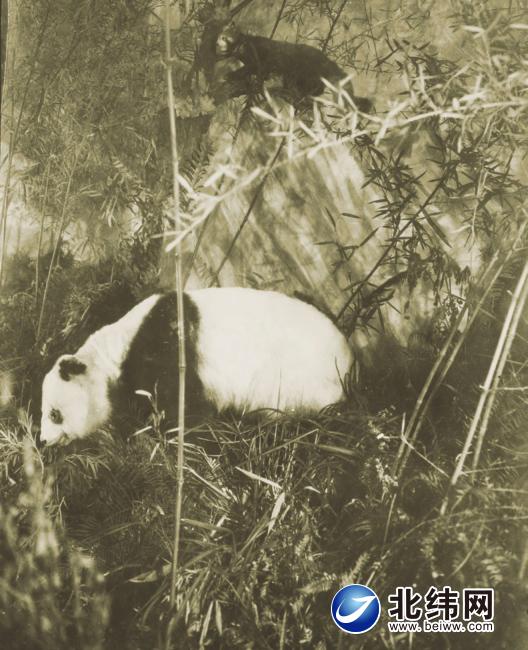
Chinese Western Museum displays the natural environment of the white bear in the Middle West
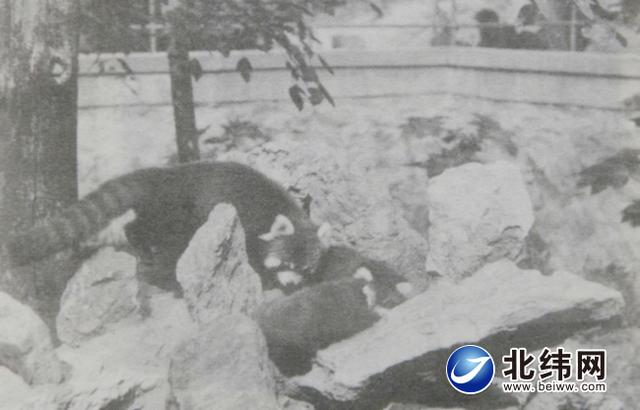
Illustrations from 'Beijing Zoo History Painting' introduce the earliest small pandas exhibited in the zoo
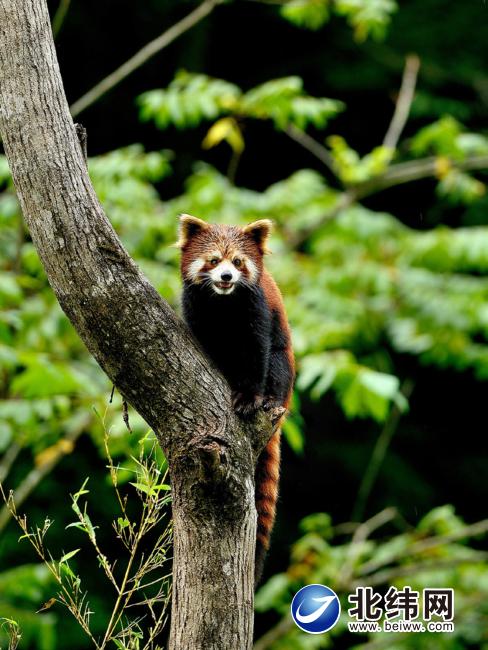
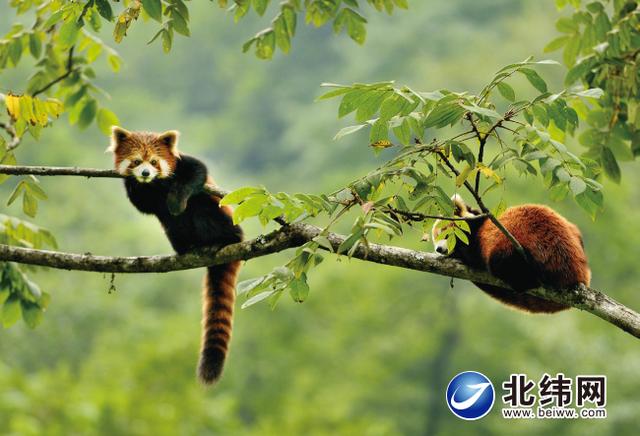
Climbing tree small pandas
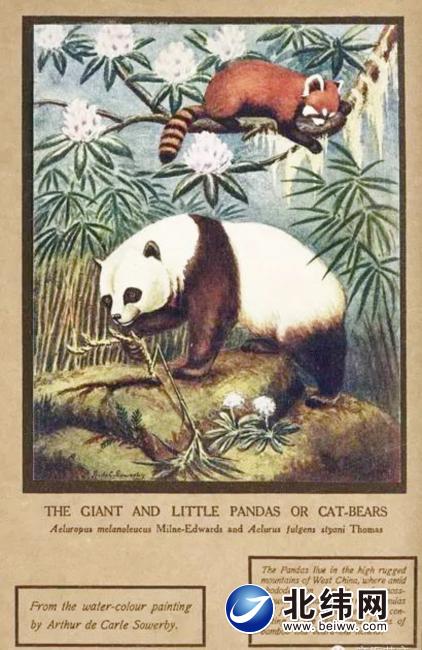
Illustrations of giant pandas and small pandas in 'China Magazine' in the 1930s
'Panda' originally belonged to small pandas, this word comes from the Nepali local word, which means 'red cat, dog', referring to the current small panda. 'Panda' is synonymous with 'Catbear' in English, and 'Catbear' in Chinese
In November 1821, British soldier and naturalist Hodgson discovered small pandas in their habitat, carried out scientific observation and description, and completed the first paper on small pandas, and sent the paper to the Linnaean Society. According to the call of small pandas, Hodgson called it 'Wah' ('Wow' or 'Oh'), and prepared to use it as a scientific name. Hodgson was the first Westerner to see small pandas in their habitat, but due to miscommunication, his paper was not published until 1827 in 'Linnaean Society Journal', by which time small pandas had been named by French zoologist Frédéric Cuvier.
In 1824, Frédéric Cuvier was very excited to see the small panda specimens from the foothills of the Himalayas. According to its fiery red-bright fur, it was named 'Flame Cat' in Greek, and it was named 'Ailurus fulgens' as its scientific name. Cuvier classified small pandas into the raccoon family because of their similarities in head shape, teeth and tails. It was not until 1977 did 'Nature' magazine still classify small pandas and raccoons into one category. Later, due to their similarity to panda DNA, small pandas began to be classified into the bear family. 'Panda' originally referred to small pandas, this word comes from the Nepali local word, which means 'red cat, dog', referring to the current small panda. 'Panda' is synonymous with 'Catbear' in English, and 'Catbear' in Chinese
In 1869, David first obtained a giant panda specimen in Dengchou Gully and considered it a new species of bears, and named it 'Black and White Bear' based on its fur color, and then the name 'Panda' for the animal found in the foothills of the Himalayas in 1824 was called little panda or red panda, while the animal found in Muping was called giant panda or panda. Soon, we had 'Small Cat Bear', 'Red Bear', 'Big Bear', and 'Catbear' in Chinese.
The name 'Panda' was originally used as a nickname for small pandas, but giant pandas were much more famous, so when simply saying 'Panda', it gradually became specifically referring to giant pandas.
Giant pandas and small pandas co-exist and prosper together
In the 1930s, British-created Shanghai Museum began to exhibit panda and small panda specimens. The specimens were placed on branches for small pandas and on rocks for giant pandas. The background was bamboo forest, creating a vivid effect. Because they thought they were intermediate between bears and raccoons, and they were both called 'Catbear', and were closely related.
In 1936, Zhou Jianren compiled 'Mammal Map' published by Commercial Printing House, the color illustrations of 'Giant Panda and Small Panda' in 'China Magazine' and the color illustrations of 'Giant Panda and Small Panda' in 'China Magazine' are all based on the exhibition scene. This exhibition form was adopted and imitated by other museums in China.
In 1944, the Chongqing Beipeng District's China Western Museum (the predecessor of Chongqing Natural Museum, established by the China Western Institute of Sciences and other institutions) was one of the earliest institutions in China to exhibit giant panda specimens. The animal specimens in the museum were displayed in 7 rooms, one of which was 'Chinese White Bear Natural Environment', as recorded: 'White bear and little red Catbear are specialty of Kwangchew, famous in the world, the two specimens exhibited in this hall are well-preserved and in lively pose, this spring, a special room was set up to exhibit them, according to white bear's natural ecological environment, combined with bamboo forest and hill, the scene is realistic, the background is painted with oil to set off the distant view.
Provided by Chongqing Natural Museum researcher and Beipeng Hall director Hou Jiang, the pictures from that year's exhibition can see giant panda specimens, small panda specimens, giant panda specimens were on the ground, small panda specimens were placed on branches. Through research and verification, the two specimens were brought by British collectors in 1938, and the two specimens were brought back from Bao Xing County, two rivers and mouths, and the two specimens were brought back to Beijing to exhibit.
Since 1869, French missionary David not only discovered giant pandas in Bao Xing and sent panda specimens back to China, but also brought back small panda specimens. In the 1930s, British specimen merchant Smith collected many giant pandas and small pandas in Sichuan West, and he obtained many live animals and specimens.
Climbing tree small pandas
Beijing Zoo's earliest small pandas came from Bao Xing
In 1938, He Guangxin, born in Salt-spring, Sichuan, presided over the construction of Chengdu (China) Giant Panda Breeding Research Base (now also known as Chengdu Panda Ecological Park), and presided over the scientific research projects 'Giant Panda Twin Birth Breeding' and other projects, won two national scientific and technological progress awards; 'Giant Panda DNA Fingerprinting' won the national invention second prize, many achievements won the Ministry of Construction, Sichuan Province scientific and technological progress awards, in 1989 he was granted 'Outstanding Young and Middle-aged Scientists' honor title by the State Council, and enjoyed government allowances since 1991.
During his work in Beijing Zoo from 1965 to 1974 in the autumn and winter to the following spring, he worked at Beijing Zoo's animal collection station in Bao Xing County two rivers and mouths for about six months, collected wild animals, surveyed and collected, and they remembered the scene, the personnel involved, the places they went to.
In 1954, March, Beijing Zoo dispatched 4 staff to establish animal collection station in Bao Xing County two rivers and mouths, called 'Beijing Zoo Bao Xing Park' (also known as 'Hunting Station'), purchased wild animals from local hunters and farmers, or hired local hunters to hunt, in two months, they airlifted the first batch of animals, and they were most proud of a small panda, weighing 12 kilograms, with a tail length of 1.1 meters, and a height of 0.35 meters.
According to 'Beijing Zoo Chronicle', on May 30, 1954, the small panda was exhibited in Beijing Zoo for two days. The next day, 'Children's Day', many children came to see the small panda, formed a long queue, just to see the small panda.
In 1955, June, Beijing Zoo airlifted the first giant panda to China. It can be said that the small panda entered Beijing earlier than the giant panda by one year.
During the 20 years between 1954 and 1974, the collection station collected 114 small pandas and exhibited them in Beijing Zoo. The most number of pandas collected in 1965, reachedത്തിനെ 23.
The bred small pandas in Beijing Zoo gave birth to 2 cubs in 1962, April 29, which created the precedent of artificial breeding of small pandas, but the two cubs died tragically. In 1988, April 29, the China Forestry Administration also selected one pair of small pandas as a national gift and sent it to the Democratic Republic of Germany.
2018922
1938“” “ DNA”1989“”1991
19651974
195434“”“”2121.10.35
1954530“”
19556
20114196523
1962628219884291