Dragonflies of Datian Town
When I was a child, I lived in Datian Town, Mountain, surrounded by lush vegetation. Every summer and autumn, I could see many dragonflies flying in the streets.
At dusk, the dragonflies would hover and fly in the streets at low altitudes. They were like small flying machines, flying very stably. Under four wings, there was a long circular body, and below the body were many fine legs. Two large eyes were on its head. I learned from ‘Ten Thousand Reasons Why’ that places with abundant vegetation also have more mosquitoes and chives. When people rest in the street in the evening, mosquitoes and chives will come out to suck blood.
Dragonflies feed on mosquitoes and chives. At dusk, when the sky is not dark, dragonflies fly to places with more mosquitoes and chives, conducting ‘’ ( - to eliminate) on them.
Dragonflies are invertebrates, belonging to the Insect class, Order Dragonfly. Dragonflies have four wings, and their wings vibrate up and down when flying, and are motionless when gliding. When resting, they spread their four wings flat on either side of their body. Dragonflies are carnivorous insects, including flies, mosquitoes, gnats, and small moths. Dragonflies are beneficial insects for humans, but we young children often catch dragonflies.
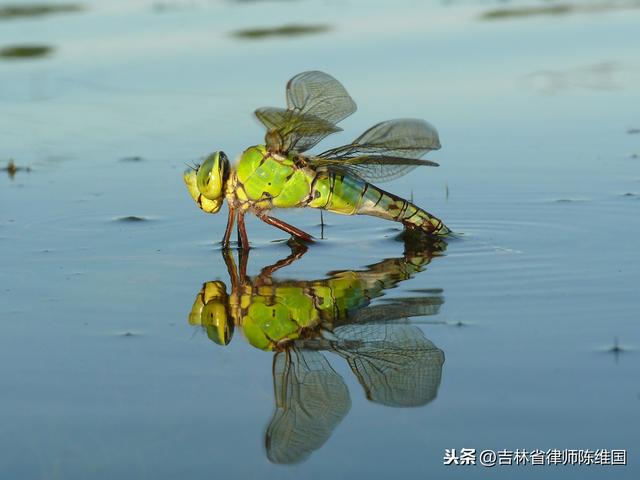
Dragonflies like to fly by the water. When flying, they often click the tail on the water surface. It is actually to lay eggs underwater. Dragonflies’ eggs hatch in water, and the larvae live in water. Generally, they live in water for 2 years, and some can live for 3 to 5 years. There are more than 5600 species of dragonflies in the world, and 250 species in China.
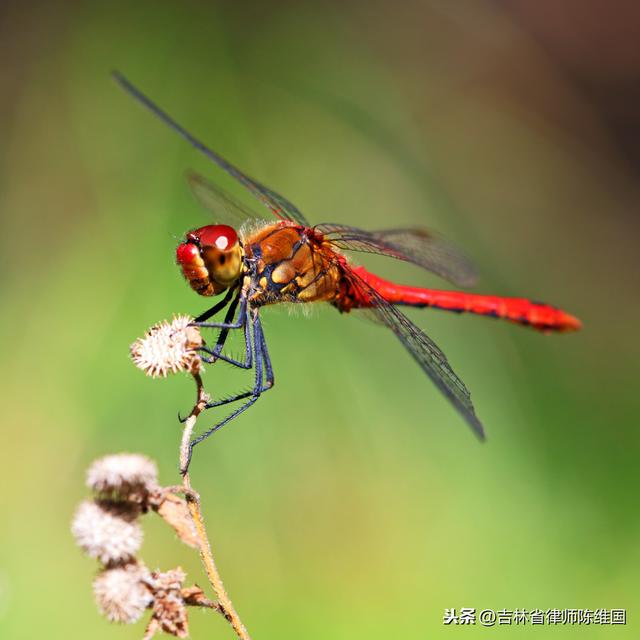
Dragonflies in Datian Mountain can be of many colors and sizes, but we saw the most is an orange dragonfly. This dragonfly is about 4-5 cm long and often flies in groups.
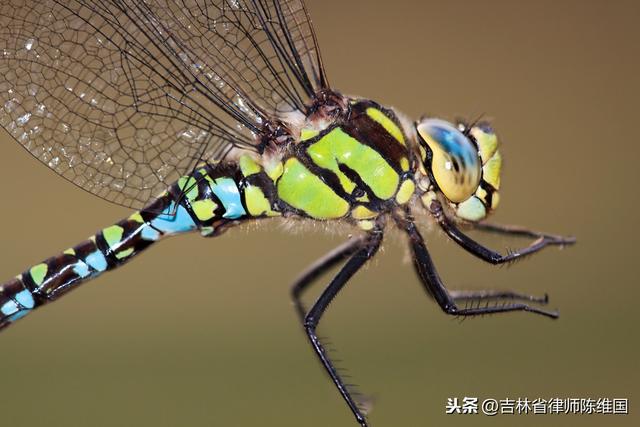
There is also a large green dragonfly that is relatively common. This green dragonfly is particularly abundant in the Datian Reservoir. We call it ‘’ (Da Li Dou Qingtong - Big Green Bean Dragonfly). This large dragonfly is about 7-8 cm or 10 cm long, its body is green, its back is brown, and it flies in the air like a helicopter. This large dragonfly is relatively less in groups, and occasionally it flies in groups of 10-12 dragonflies, unlike the orange dragonflies, which can fly in groups of dozens or hundreds in residential areas. This green dragonfly is very fierce and often eats small dragonflies.
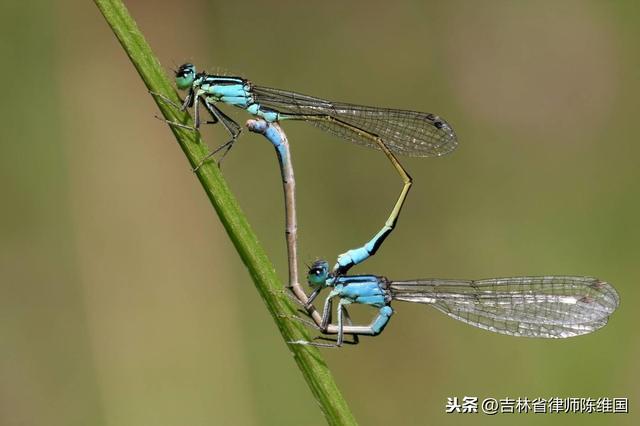
There is also a blue dragonfly by the water. This dragonfly is smaller than the orange dragonfly and rarely flies in groups, only three to five dragonflies fly together by the water, and they fly away after a while and land on the shore or water grass.
There is also a red dragonfly that is relatively common. This dragonfly is similar to the orange dragonfly, but its body is smaller, and it likes to fly in groups.
There is a very small dragonfly, about 2 cm long, very fine, only flies by the water, if it lands on the grass, it will stay motionless on the grass for a long time.
Dragonflies are fierce, with well-developed mouthparts, and they dare to prey on insects about the same size as themselves. Different dragonflies often fight and sometimes capture and cannibalize each other. There are many thick hairs on the dragonflies’ feet, which have great power, and the prey caught will have difficulty escaping. The dragonflies’ feet have a large number of thick hairs, which have great power, and the prey caught will have difficulty escaping.
After flying for a period of time, dragonflies will find a place to rest. When flying on the water surface, they will rest on the grass tip, sometimes they will also rest on the ground stones. When flying in the mountains, they will rest on the trees. When flying on the street, dragonflies will rest on fences or walls. When dragonflies rest, their four wings will spread flat, and they will not move. At night, dragonflies will find a resting place to sleep. The next day, when the sun rises, they will dry the dew on their wings, and they will fly again.
Dragonflies are particularly interesting when mating. Two dragonflies mate, and after mating, they will be tightly connected. The male dragonfly will bend its body on top of the female dragonfly, and spread its wings to fly together with the female dragonfly. When we caught the big dragonfly at the reservoir, we often saw a dragonfly suddenly rush to another dragonfly, ‘’ (wa la - crash sound) and the two dragonflies would connect and mate.
Children would pick up long reeds or large brooms and chase the paired dragonflies, aiming at the flying direction of the dragonflies and quickly throw down the reeds or brooms. Agile dragonflies would suddenly turn or rise, and the children chasing them would fail. Children who fell to the ground would get up and pick up reeds or brooms to chase again. If they successfully caught the dragonfly, they would cheer. If they caught the dragonfly, they would take it home, tie it to its tail with a line, and use a line to pull it and fly it on the street.
Because dragonflies often rest on grass tips, we sometimes use our hands to catch dragonflies. The two large eyes of the dragonflies are located on its head, when it rests on the grass tip or on the ground stone, its vision is limited. If a person approaches the dragonfly from its tail, it will generally not notice it. As long as the person who catches the dragonfly is flexible in his fingers and quick in his movements, the resting dragonfly will be easily caught.
I often did this thing of catching dragonflies, but after observing the caught dragonflies, I would give them to other children or let them go. Dragonflies at night, their wings are wet with dew. Before the sun rises, they will stop at the resting place and not move, and it is easier to catch dragonflies at this time. Children don't need to go to the water to catch dragonflies, they will catch dragonflies in the fence or wall in the courtyard.