The massive locust swarm sweeping across East Africa could grow five times as much, triggering a 'disaster'
According to the UK's Daily Mail on February 11th, the United Nations warned that if the locust swarms grow five times as much as people feared within the next four months, Africa will face a locust 'disaster'. It is expected that in the coming weeks, the number of 3600 billion locusts will increase rapidly, while the expected rainfall will promote plant growth to provide food for the locusts, and their numbers will peak in June.
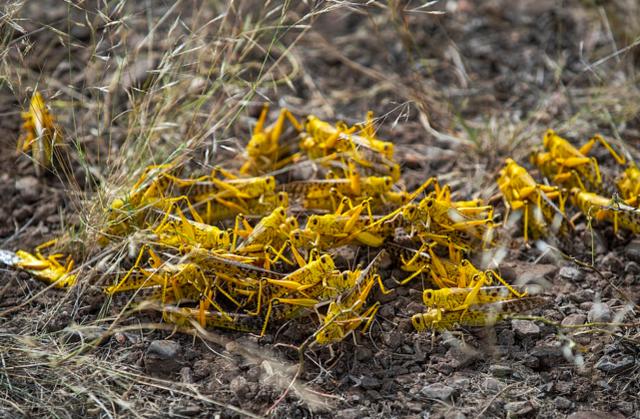
East African locust swarms
Currently, the locust swarms have destroyed important crops in Ethiopia, Somalia and Kenya. On February 10th, it was found that locust swarms had entered Uganda through the Karamoja border region in northeastern Uganda. They are expected to arrive in South Sudan at any time.
The United Nations Food and Agriculture Organization (FAO) warned that a humanitarian crisis is emerging in the region. It is currently estimated that about 3600 billion insects are devouring crops. Africa is facing the first locust disaster since 1989.
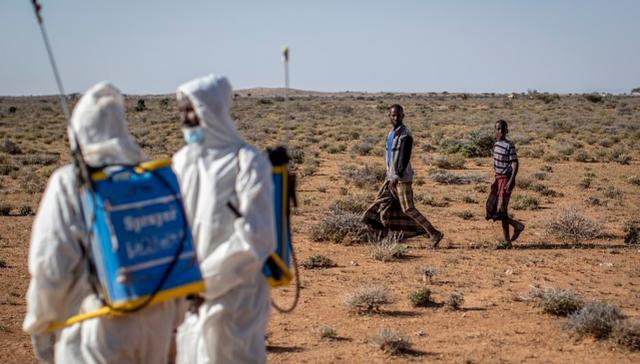
Spraying pesticides in Somalia
Somalia has declared a state of emergency, while countries including Djibouti, Eritrea, South Sudan and Sudan are monitoring the activity of the locust swarms.
FAO locust prediction senior officials Keith Cressman said on February 10th that Kenya has faced 'wave after wave of locusts' since January.
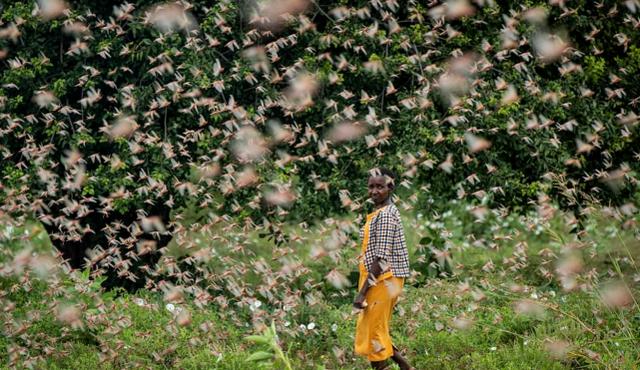
East African locust swarms
'A locust swarm can eat as much food as the food needs of three US states in a day. If no action is taken in time, the consequences will be very serious.'
Uganda held an emergency meeting after discovering these locusts and ordered two planes to spray insecticides in the affected areas. This is currently considered the most effective way to control it.
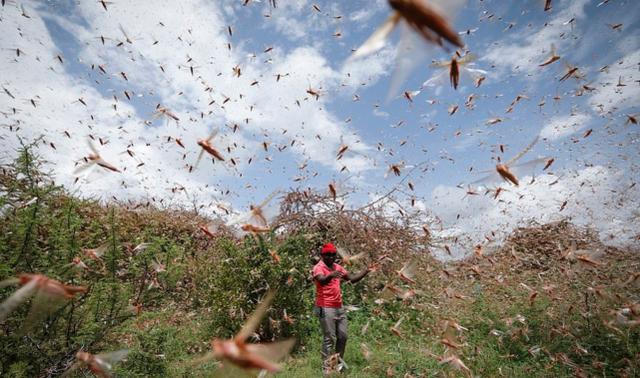
East African locust swarms
The United Nations will test drones equipped with map sensors and sprayers to spray insecticides to save crops. But experts say the scale of the locust plague far exceeds the local ability to bear it, because desert locusts can fly 150 km in a day.
In Somalia, due to the threat or control of youth groups linked to al-Shabaab, it is more difficult to solve the locust problem.
The United Nations Food and Agriculture Organization said that the current situation of locust swarm development is 'rising', that is, the entire East African region is affected. However, if this situation continues to worsen and cannot be controlled for more than one or more years, it will turn into a 'plague' of locusts.'