How Smart Are Octopuses? An 'Ordinary Octopus' Passed the Marshmallow Test
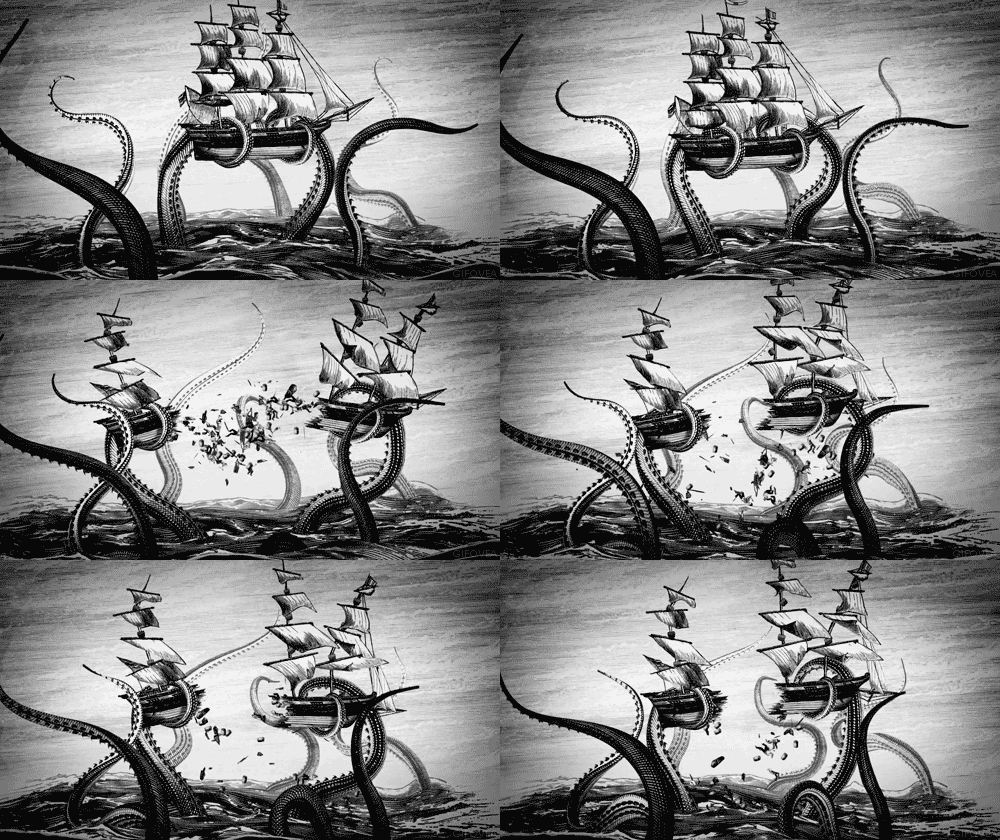
Cephalopods have always been a research target for scientists.
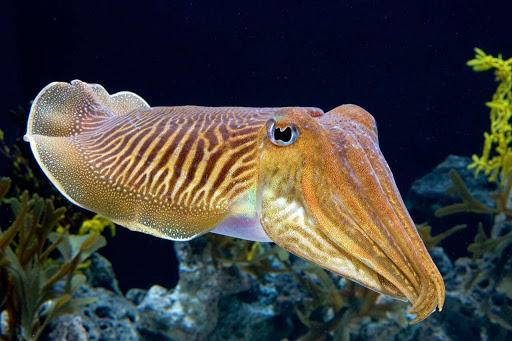
Many people may not be familiar with cephalopods, but when it comes to their members, they suddenly realize it – octopus and squid are the most famous representatives of cephalopods.
Although cephalopods belong to marine soft-bodied animals, they are a symbol of invertebrate intelligence, especially the latest research results may surprise you.

Research shows that octopuses can pass the marshmallow test just like human children.
The marshmallow test is an experiment done for children in the 1960s. In the experiment, children and marshmallows are placed in a room, and children are told that if they don't eat the marshmallow within 15 minutes, they will get a second, even better marshmallow. The experiment demonstrates human cognitive abilities.
There are often situations of delayed gratification in daily life.
When facing delicious food, many people regret: 'If I knew earlier that there would be so much good food in the evening, I shouldn't have eaten lunch, and I could eat more by eating dinner directly.'
Smart crows also passed the experiment. Now, a study found that octopuses also have the same ability,In order to get better food, it is willing to go hungry by eating less.
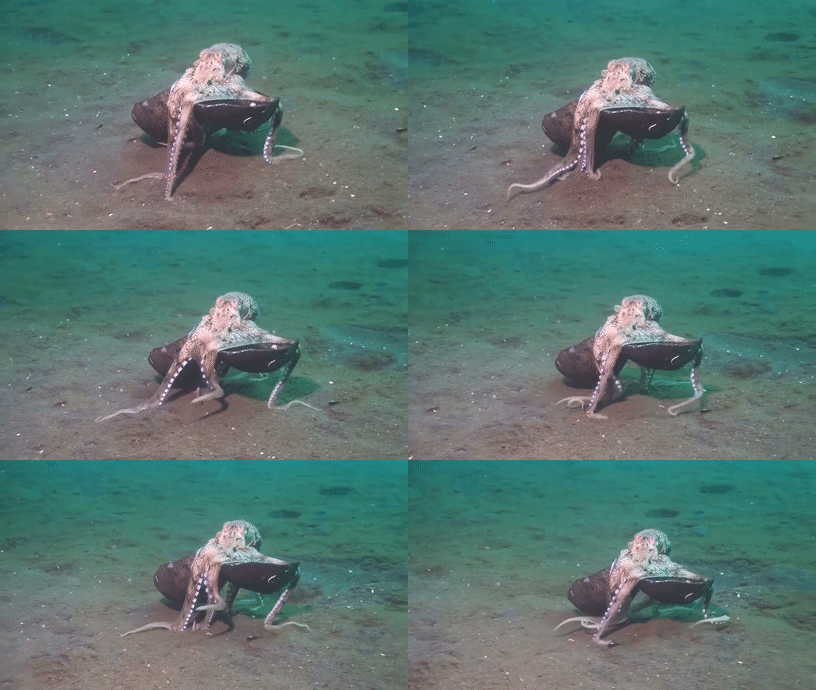
The experiment used 29 'ordinary octopuses' as experimental subjects. The octopus's name was also 'Ordinary Octopus.'
First, the octopuses were raised in water tanks and fed continuously for 5 days, while feeding crabs and shrimp. It was found that all the octopuses liked to eat shrimp.
Then the octopuses were divided into two groups, one group ate crabs in the morning and shrimp in the evening, and it was unchanged; the other group ate crabs in the morning, and there was no shrimp at night, randomly.
The first group quickly adapted, they seemed to know that the most delicious food, shrimp, would definitely come every night in the evening. During the experimental period, they ate less and less crabs and became more and more fascinated by shrimp.
As for the second group, shrimp was randomly provided, did not expect, so the octopus ate a certain number of crabs every day or less.
Overall, there was a significant difference in the crab consumption between the two groups.
Finally, the dietary treatments of the two groups were exchanged.
The same thing happened: the group that had shrimp every night adapted, and ate less crab; the group that randomly had shrimp, on the other hand, ate more crabs than before the experiment.
Conclusion
Researchers believe that octopuses, in order to feast on shrimp every night, are willing to go hungry by eating less in the morning, which means that octopuses not only can remember the feeding schedule, but also include this schedule in the future and conduct self-control to maximize the enjoyment of their favorite food.
This is a very complex behavior. Besides humans, some primates, dogs, and crows also have this ability.
However, such a capability appearing in cephalopods is surprising.
Because among the animals that have passed the test, only octopuses are invertebrates, and the evolutionary path of octopuses in this planet is almost different from other organisms, sometimes their amazing intelligence makes many people suspect: octopuses may come from another planet.
Everything is possible, scientists are still studying this magical creature.