Wow~ Tiling River Source Wild Boar ‘Bathing’ – Have You Seen It? Happy Wildlife Home Under Infrared Camera Lens
Wow~ Tiling River Source Wild Boar ‘Bathing’ Can you see it? Happy wildlife home under infrared camera lens……
Changting Media Center Micro-Changting
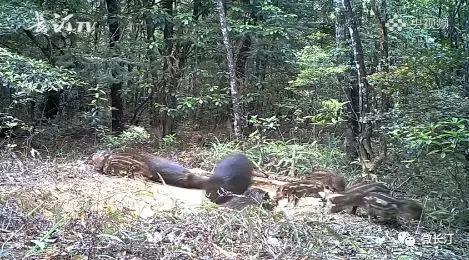
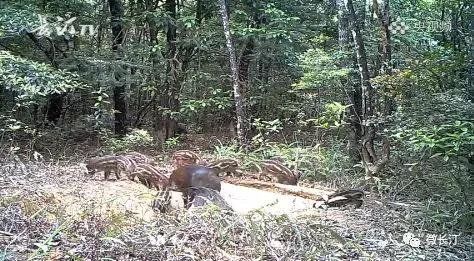
After the rain and the morning dew, a wild boar family ‘bathing’ activity is quietly unfolding in the dense forests of the Tingjiang Source National Nature Reserve in Fujian Province……
You can see ‘elders’ carelessly standing in the natural ‘swimming pool’, playing and frolicking, enjoying the coolness of mud bathing, while ‘children’ linger at the edge of the ‘swimming pool’, eager to try, sharing ‘family fun’. The scene is harmonious. According to experts from our province’s wild animal research institute, such videos are rare.
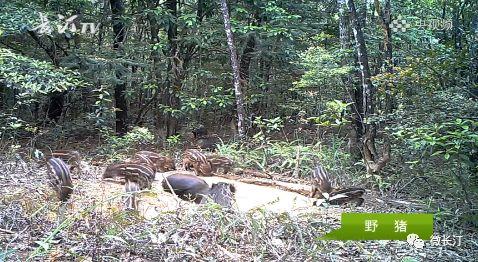
Wild boar (scientific name: Sus scrofa)Divided into European wild boar and Asian wild boar, there are 27 subspecies worldwide, but there is no reproductive barrier between them, and they can produce offspring. Wild boars are omnivorous animals, living in mountains, hills, deserts, forests, grasslands and thickets, with strong environmental adaptability. Wild boars are active day and night, but mostly forage in the morning and evening, and hide in dense forests during noon. They like to bathe in mud and forage along streams. Male boars mostly roam alone, and female boars often form small groups of 3-4, sometimes female boars and their previous brood’s daughters will form large groups of 20-30 together. Wild boars are widely distributed in the world, but due to hunting by humans and the rapid reduction of living space, their numbers have decreased sharply, and they have been listed as national ‘three-exist’ protected animals, which are terrestrial wild animals with important ecological, scientific and social value.
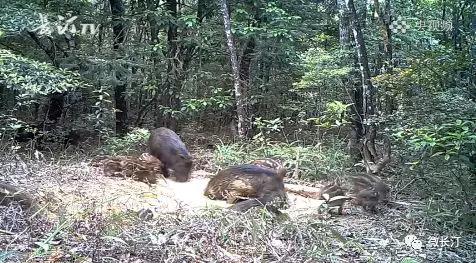
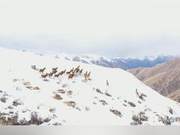
It is reported that the Tingjiang Source National Nature Reserve in Fujian Province has been protected since its establishment. With increased protection, patrol, and publicity, the awareness of local people protecting wild animals has significantly improved. From 2017 to 2019, 139 infrared cameras were set up in the protection area and surrounding areas, which initially built a wild animal infrared monitoring network. More and more wild animals appeared in the infrared camera lenses, and a series of national first-class protected animals such as white-necked long-tailed, national second-class protected animals such as water deer, monkeys, white cranes, goral, mandarin ducks, wood pigeons, snakes, etc. were photographed. The fact that water deer was alive in Fujian for the first time was also photographed in the protection area, which truly turned the protection area into a happy home for wild animals.
Source: Tingjiang Source National Nature Reserve Bureau Lin Qinwen
Web editor: Chen Binglin Qiu Binghua
Review: Wu Derong Huang Jianliang
Production: Deng Zhuyuan
Chief Producer: Zhong Binbin