The German Shepherd's Difficult Fate: Growing Up and No Longer Huggable
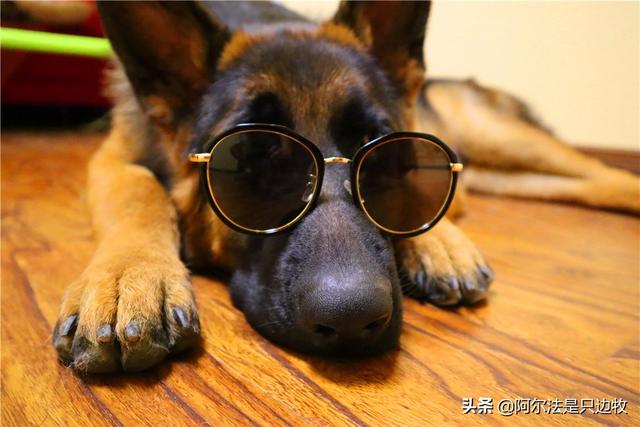
It was by chance last year that I temporarily raised a German Shepherd puppy, and for various reasons, raising it became my own dog. Now, after a year, the little black ball that came here has grown up, and it's impossible to hug it anymore because you can't hug it.
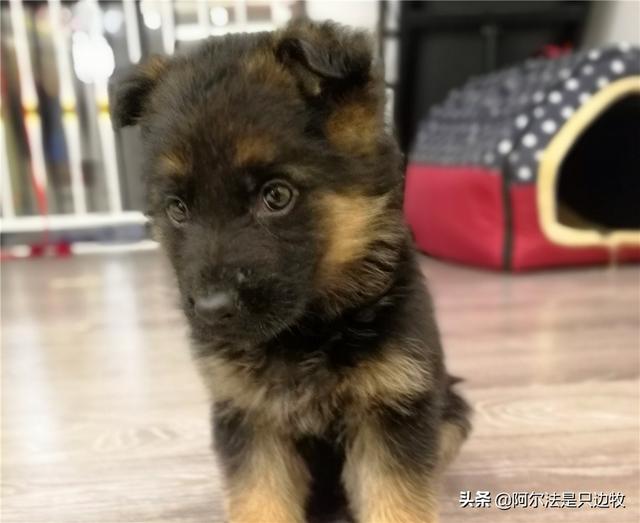
Just like the little black ball, German Shepherds look so cute.
When the German Shepherd was a puppy, it looked like a little black ball, small and not handsome or smart, seeming ugly and silly, and full of cuteness, and many people said that the German Shepherd was 'cute and silly' or 'ugly and cute', and this bit of cuteness made the German Shepherd particularly popular.
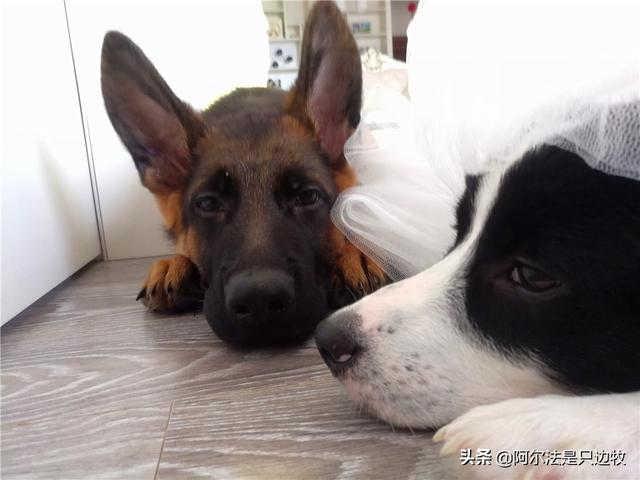
During outdoor walks with the German Shepherd, if it couldn't walk, it would sit there and refuse to move, no matter how I called it. Often, when taking dogs for a walk at home, I would run ahead with the Border Collie, and the German Shepherd would slowly follow behind. After I and the Border Collie ran for a while, we would stop there to wait for them. Sometimes, the Border Collie was impatient and would pull me back to catch up with the German Shepherd and the Border Collie, and then we would run forward together. But soon, the German Shepherd would lag behind, and we would go back to pick it up, and we would do this over and over again.
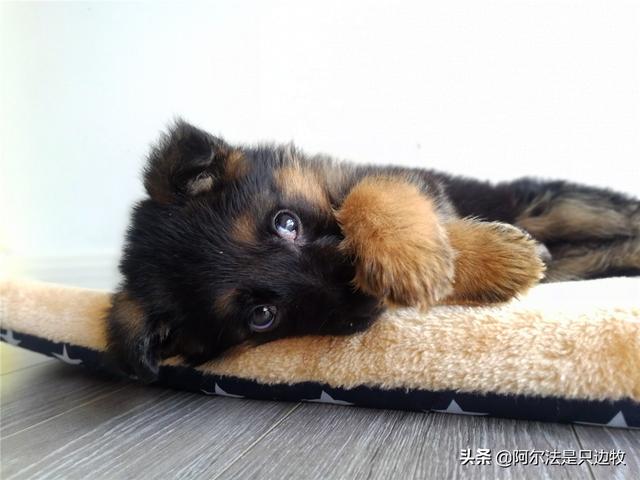
The German Shepherd never makes a fuss at home, it eats and sleeps every day, it rarely plays and rarely interacts with people. When it's sleeping, the Border Collie will run around for fun, so I think of it as hugging it to sleep, but it doesn't want to be hugged, and it struggles to get down, no matter how I look at it, it's always cute and adorable.
As it grows up, you can't hug it, but it can stick to you.
The Border Collie only gave birth to one puppy in its lifetime when it was a puppy, and it was always happy and excited, jumping and bouncing. But after the German Shepherd came to our home, it was always sick, and it was not easy to grow up.
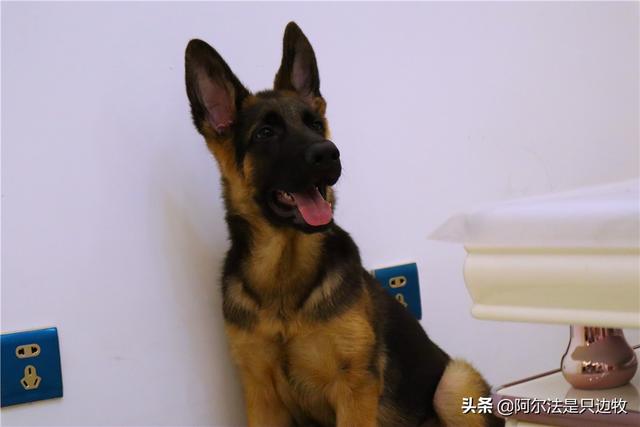
When the German Shepherd first came to our home, it had a skin disease, and after applying medicine at home, it gradually recovered, but the skin disease on its tail remained, and it kept getting better and worse, over and over again. At its worst, the whole tail needed to be treated, with scabs falling off, and the skin disease was eventually cured, but all the fur on its tail fell out. After the tail was healed, the German Shepherd's umbilical hernia was discovered, and we took it to see a doctor. The doctor said to observe for about 6 months, and if the hernia area becomes hard, surgery may be necessary. But since it was just a small surgery, it wasn't a big deal, but for the German Shepherd, it was a big deal because it had never left my side, had never stayed overnight alone, had never been locked up, every time I went to see it, it would whimper and cry, and the longer I stayed there, the harder it was for it to stop crying. It always felt like I didn't want it. At the time of leaving, the German Shepherd was thinner and its personality had changed a lot.
Before, the German Shepherd was steady and calm, but after leaving, it seemed to understand that life was only once, and it didn't know when it would no longer be with its owner, or when it would get sick, so it entered its body a second dog, and when it's happy, it will cry and whine, and when it's unhappy, it will be angry and complain. Although it's no longer just a cute puppy, I feel that it's even more cute.
Raising a German Shepherd is difficult, and you always have to take it to the doctor, and the doctor will always say, 'German Shepherds have this problem.' When you ask why, the doctor says, 'It's a breed problem.' My German Shepherd is the same, with hip joint problems, elbow dysplasia, and one after another.
Fortunately, these problems were discovered early because of many people's supervision and care. Perhaps it was lucky, and after its elbow dysplasia, it was also seen by a doctor, and the doctor recommended surgery or observation, and we chose to observe first. Unexpectedly, after a month, the big swelling disappeared on its own. It turned out that the original swelling was just a big egg.
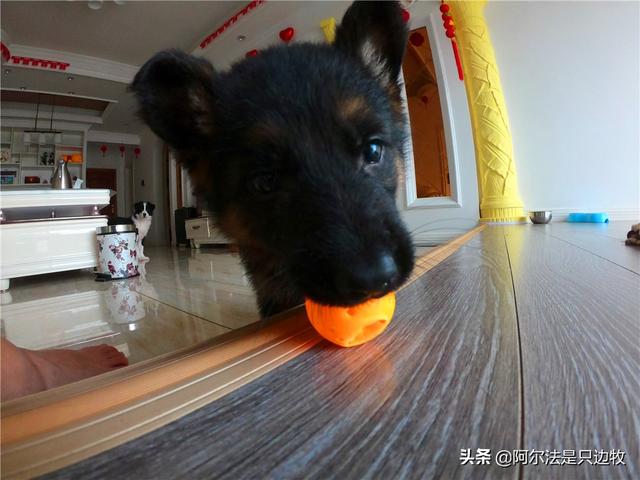
As it grew up, you couldn't hug it, but it could stick to you.
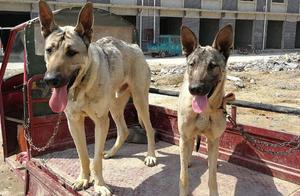
When the German Shepherd was a puppy, if you wanted to hug it, you could hug it for a long time, and it didn't feel tired, so it felt that it was still a baby, but now it has grown up to be a 70-pound dog. During a period of time, I also wanted to hug it hard, but at that time it had serious hip joint problems, so I was afraid of hurting its legs, so I didn't hug it. Now, its hip joint problems have improved, and I can't hug it anymore because it's too big and heavy, and it's difficult to hug it.
Although you can't hug the German Shepherd anymore, it likes to stick to you, and it will lie down beside me when I work, and it will guard the door when I sleep, and it will jump on the sofa when it's happy, and it will lie down and sigh when it's angry, and it will whine and cry when it's sad, as if to tell me, 'I'm still a baby.'