Must Vaccinate After Being Bitten by a Dog?
Last year, my cousin was bitten by a dog when she went on a trip to Spain with her classmates. One day, she was accidentally bitten by a classmate's dog. At that time, my cousin was immediately taken to the hospital by her classmate and asked to get a rabies vaccine. The doctor, after inquiring the situation, learned that the dog was bitten by a classmate's dog and through phone inquiry learned that this dog had been vaccinated, he told my cousin that she completely didn't need to be vaccinated again. However, my cousin was still worried and insisted on getting vaccinated. At this time, the doctor told her, 'You are wasting national resources!' This seems to be quite different from what we have known before, is it really okay not to get vaccinated if bitten by a dog?Wound treatment
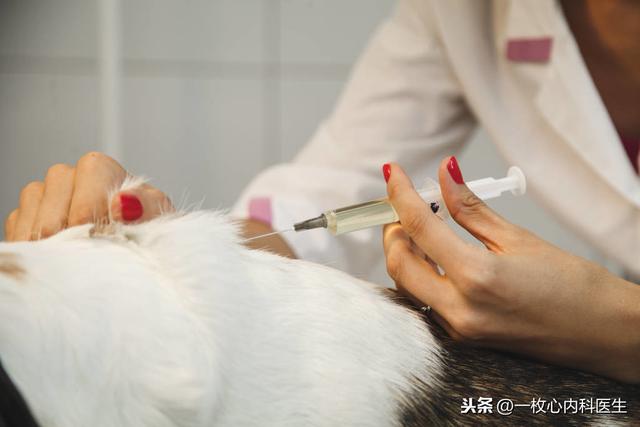
After being bitten by a cat or dog, it is necessary to clarify the degree of exposure of the wound. WHO and China both classify rabies exposure according to the nature and severity of exposure into three levels:
(1) Contact or feed animals
(2) Whole skin licked
Level 1 exposure, no handling is required.
(1) Exposed skin is lightly bitten
(2) Minor scratches without bleeding
Level 2 exposure, the wound should be treated immediately and rabies vaccine should be administered.
(1) Single or multiple through wounds
(2) Skin mucosa licked
(3) Mucosa contaminated with animal body fluids
Level 3 exposure, should immediately treat the wound and inject rabies passive immune agent, followed by rabies vaccine.
Ten-day observation method
All the above measures are based on the assumption that the animal may carry the virus. If it can be determined that the animal has been vaccinated, the ten-day observation method is also applicable. The ten-day observation method is one of the rabies prevention methods recommended by the World Health Organization (WHO), that is, after being bitten by a sick cat or dog, it is necessary to quickly inject rabies vaccine and observe the cat or dog. If the cat or dog does not get rabies and die within 10 days, the rabies pre-immune injection can be terminated, and it can be determined that the bitten person has not been infected with rabies.
This is because infected animals are only contagious in the 2-3 days before they become sick, and once animals become sick, they will die within 3-5 days, so 10 days is a very safe time.
This method can completely eliminate all possibilities of human infection with rabies.

I specifically asked a professor of infectious diseases and a friend from the CDC, and his answer was affirmative.
Moreover, CCTV has also done relevant reports.
But! The ten-day observation method does not mean that you observe for ten days after being bitten by a dog and then get vaccinated. This is mainly because the dog in China has not been fully registered, and the immunization rate is very low, which limits the application of the ten-day observation method.
Misconceptions and debunking
First, not all cats and dogs carry the virus. Rabies virus is a very dangerous virus, and it cannot coexist peacefully with any animal. Therefore, healthy cats and dogs are not a problem. It is not possible to be infected with rabies if bitten by a healthy cat or dog. Most cats and dogs are healthy.
Second, rabies virus belongs to a specific neurotoxic virus, and it is not transmitted through blood. Therefore, it is impossible to determine whether to vaccinate based on whether there is bleeding!
Third, the risk of different bite sites is different. Generally, upper limb bites are higher than lower limb bites, chest and abdomen bites are higher than limb bites, and facial bites are highest. If it's a facial bite, it's highly recommended to vaccinate along with the administration of antibodies.
Conclusion
If bitten by a dog that can be observed such as one's own home, neighbor's, relative's, friends' or other dogs with known daily lives and had been vaccinated, it is applicable to the ten-day observation method; otherwise, it is a must to vaccinate immediately. Given the low immunization rate of animals in China, the safest method is to vaccinate while observing, if the dog does not get sick within 10 days, then stop vaccination immediately. Save money and help save national resources. However, if bitten by an unknown animal, please inject vaccine immediately!