Hip-Opening vs. Non-Hip-Opening Tai Chi
Currently, Tai Chi practiced worldwide is actually two types of Tai Chi: one is non-hip-opening Tai Chi, and the other is hip-opening Tai Chi, as evidenced by the X-ray images of Mr. Ma. The two types of Tai Chi have different basic research principles. Non-hip-opening Tai Chi studies the angle at which humans stand upright with two feet. Hip-opening Tai Chi studies the angle at which humans stand upright with four feet, that is, how to return to the instinctive state of four-limbed crawling animals.
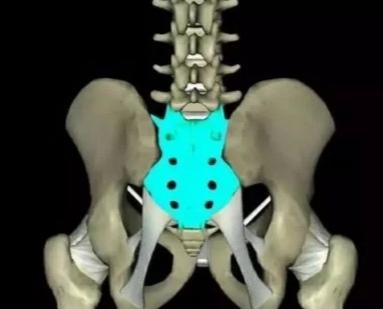
The basic principles of Tai Chi are based on a four-limbed crawling animal as the basic research object. This leads to a question: since humans have evolved to stand upright, why do you deviate and regress to an animal state? In fact, we only need to obtain the powerful strength and sense of distance that four-limbed animals possess. Understanding the basic research principles allows us to understand what hip-opening is, and we can begin to notice the state of the legs of four-limbed crawling animals. Their hind legs are in a state, and the distance between the front legs and the back legs is the same as the distance between the front legs and the back legs, forming an H-shaped parallel. Compared to humans, who stand upright with their front legs, the front legs have an additional collarbone to maintain the distance. However, the pelvis of the hind legs has little collarbone, and the distance is very small, which is not equal to the distance between the shoulders. This means that the upper body and lower body are not equal, the upper body is U-shaped, and the lower body is inverted V-shaped. Let's compare it with Mr. Ma's hip-opening X-ray images. The bones of the two legs seem to stretch open and become very firm. This is a virtual collarbone, its purpose is to balance the distance of the upper body, forming a four-square state like four-limbed crawling animals. This is the first principle of body shape. When you look at non-hip-opening Tai Chi, you will find that their front chest is close to the back, but their abdomen is protruding, and their back is arched. The entire back is C-shaped, not flat like a spear. Combined with the earlier hip opening, the front chest and abdomen are close to the back, and the back is flat like a spear. This is the state of a four-limbed crawling animal. This is the process of hip-opening training, which is called 'draw, lean, and attach'. Once it is done, it naturally sinks down, not a forceful sinking. When you understand the previous two principles of body shape, you must also understand the third principle, which is the head and face body shape. The head and face of cats and dogs are how? Compared to humans, you will find that their eyes are actually attached to the back of the skull! After humans evolved, our eyes have moved forward. Therefore, hip-opening Tai Chi requires the front face to be close to the back of the skull, and the eyes are attached to the back of the skull. It's very difficult to practice, but it's crucial. If you don't do it carefully, you might end up like non-hip-opening Tai Chi, turning into a turtle-necked posture. So sometimes the teacher even uses his hand to pull our back of the head, so that we can raise our whole body, just to avoid becoming a turtle-necked posture, so that the back of the head and back are flat. Since the eyes are in the front, how can they be attached to the back of the head? Early on, it just requires looking backwards from the back of the head, combined with the front face to be close to the back of the skull, in the later stage, it plays a great role, as long as you put an eye back into the back of the head, you can clearly understand the movements of the opponent, and clearly know the distance near and far. The more you practice body sight, it's like the whole circle goes around the opponent. In fact, there is also a requirement for the ears, but it cannot be seen, so it is not used as a body shape requirement, only related to the eyes that are related to being close to the back of the head. If the second principle of body shape is to empty the chest and abdomen, then the third principle of body shape is to empty the face. Non-hip-opening Tai Chi basically just empties the chest, does not empty the abdomen and face. The hip-opening of Tai Chi is basically these three principles, through controlling the muscles on the inner side and mastering the space, training the body to the most extreme, the most standard.
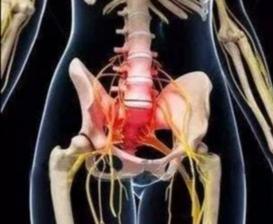
When you want to distinguish whether it is hip-opening Tai Chi or non-hip-opening Tai Chi, as long as you use these three body shape principles as the standard, it is natural to see through it. It's the simplest, as long as the back and back of the head are not flat like a spear, you cannot achieve the first requirement of hip-opening, and even if you have this requirement, you don't know how the hip opening operates and opens, it's impossible to open it. According to my understanding, even if I tell you how the hip-opening is practiced – 'draw, lean, and attach' – if you don't have experience, long-term understanding, and correct wielding of force, you may not be able to open your hips. And if you don't understand the process of hip-opening, it's even more impossible.
C