Slipped Disc (Herniated Disc) Treatment: Optimal Rehabilitation Exercises to Save Your Spine
Spinal traction is a therapeutic method based on passive movement, which has been widely applied in modern medicine for the treatment of slipped discs and other waist and leg pain. Spinal traction can be divided into manual traction, self-traction and gliding traction. Clinical evidence shows that this method has obvious efficacy.
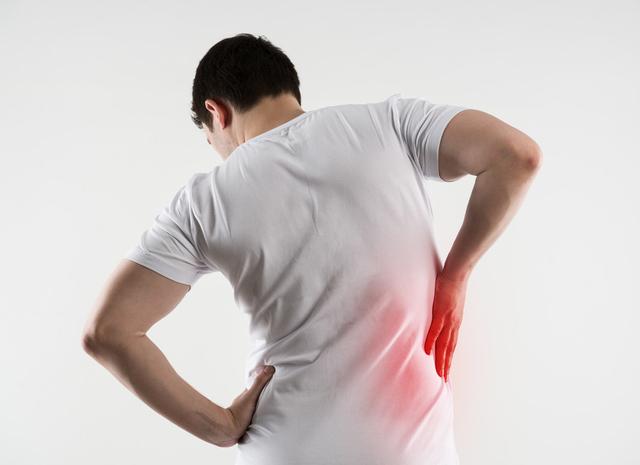
Manual traction
Below, we will introduce several methods, which you can choose to exercise according to your own situation. As long as you persevere, any method will be effective.
Method 1: Prone traction
Patients lie prone on the bed, with their legs extended straight, to stretch the waist. Family members stand at the patient's feet, with their hands gripping the ankles of the patient's feet, and then perform traction along the axis of the lower limb until the patient feels obvious pain in the waist significantly relieved, or until the patient's body begins to slide on the bed. In order to enhance the traction effect, when the family members are pulling, the patient can grasp the bed head or the sides of the bed sides to increase the traction effect. This method can make the patient's waist vertebrae be in a supine state, which is conducive to the relocation of the intervertebral disc. Each lasts 20-60 seconds, intermittent traction 10-15 times, daily 2-3 times.
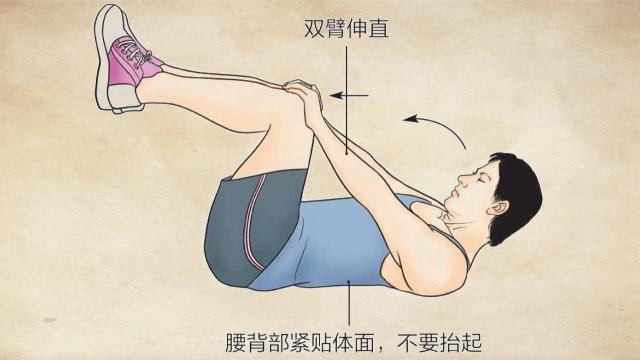
Patient lies prone, with legs extended straight, stretching the waist. Family members stand at the patient's feet, with their hands gripping the ankles of the patient's feet, and then perform traction along the axis of the lower limb, the patient can grasp the bed head or the sides of the bed sides to increase the traction effect.
Self-traction
Method 1: Squat traction
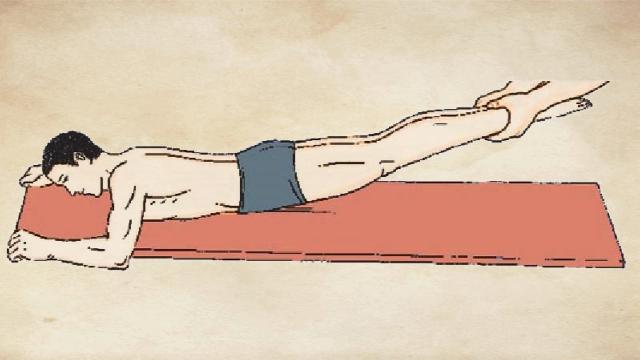
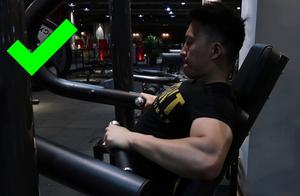
Patients grasp a bar at the same height as their shoulders and slowly squat down, while keeping their arms extended, in a semi-hanging state. Each lasts 1-2 minutes, and do 2-4 times daily.
Patients grasp a bar at the same height as their shoulders and slowly squat down, making their arms extended, in a semi-hanging state.
Method 2: Leg traction
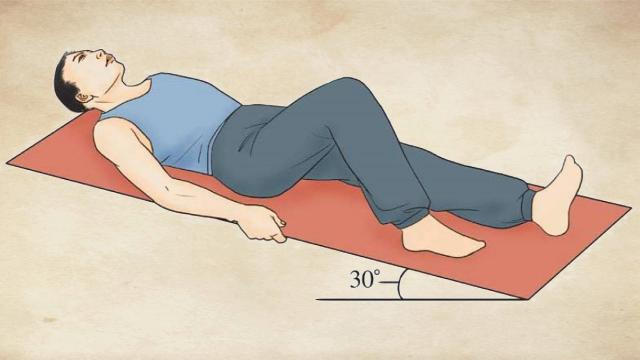
Patients lie on a bed inclined at 30-40 degrees, with their hands holding the edge of the bed to fix their bodies, and their legs alternately perform flexion and extension movements. The movement of the two legs will generate inertia, pulling the body along the inclined bed surface, and the patient holding the bed edge plays a role in preventing the body from sliding, thus achieving the purpose of traction on the waist vertebra. Repeat 5-10 times, do 1-2 times daily. The force of the patient's bending and straightening legs should be appropriate.
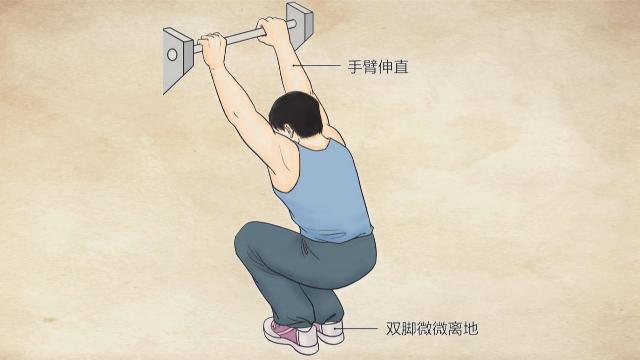
Patient lies on a bed inclined at 30-40 degrees, with their hands holding the edge of the bed, and their legs alternately perform flexion and extension movements.
304051012
3040