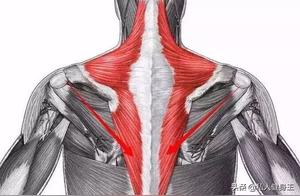
Training the Deltoid | 5 Ways to Build a ‘Tiger Head’ Shoulder, Training Sequence, and Weight/Rep Recommendations

Why are your shoulders not getting bigger? Read on to find out!IntroductionThe Deltoid Is a Very Special Muscle Group, Why?Professional StageIn many competitive bodybuilding and fitness arenas, frankly, the deltoid isn't the key differentiator for scoring, because the people who make it onto the stage have talent and effort beyond doubt, plus its small muscle group, everyone's deltoid is not bad, the difference is not obvious.Therefore, many professional athletes' attitude towards the deltoid is:Just persist and it's enough!Instead, they focus more on training larger muscle groups.Mass FitnessIn the mass fitness field, the deltoid training is directly and clearly reflects a person's training level.Everyone has this experience and feeling: this person in the gym is very good at shoulder training! The entire shoulder looks very round and wide, and the physique is closer to a V-shape, which is very envious!As a rare multi-headed muscle group in the human body, the deltoid can withstand training intensity and recovery ability, so in general, deltoid training is aTime accumulation and number polishingProcess.In the training process, mastering certain training experience and techniques will make you more efficiently train a good-looking shoulder!1 About Training Order: Back > Middle > FrontRegarding the order of deltoid training, most of us start from the front, because we have to have a front and back sequence, right?For example, according to this,:1. Shoulder sleeve warm-up 5-10min2. Seated dumbbell shoulder press (front) 4×8-12reps3. Dumbbell front raise (front) 4×8-12reps4. Dumbbell lateral raise (middle) 10×12-30reps5. Reverse bird (back) 4×8-15reps6. Rope face pull (back) 4×8-15repsThis sequence is perfectly fine. Now please consider the following question:Where do you look to see that someone's shoulders are good?That is, how wide and round are the shoulders, and then do you ever see someone whose shoulders aren't round because of a lack of the anterior deltoid? I believe most people have never seen it.It doesn't mean that the anterior deltoid is unimportant, but our anterior deltoid in other muscle training, such as chest training, will inadvertently train it, so for your personal shoulder training level, even if the anterior deltoid is weak, it will not be weaker than anyone.In other words, if you think your anterior deltoid is weak, I can only say that your medial deltoid and posterior deltoid may be even weaker,Do you understand the meaning?So Max suggests:Everyone should invest more energy in training the medial and posterior deltoidsMake the medial deltoid good, whether from the front or the back, it will make the person look wider and better shoulder-to-waist ratio! Make the posterior deltoid good, when you look at the side of your shoulder, it will be fuller, not with a sense of missing!Adjust the training order appropriately,Put your weak muscle groups in front to train,This will yield unexpected training benefits.2 About Sets Per TrainingThe specialness of deltoid training also manifests in training sets.As a three-headed muscle group, the deltoid is divided into three heads in front, middle and back.The deltoid muscle group division:Anterior deltoid:It needs larger weight stimulation to grow, so if you are a beginner, you should start with lighter weight and develop good power habits before gradually increasing the weight.And another important point is to prevent weak sides from being too weak, large weight, to avoid weak side other muscle groups long-term compensation, which can lead to asymmetry in posture or muscles, and it will be difficult to correct the body shape later.Middle deltoid:As the intermediate head of the deltoid muscle, it has the highest fatigue resistance and recovers quickly. So Max usually adopts high-volume+high-repetition training methods.For example, for dumbbell lateral raise training, I usually train about 8-10 sets, and each set completes about 15 reps with a large amount of weight, and about 30 reps with a smaller amount of weight!Posterior deltoid:Rope face pull, reverse bird, dumbbell lift, head-down dumbbell lift, about 8-15 reps each.Anterior deltoid: Seated dumbbell shoulder press, Smith machine shoulder press, dumbbell front raise, 8-12repsMiddle deltoid: Standing/seated dumbbell lateral raise, rope lateral raise, 12-30repsPosterior deltoid: Rope face pull, reverse bird, dumbbell lift, 8-15reps3 About Training ActionsDeltoid training has many actions, and my suggestion is:The classic training actions must be mastered, such as anterior deltoid training: seated dumbbell shoulder press, Smith machine shoulder press, dumbbell front raise, posterior deltoid training: rope face pull, reverse bird, dumbbell lift, head-down dumbbell lift, 8-15 reps each.These classic deltoid training, you must master the ability to effectively target the muscle group, and then the rest is a matter of time. Regarding other fresh training actions, such as rope front raise, dumbbell lift, etc., my suggestion is:Dare to try, maybe it's the training method you like!If you feel that these training techniques and details are not mastered enough, orI really can't find a good way to target muscle activation,Max suggests that you can take a look at Muscle Medness homepage's column: '100 Classic Fitness Training', which contains 100 training actions for each part, with training techniques, error analysis, and good imagination, which can help you quickly find a good muscle activation feel!100 Classic Fitness Training content4 About Weight SelectionFollow two principles:First, initial trainingIf you are a beginner, you should start with lighter weight and develop good power habits before gradually increasing the weight.Another important point is to prevent weak sides from being too weak, large weight, to avoid weak side other muscle groups long-term compensation, which can lead to asymmetry in posture or muscles, and it will be difficult to correct the body shape later.Secondly, progressive overloadWhen you master the activation of a muscle group, if you want to continue progress, training weight becomes a decisive factor. Following the principle of progressive overload, because theoretically, as much muscle you have, the maximum weight you can lift.Regarding the deltoid,The weight selection is usually: anterior deltoid > medial deltoid > posterior deltoid,The anterior deltoid needs larger weight stimulation, the medial deltoid needs appropriate weight continuous stimulation, and the posterior deltoid needs you to eliminate the interference of other muscle groups, accurately find the activation, so the weight depends on it.5 About Shoulder Sleeve Injury and Warm-upIn terms of fitness training, if I want to judge the most prone to injury joint or muscle group, I will definitely choose: shoulder joint!As a fitness author who has a long-term left shoulder joint activity limitation, my biggest suggestion to you is:Before any training involving large shoulder movements (especially chest, shoulder training), you must warm up your shoulder joint and shoulder sleeve muscle group!It can increase the activity and stability of your shoulder joint, so that you can complete the training action more easily and symmetrically, and in the long run, it is conducive to prolonging your fitness career (covering face).Column screenshot: Column 27Regarding the activity and stability of the shoulder joint and shoulder sleeve muscle group, Max updated it in column 27, if you need it, small partners can view it by themselves!The article summarizesIn this article, we have made suggestions about deltoid training from the macro perspective.It involves training order, training actions, weight selection, and sets per training. Note that all the suggestions above are based on your ability to effectively complete the training action, so learning the training action, mastering the power technique is your first thing to do! Then apply these principles and methods to training!I am Max, a fitness author who is grounded and insightful!
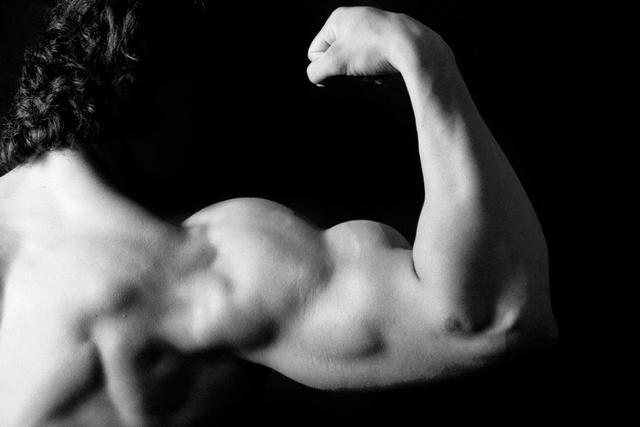

V

1
1.5-10min
2. 4×8-12reps
3. 4×8-12reps
4. 10×12-30reps
5. 4×8-15reps
6. 4×8-15reps
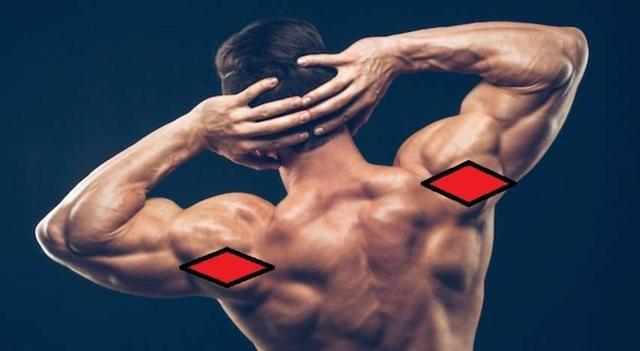
Max
2
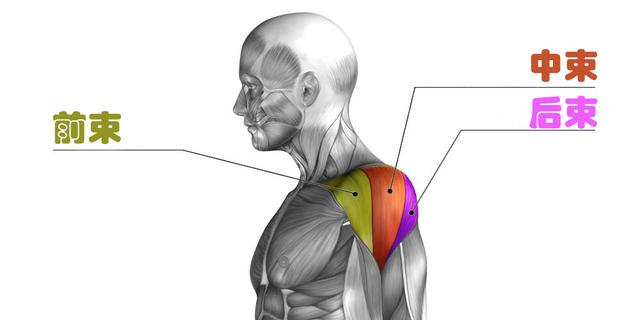
8-12
Max+
8-101530
/8-15
8-12reps
/ 12-30reps
8-15reps
3
//
MaxMuscle Medness100100

100
4
Max
5

27
Max27
5
Max