Will Squats Hurt Your Knees? How to Do a Standard Squat?
Original content, translocators will be held accountable!
Do you have any changes after doing 50 squats every day?
Squats are called the golden action in the fitness world. For both muscle-building people and weight-loss people, this action is undoubtedly the most suitable for them to train.

Squats are very effective for lower body fitness, leg muscle training, and knee joint exercise. If you don't have the conditions to go to the gym to exercise, doing squats as a self-weight exercise at home can also strengthen the muscles.
Why do we advocate persisting in doing squats? What benefits can squats bring us?
First, squats are very effective for lower body muscle training. After the muscles are stimulated by resistance, they will continue to grow. Persistently doing squats will make your muscles grow. Muscle growth will also improve your metabolic ability, which can promote fat burning and help your body speed up the pace of weight loss.
Second, persisting in doing squats can help train other body muscles and promote the balanced growth of whole-body muscles.

Squats are not just for training legs. During the movement, your waist, abdomen, hips, and knee joints will also be effectively trained. Because the muscle content of the legs is the largest, it can coordinate the growth of whole-body muscles and protect various joints.
The process of doing squats can also train your endurance and stamina. You will find that your physical fitness has improved a lot. It will make it easier for you to complete other things in sports or life with more endurance and less complaining psychology. This is one of the benefits of exercise.
Fourth, squats can promote the secretion of testosterone, prevent muscle loss, maintain muscle strength, and keep you energetic.
Fifth, squats can increase bone density, prevent calcium loss, and slow down the speed of aging.
How much harm can squats cause to the knees?

When we talk about the harm of squats to the knees, we are talking about the harm of running to the knees and jumping rope to the knees. But have you ever seen someone stop exercising because of knee injury?
Of course not, because any exercise will cause certain damage to our bodies. But the benign damage can be self-recovered, and sometimes it can be recovered better than before. Correct squats can 'damage' the knee joint, and when the leg recovers, the knee and other joint parts will become stronger.
Then how to do the correct squats?
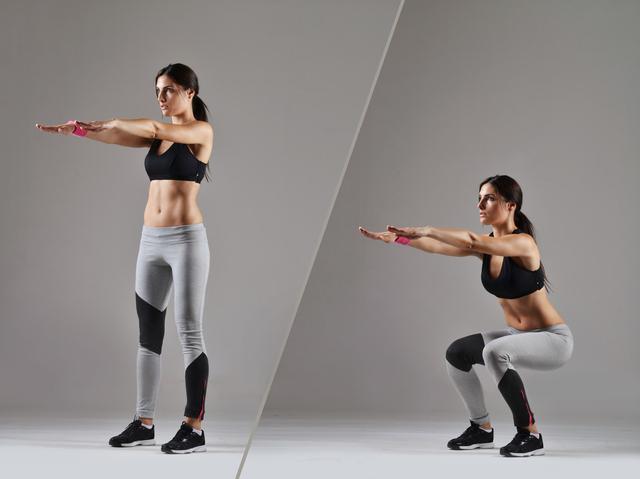
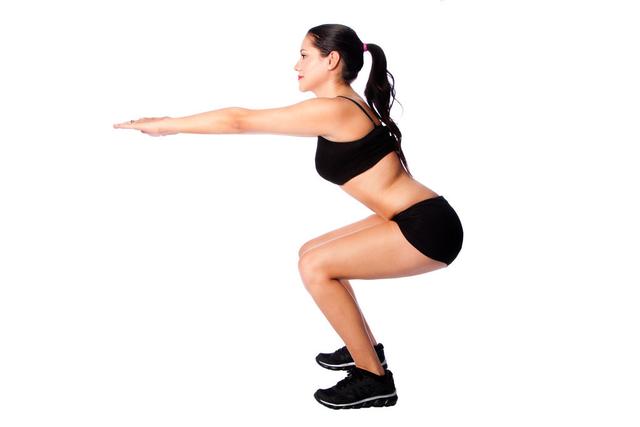
1. When standing, your feet should be shoulder-width apart, and the lowering process should keep the direction of your knees and toes consistent.
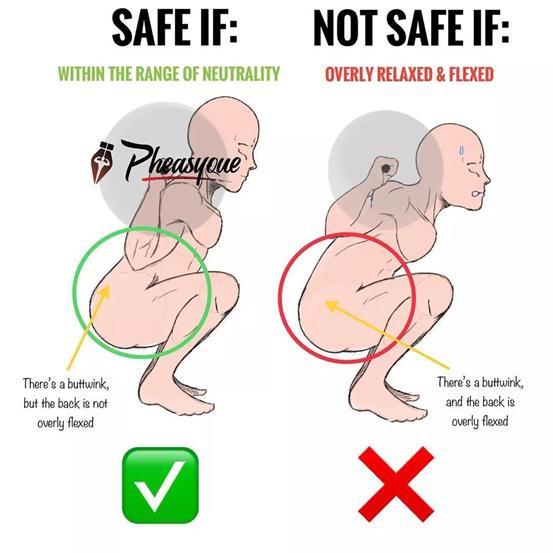
2. Look forward, keep your waist and back straight, and lower your hips. Slightly contract your abdomen and lower your hips downwards.
3. Your knees can exceed your toes by a little bit. If you always consider whether your knees should exceed your toes, it will make it easier to fix the posture and increase the risk of knee injury.
4. During the lowering process, from the side, we can see that your waist and shoulders are straight.
How should beginners start doing squats?
First, you need to set a fitness goal for yourself, such as starting with 10-15 repetitions, and then feel yourself. After persisting in 3-4 sets, and persisting for 4 days a week, gradually increase the number and times.
Because your fitness will improve during the training process. So, for advanced training, you can add weight (barbell or dumbbell) to increase the intensity of the training. This will help your muscles become stronger.