The Back Muscle Group – The Part We Want to Train Most! How to Improve Back Training Effectiveness?
Original content, unauthorized will be held accountable!
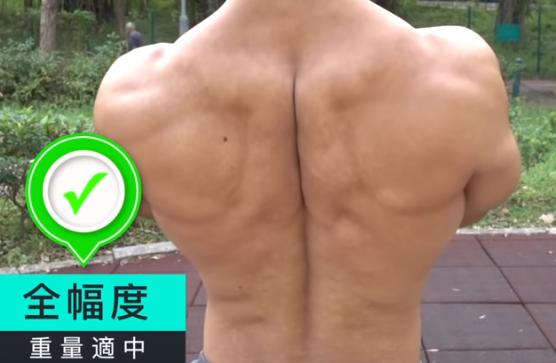
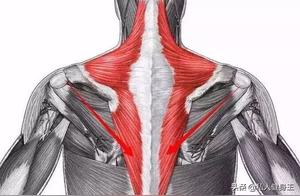
The back muscles are an area that serious gym enthusiasts don't easily ignore.Editor will first talk about the composition of the back muscles. The back is mainly composed of the following muscles: latissimus dorsi, rhombus muscle, trapezoid muscle, teres major, and posterior triangle muscle.
The back muscles are the second largest muscle group in the body, with a large scope of involvement. Given so many muscle groups in the back, if you train them separately, you might find it cumbersome and the training effect may not be the same.

So, how should you train more efficiently?
Many friends think that pull-ups are the golden exercise for back muscles, and the training effect is also relatively high. In fact, for most people, pull-ups have a certain difficulty, and not many people can obtain a good effect through pull-ups.

Today, I'm going to talk about another way to help you improve your back muscle awareness, which can help improve your training effects.
After knowing the composition of the back muscles, we also need to understand the function and role of the back muscles. The functions of the back muscles are three: pulling down, pulling back (rowing), and arm extension.
We also need to understand several actions related to the shoulder blades: elevation, depression (shrugging), abduction (rounded shoulders), adduction (retraction), rotation upwards, and rotation downwards.
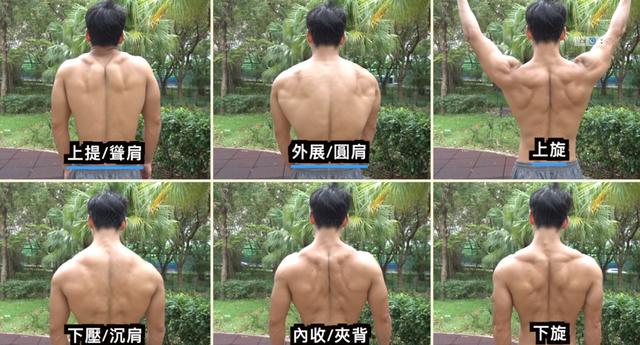
So, if we want to train our back muscles well, we first need to master the basic pressing and adduction exercises, namely, shrug and retraction.
The first exercise I want to talk about is the shrug exercise.
Shrug exercise targets the lower trapezoid muscle. We grip the pull-up bar with both hands, first relax our shoulders, allowing them to rise naturally, then use force to depress our shoulders, maintaining it for 2~3 seconds, and then relax and return to the original state. 10~15 repetitions for each set, 3~4 sets.
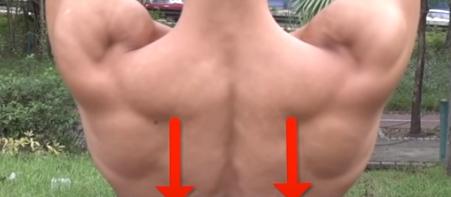
The second exercise is the retraction exercise,
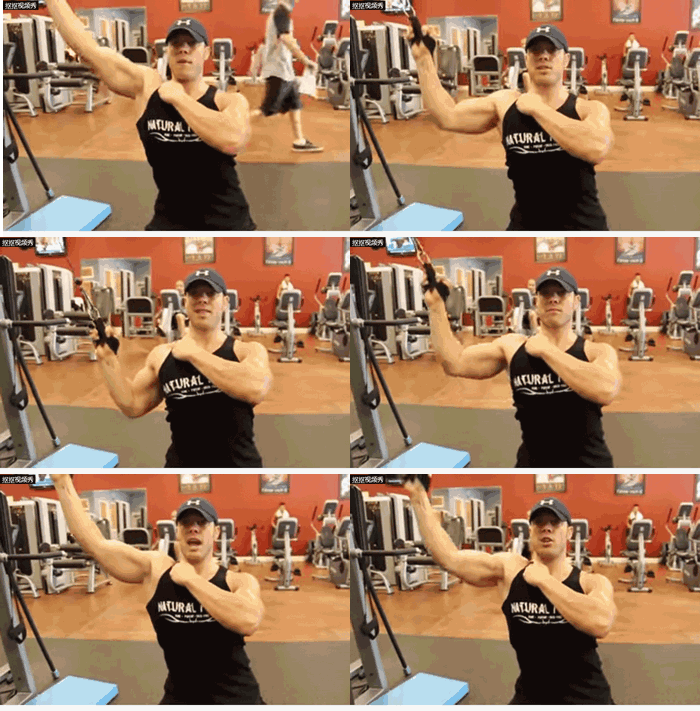
This exercise targets the rhombus muscle and the middle trapezoid muscle. We can use resistance bands, attached to a pillar, in a rowing posture, with both hands extended forward, then relax our shoulders, naturally protracting, and then use force to retract our shoulders, maintaining it for 2~3 seconds, and then relax and return to the original state. 10~15 repetitions for each set, 3~4 sets.
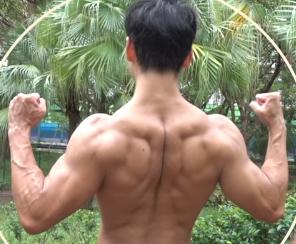
After we are familiar with these 2 exercises, we need to do back muscle awareness training by ourselves.
First, we need to practice shrug, using all our force to depress our shoulders, maintaining it for 5~10 seconds, the purpose is to see if we can feel the back muscles contracting, whether there is any discomfort or pain.
If there is no discomfort, we need to add the adduction action, with all our force to retract our shoulders, maintaining it for 5~10 seconds.
Finally,