Deformed Squats Cause Joint Pain, Learn 1 Action, Safely and Effectively Train Your Legs
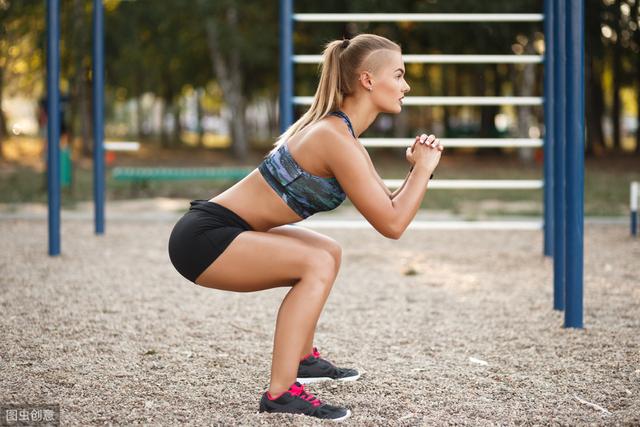
Working out shouldn't neglect the legs, and to train the legs, one must squat. This is already a common-sense knowledge in the fitness circle. Indeed, squatting is one of the best fitness exercises, mainly involving the lower limb muscles, but it can also improve overall athletic performance, and even without arm exercises, it can increase arm circumference. This is the unique charm of squatting. However, due to the involvement of many joints and muscles in squatting, it is difficult to master, and many people will experience knee pain during squatting. This is not a minor matter, but simply emphasizing how to do a standard squat is meaningless. Next, we will introduce how to avoid making wrong squats.
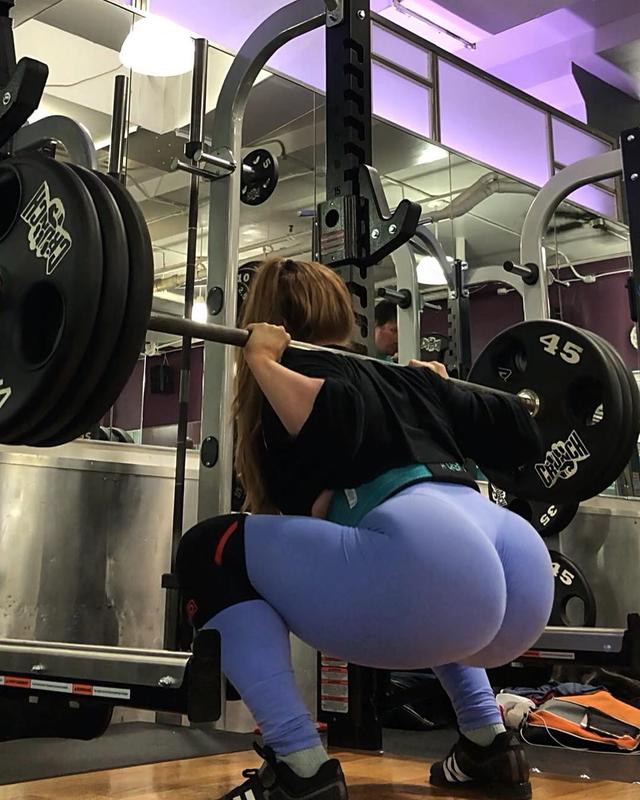
Reasons for Knee Pain During Squats
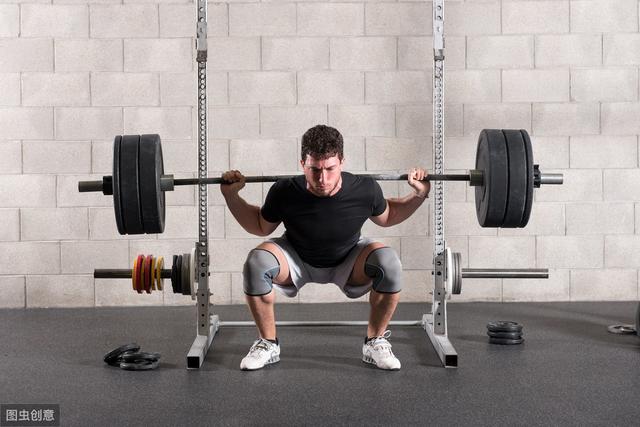
1. Incorrect Knee Position
Flexion is an essential part of squatting and also the most prone to error. When squatting, if the knees buckle inward, under the action of the barbell weight, they will generate an inward rotational force. Even if the knees appear to buckle inward slightly, if not corrected in time, the inward trend will become stronger, leading to knee pain. In previous articles, most methods to correct knee inward buckling involved widening the feet actively, but this only addresses the symptoms and not the root cause. Moreover, for people with severe knee inward buckling, actively widening the feet can even increase knee discomfort.
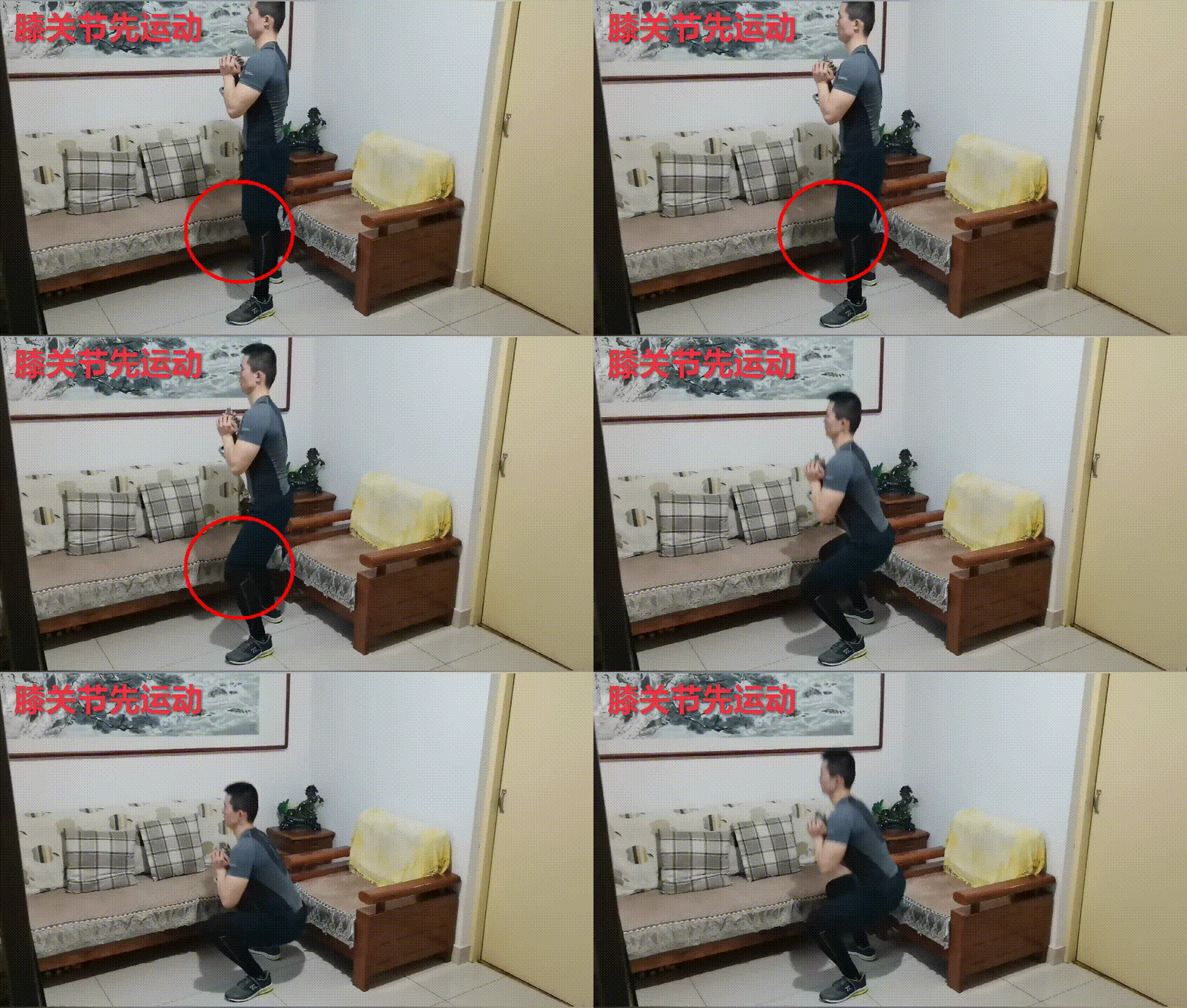
2. Hip and Knee Not Synchronized
When squatting, if the knee joint moves first, it will cause the knee to hyperextend, not just the issue of the knee exceeding the toes, but also make it impossible to complete the squat. If the hip joint moves first, the glutes will shift backward excessively, leading to the torso leaning forward and the back muscles bearing excessive pressure, causing waist and back pain, and at this time, only a partial squat can be completed. The standard squat should be that the knee and hip joints move synchronously, but many people cannot do this. In addition to difficulty in achieving simultaneous movement, the key reason is that the target muscles cannot actively generate force.
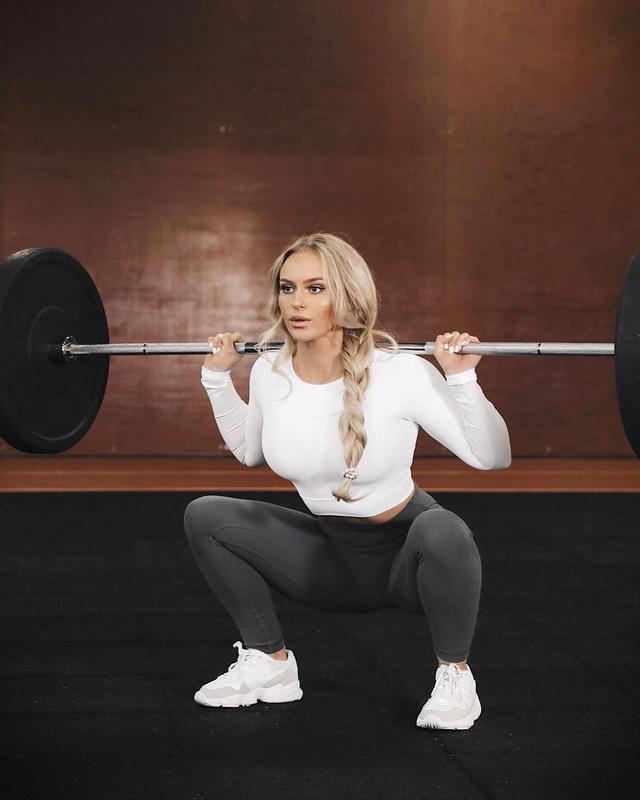
3. Back Muscle Activation
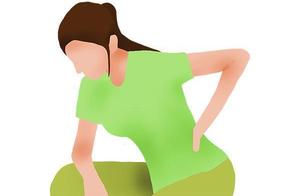
When standing up, the hip joint should be the main driver, thereby synchronously moving the knee, which is the key to achieving this is that the gluteus maximus should be able to generate active force. Most people today are sedentary, not only making their buttocks unsightly, but also lacking the strength of the gluteus maximus, let alone generating active force. Therefore, when the gluteus maximus is weak or cannot generate active force, in order to complete the action of standing up, the lower back will participate, causing waist and back pain.
The above three points are the main reasons for knee pain during squatting. Next, we will not talk about how to do a standard squat, because this is already a common knowledge, and many people cannot independently judge whether their squats are correct. Therefore, we need to find a way to minimize the occurrence of errors. Squatting before a set of 1-2 glute bridges is the most effective method.
Glute Bridges vs. Hip Thrusts
I believe everyone is familiar with glute bridges and hip thrusts, but many people often confuse the two. The following three points are the main differences between glute bridges and hip thrusts:
- Glute bridges involve greater exercise intensity than glute bridges and are suitable for use when the primary goal is to train the glutes.
- During glute bridges, the hip flexion range is larger, and it is necessary to perform dynamic warm-ups before starting to avoid injury.
- Glute bridges need to be performed in a supine position, with the upper back and head pressed against the ground; hip thrusts require the upper back to be in a high position, so their strength requirements for the upper back are higher, and the action difficulty is also greater, which is suitable for experienced trainers to use.
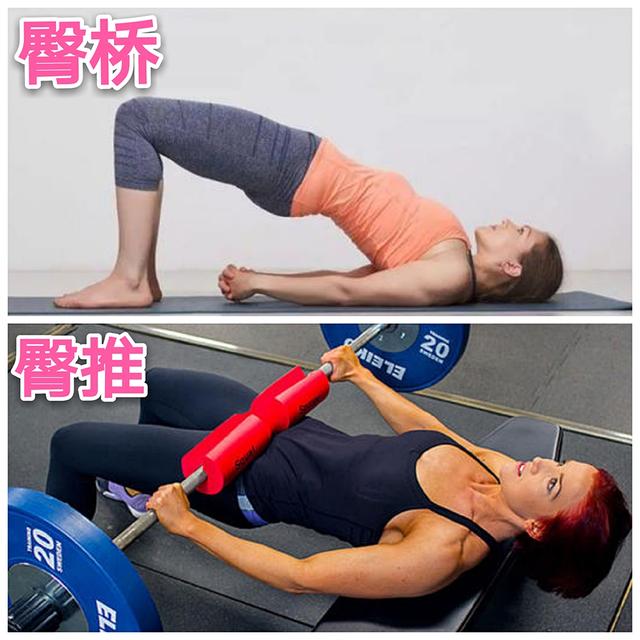
From the above three points, the warm-up before squatting should be a glute bridge to activate the glute muscles, so that they can better serve the subsequent squat training. Do not use heavy barbell weights, for fitness enthusiasts with weaker strength, self-weight glute bridges are also a good choice.
Why Do You Do Glute Bridges Before Squats?
1. When performing glute bridges, the concentric movement requires hip flexion, which perfectly simulates the lowering movement in squatting, allowing the glutes and hip muscles to become familiar with the load of hip flexion, avoiding excessive stress on the knees.
2. The knees will have some flexion, which can simulate the knee bending action during squatting to fully warm up the knees, avoiding injuries in subsequent training.
3. Glute bridges not only require the coordinated action of the gluteus maximus and hamstrings, but also require the involvement of the posterior chain muscles, such as the erector spinae, to maintain the stability of the trunk. In this way, the posterior chain muscles can actively generate force during squats, avoiding the phenomenon of only partial squats when standing up, and the knees will experience excessive pressure.
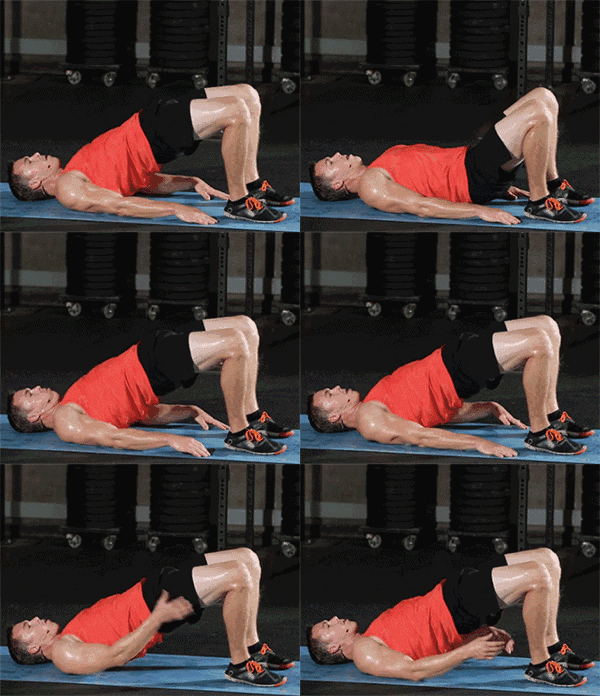
Glute Bridge Action Steps:
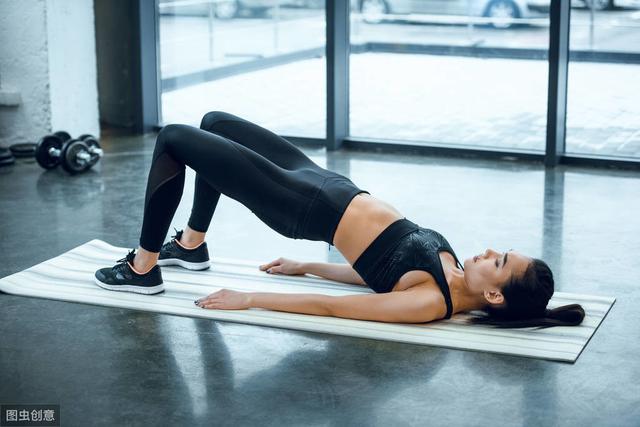
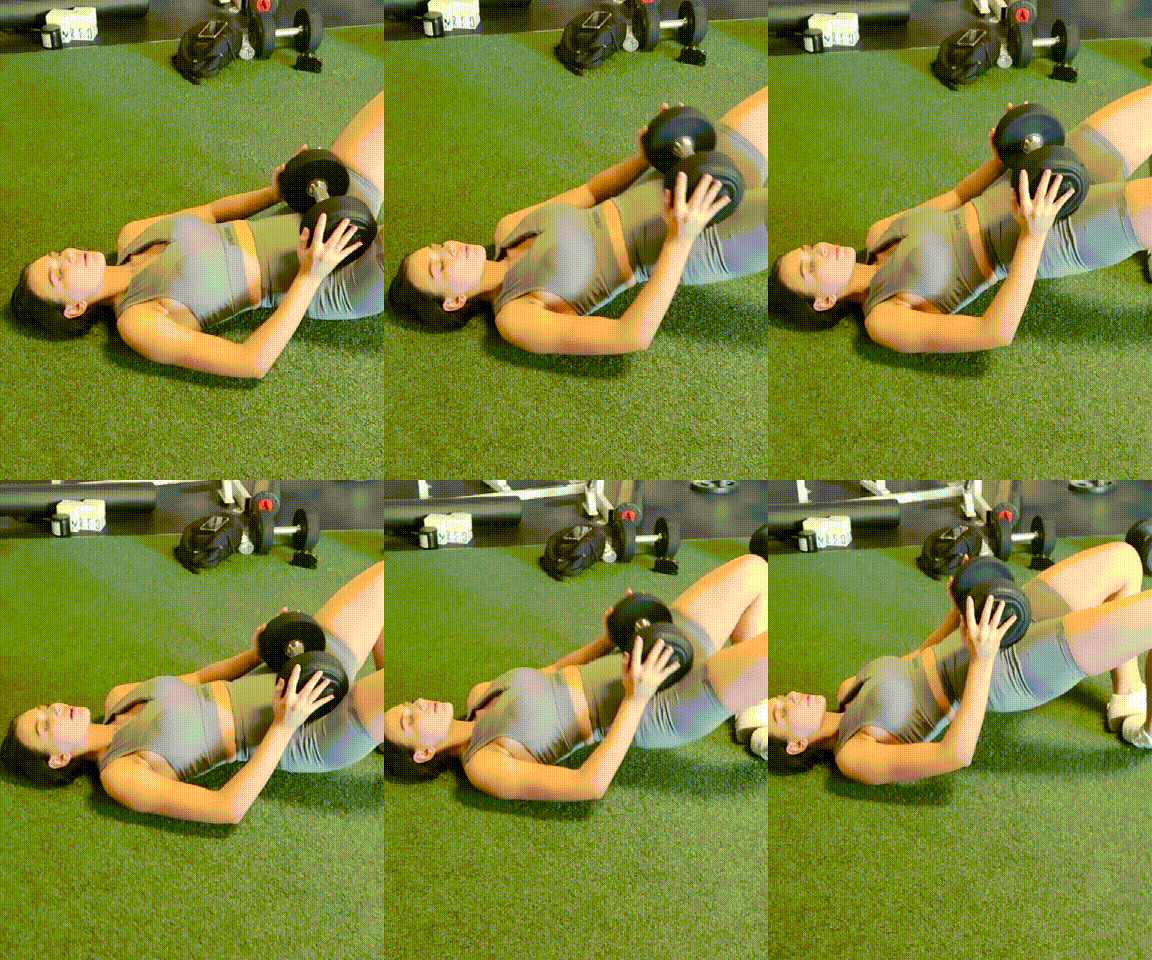
1. Place the body in a supine position, with hands palms down pressed against the ground, which can stabilize the trunk. The legs are bent, while maintaining the contraction of the back muscles to maintain the normal physiological curve of the lower back, do not fully relax on the ground, this can also help later glute muscle strength activation.
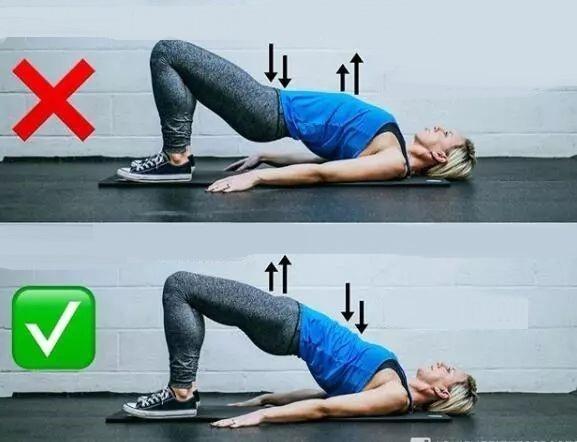
2. Use the glutes as the main driver to complete the hip extension, imagine pushing the abdomen as close to the ceiling as possible, when the peak contraction, the gluteus maximus should have a noticeable contraction, while maintaining the knee, hip, and shoulder joints in a straight line; do not just do half of the action, typical characteristics are that the hip goes below the shoulder and the knee joint line.
3. Hip flexion, i.e. shifting the hips down, pay attention to the action to be slow, so that the glute muscles generate force to resist the downward trend.
Common Mistakes:
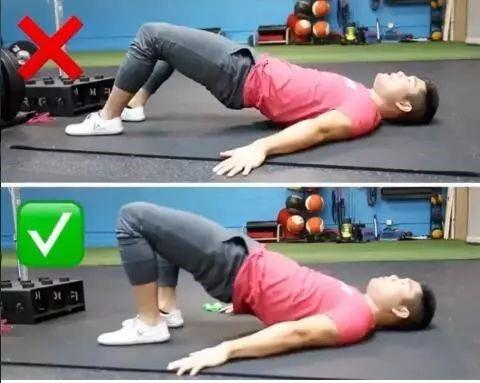
1. Knee Position Offset
In lower limb training exercises, the knee position is crucial. For example, in glute bridges, if the knee position is too far in front of the ankles, it will affect the completeness of the movement, preventing the fitness enthusiast from completing the peak contraction; if the knee position is too far behind the ankles, the knee joint will hyperextend, putting excessive pressure on it. The solution is to place the feet not close to the hips, nor too far from the hips, generally a foot's length is appropriate, and can adjust according to individual circumstances, the goal is that at the highest point, the lower leg is vertical to the ground, and the knee is above the ankle joint, the knee joint is located above the ankle joint.
2. Waist Hyperextension
The glute bridge should be driven by the gluteus maximus, but because the action is based on the movement of the hip joint, many people will have the problem of waist hyperextension. The solution is to use abdominal breathing to increase intra-abdominal pressure, to stabilize the spine, and to focus on the gluteus maximus with active contraction to complete the action.
Note:
1. When the knee faces the same direction as the foot, it mainly activates the gluteus maximus; when the feet are together and the knees are open to the sides, the hip is in an extended state, it can effectively activate the gluteus medius.
2. The distance between the feet can be maintained at a certain distance, but do not exceed the width of the shoulders, otherwise it will affect the extension of the hips and make it easier to buckle the knees.
3. The glute bridge is a warm-up before squatting, so do not use heavy barbell weights, for fitness enthusiasts with weaker strength, self-weight glute bridges are also a good choice.
1.
2.
3.