Turning Your Hips Equals Hitting Far? Do You Really Understand?
Will you turn your hips? That kind of shot that can hit the ball and generate a super-long distance? Everyone's mind starts to think, 'If you turn your hips quickly, the shot will definitely be far.' But is that really the case in reality? When we see professional golfers erupting with explosive power in tournaments, don't we instinctively want to imitate them?
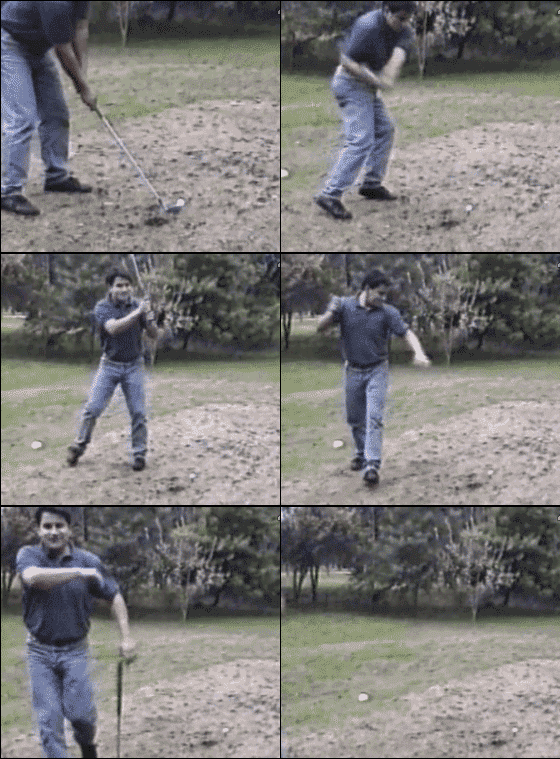
(Turning your hips too quickly sometimes can't even hit the ball…)
In fact, if you don't have physical training, forcefully imitating a very fast hip turn doesn't only lead to unstable swing, it could also cause sports injuries. Today, let's revisit and consolidate our knowledge about hip rotation!

Common Misconceptions
'When the downswing, you need to turn your hips' should be familiar to many golfers. But this statement doesn't mean that the downswing is purely driven by hip rotation. Many golfers pursue excessive hip rotation or a fast hip turn, trying to obtain greater power and distance through this method.
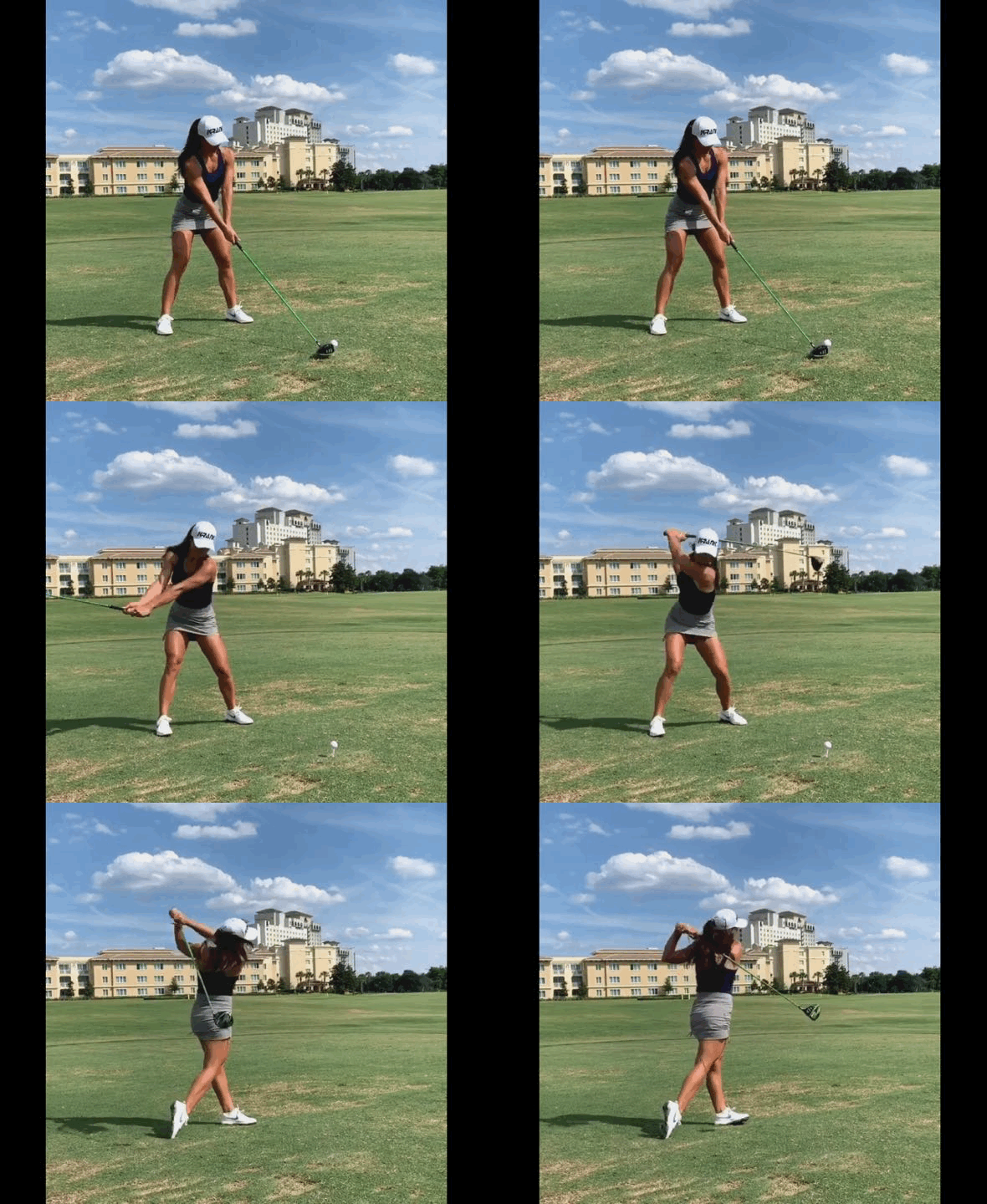
In fact, excessive or overly fast hip rotation during the downswing doesn't increase the head speed of the club, but it causes many problems: it can lead to unsynchronized swings, unstable shots, and a high risk of sports injuries.
Improve Your Practice
Better completion of hip rotation means you can hit the ball straighter and farther. How to start improving? Let's try the following two small exercises:
Exercise One
When practicing on the practice ground, you can use the ball bag as an aid to correct your stance.
1. Make a normal stance, left hand resting on the right side of your belt, and right hand holding the ball bag to practice hip rotation, which can help you better start the power of the hip.
2. When taking the downswing, transfer your center of gravity to the left side of your body, and the hips rotate around the left leg as the axis.
3. When rotating, try to keep your left knee slightly bent, and try to keep your thoracic spine in place and aligned with the target.
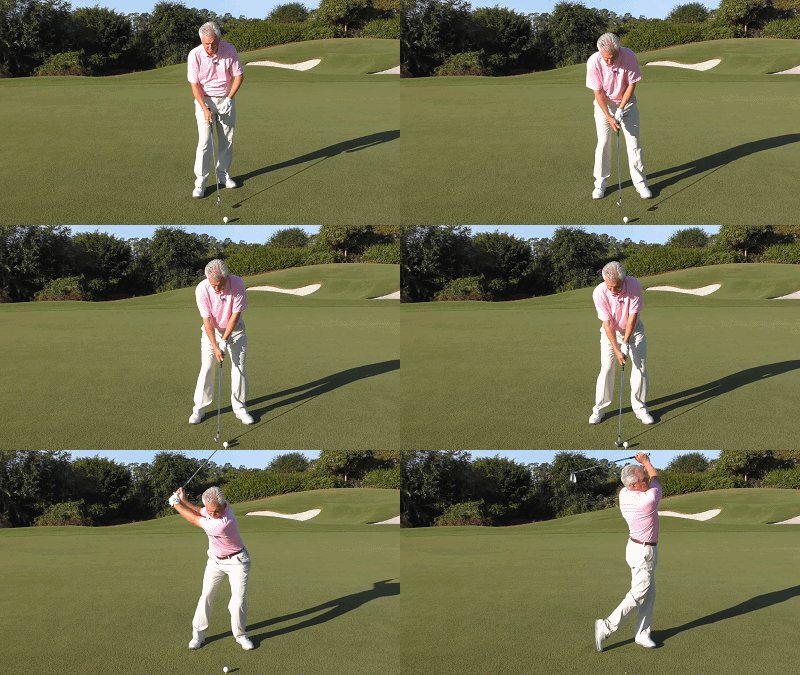
(Image source: Scratch Golf Academy)
Exercise Two
Use a sighting pole, insert it into the belt buckle, and practice empty swings. If our arms and the club are located behind our body during the practice process, we will hit the sighting pole. Try to regulate the position of our arms and clubs, slow down the hip rotation, and avoid hitting the sighting pole.